
 Photo by Sheldon Gardner
In a vote that will reduce property taxes for millions of Florida homeowners while simultaneously forcing local governments across the state to contend with losses of billions of dollars of that tax revenue, Floridians approved a constitutional amendment on Nov. 3 to raise the state’s homestead exemption.
Amendment 3 passed with 61.98% of the vote, according to the state Division of Elections. That is nearly 2% above the threshold the amendment needed for approval.
The amendment will increase the homestead exemption on residential property taxes from $50,000 to $150,000 in fiscal year 2028 and $250,000 in FY29. It also will limit year-over-year increases in assessed value for nonhomestead properties to 5%, a decrease from 10%, and direct state lawmakers to eventually eliminate homestead property taxes.
According to the Florida Association of Counties, the result will be reductions in nonschool property tax revenue of $303.04 million in Duval County, $109.38 million in St. Johns County, $60.9 million in Clay County, $40.09 million in Nassau County and $4.01 million in Baker County in FY29.

“The voters have spoken and we respect their decision,” Jacksonville Mayor Donna Deegan said in a statement. “The necessary adjustments will be made in collaboration with the community and City Council in preparation for the future.”
Deegan added that the mayor’s office would continue to prioritize public safety, improved affordability and quality of life, and would “continue to deliver lean, balanced budgets which bring return on investment and deliver city services that are efficient and responsive to every neighborhood in Jacksonville.”
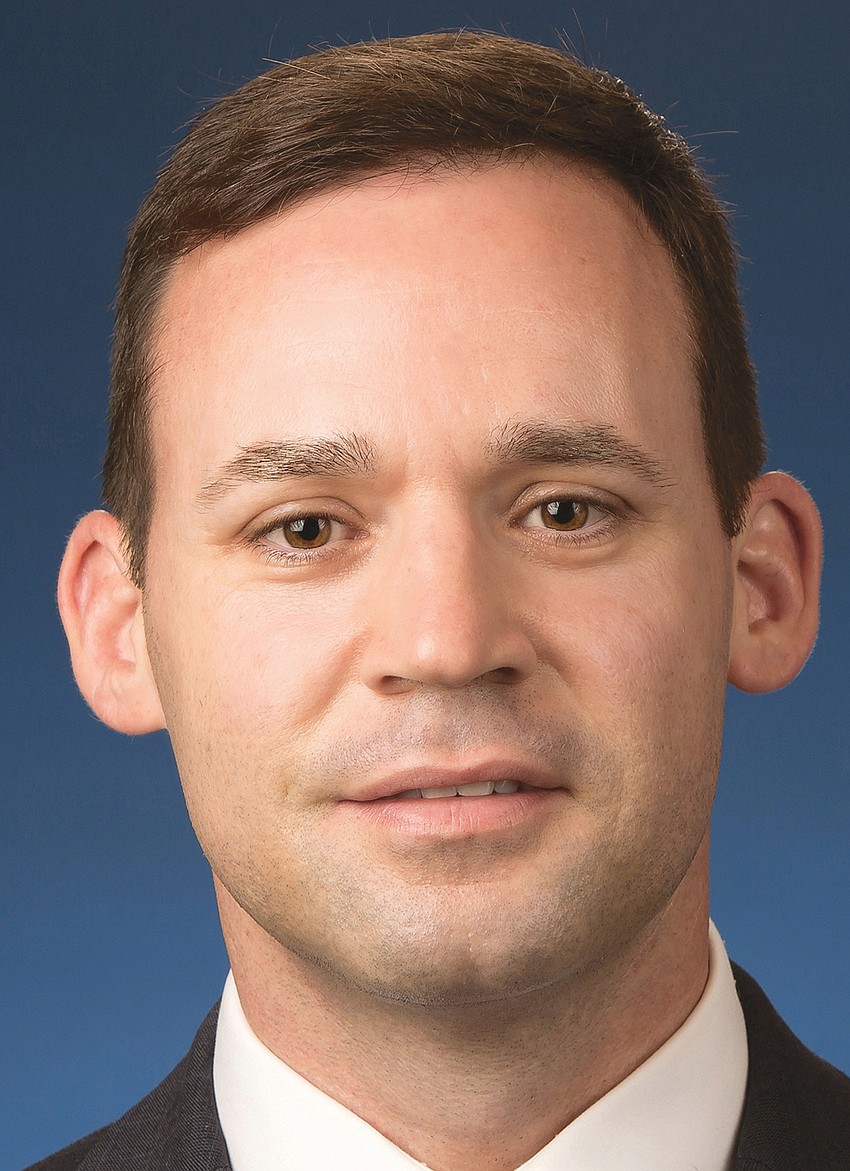
“Tonight, Florida home-owners roared back at their local governments and said ‘enough is enough,’” Jacksonville City Council member Rory Diamond posted on social media. “The Amendment 3 vote is (a) resounding slap down of bureaucratic waste, phony non-profits, and developer kick-backs. Welcome to the Freer State of Florida.”
There are about 5 million homesteaded properties in Florida. Increasing the tax exemption on those properties would result in cities and counties losing $5 billion in tax revenue next year and almost $12 billion by 2031, according to state economists. For local governments, that tax revenue is a key source of funding for such services as police and fire protection, public works, libraries and parks.
The Northeast Florida vote
With all precincts reporting but some mail balloting left to count, the vote in Duval County was 56.5% in favor of the measure as of 8 a.m. Nov. 4. The percentage in favor was 72 in Baker County, 65 in Clay and St. Johns counties, and 74 in Nassau County.
The proposal received more than 50% of the vote in all but three Florida counties.
“The voters have decided, and I hope they had enough information to make an informed choice,” St. Johns County Administrator Joy Andrews wrote in a statement. “More than 60% of residents have voted for a lower property tax structure, which will naturally require adjustments to how local governments raise revenue and the level of services they can afford to provide under the new structure. There is still a lot to be unpacked because the constitutional amendment is subject to interpretation, particularly regarding which categories of services can and cannot be funded with property taxes.”
No substantial economic impact studies were conducted before Amendment 3 was placed on the ballot by the Florida Legislature, and no comprehensive studies have been conducted since. While individual homeowners with homestead exemptions can calculate how much they will save on taxes by visiting https://tinyurl.com/37smrcwn,the impact to public services, and the trickle-down effects of those cuts, remain difficult to gauge.
The debate over A3
Opponents of the proposal warned that it would hurt governments’ ability to fund public safety operations, libraries, parks, economic development, city planning and nonprofits while hurting renters and forcing other tax increases.
Groups opposing the amendment included the Florida State Fraternal Order of Police, Florida Sheriffs Associations, Florida Professional Firefighters, Florida Association of Counties, Florida League of Cities, 1000 Friends of Florida and the Florida Policy Institute.
In Duval County, organizations that came out in opposition included the JAX Chamber and Jacksonville Civic Council.
“Police and fire leaders from across Florida have voiced major concerns about the strain Amendment 3 would place on public safety,” the Civic Council said. “Our analysis supports their conclusion that the proposed amendment could lead to longer police and fire response times and impair our ability to recruit and retain the first responders we rely on to keep our community safe.”
Proponents of Amendment 3 argued that local governments’ budgets had grown too large in the last several years. In Jacksonville, the city’s property tax revenue between FY19 and FY27 increased 47% when accounting for inflation, while the population grew 9.53%.
Proponents also argued that Amendment 3 would make homebuying and renting more affordable, although homebuilders disagreed.
Ramifications of the vote
Amendment 3’s passage leaves many unknowns for municipalities in and around Duval County. Between Deegan’s administration and 19 City Council members, there is no consensus on whether the city should increase nonproperty taxes and fees, and what the city will cut from its budget.
“Last night’s strong support for Amendment 3 confirmed what Jacksonville families already know: the affordability crisis is real,” Council President Nick Howland said in a statement. “From homeowners insurance and groceries to utilities and housing, costs continue to rise. This property tax relief will provide homeowners with direct, predictable savings. The people have spoken. This City Council has heard them, and we will plan and act accordingly.”
Even if there was a strong consensus, all 20 of those individuals will either be on their way out of office or running for reelection in March 2027.
In presentations about Amendment 3, Jacksonville political analyst Chris Hand predicted that local governments would consider all options to address the loss of revenue, including scaling back or elimninating infrastructure projects, instituting fees for police and fire protection, establishing a sales tax surcharge to help pay for indigent healthcare services, and many more.
Opponents of the amendment warned it could result in reductions of citywide services in Jacksonville and leave the city struggling to provide incentives for Downtown development.
Speaking at a community forum in June, Deegan said the city could not afford incentives for Downtown development should Amendment 3 pass.
“We are at a point in this city right now where we have so much momentum, so much momentum, and it would be a crying shame to put the brakes on that for political expediency,” Deegan said, sitting next to Downtown Investment Authority CEO Colin Tarbert .
With the city set to feel the effects of Amendment 3, Council members are expected to vote on up to $49.66 million in incentives for a Publix-anchored development of Block N7 in Gateway Jax’s mixed-use Pearl Square development Nov. 10. Gateway Jax CEO Bryan Moll has called N7 the most important element of his team’s development, as it would help attract new residents and retail to Downtown.
Beyond the N7 development, Council members will likely also consider redevelopment of the long-vacant Laura Street Trio of historic buildings at Laura and Forsyth streets, up to $35 million in incentives to bring the Culinary Institute of America to Downtown and other revitalization projects.
Elsewhere on the ballot
Other races affecting residents in Northeast Florida include:
Florida Senate District 4: Republican Clay Yarborough won unopposed.
Florida Senate District 6: Republican Jennifer Bradley defeated Democrat Jason Bellamy-Fults.
Florida House of Representatives District 10: Republican Marshall Rawson defeated Democrat Merrillee Malwitz-Jipson
Florida House of Representatives District 11: Republican Sam Garrison won unopposed.
Florida House of Representatives District 12: Republican Terrance Freeman defeated Benjamin Sandlin.
Florida House of Representatives District 13: Democrat Audrey Gibson won unopposed.
Florida House of Representatives District 14: Democrat Kimberly Daniels won unopposed.
Florida House of Representatives District 15: Republican Dean Black defeated independent Chadd Charland.
Florida House of Representatives District 16: Republican Kiyan Michael won unopposed.
Florida House of Representatives District 18: Republican Kim Kendall defeated Democrat Art Stresing.
Florida House of Representatives District 19: Republican Sam Greco defeated Democrat Suzanna Pavelle.
Florida House of Representatives District 20: Republican Judson Sapp defeated Democrat Lee Butler.
U.S. House of Representatives Florida District 3: Republican Kat Cammack defeated Democrat Seth Harp.
U.S. House of Representatives Florida District 4: Republican Aaron Bean defeated Democrat L.J. Holloway.
U.S. House of Representatives Florida District 5: Republican John Rutherford defeated Democrat Rachel Grage
U.S. House of Representatives Florida District 6: Republican Randy Fine defeated Democrat Eric Yonce.
United States Senator: Republican Ashley Moody defeated Democrat Angie Nixon.
Florida Governor: Republican Byron Donalds defeated Democrat David Jolly.
Editor’s note: Other results will be updated once final vote counts are available.