
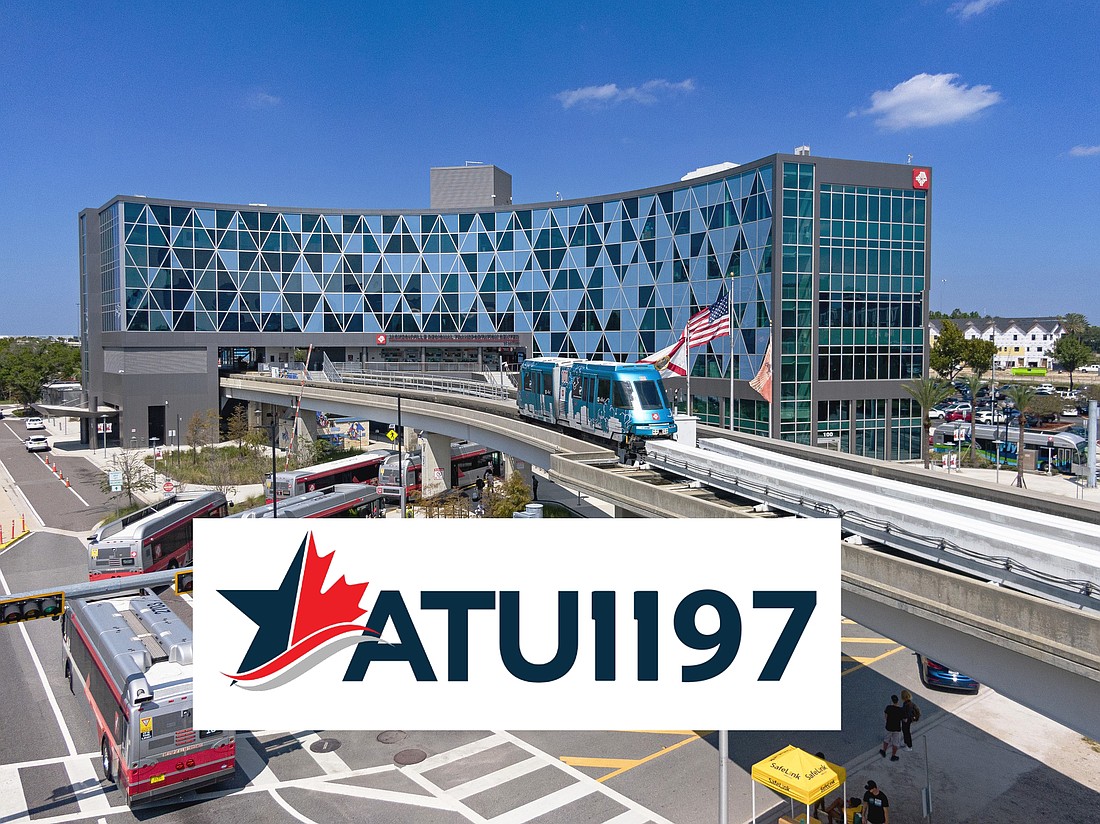
The Jacksonville Transportation Authority is taking legal action against the union that represents the bulk of its employees, accusing it of jeopardizing more than $100 million in federal funding the authority receives for services that include its Ultimate Urban Circulator (U2C) program.
In a complaint filed in United States District Court, JTA, through its subsidiary Jax Transit Management Corp., accused Amalgamated Transit Union 1197 of breach of contract.
According to the filing, JTM is a not-for-profit Florida corporation created by JTA to provide it with bus operators and maintenance personnel. JTA is the sole stockholder of JTM.
At issue is a Public Transportation Agency Safety Plan that must be signed by JTA and the union for JTA to receive the federal funding.
In JTA’s complaint, it says Amalgamated Transit Union 1197 has refused to sign the plan based on “arbitrary and capricious” reasons.
The union represents 350 JTA employees, a majority of the authority’s workforce. The local union only represents JTA workers.
In 2025, union representatives refused to sign the Public Transportation Agency Safety Plan, JTA wrote in the complaint. The authority said the refusal “violates (the union’s) contractual obligations under the CBA (collective bargaining agreement) to engage in good-faith bargaining over workplace issues such as safety.”
The Federal Transit Administration has threatened to withhold more than $100 million in grants should the union refuse to sign the safety plan, according to the complaint. The union objected to including the U2C as a mode of service in the safety plan, saying the service was unsafe.
“Yet, in the months following that initial proposal (for the PTASP), Local 1197 has not articulated a single item, or issue that it considers unsafe,” the complaint reads.
Melvin Hicks, the president of the local union, declined to comment on Amalgamated Transit Union 1197's safety complaints, directing the Daily Record to contact international union representatives.
Representatives for the international union did not respond to a request for comment before publication.
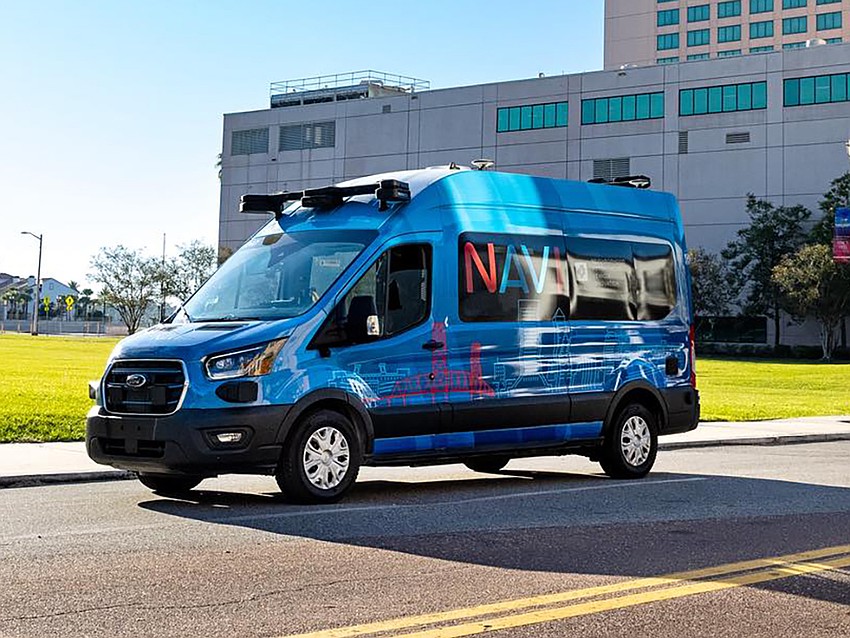
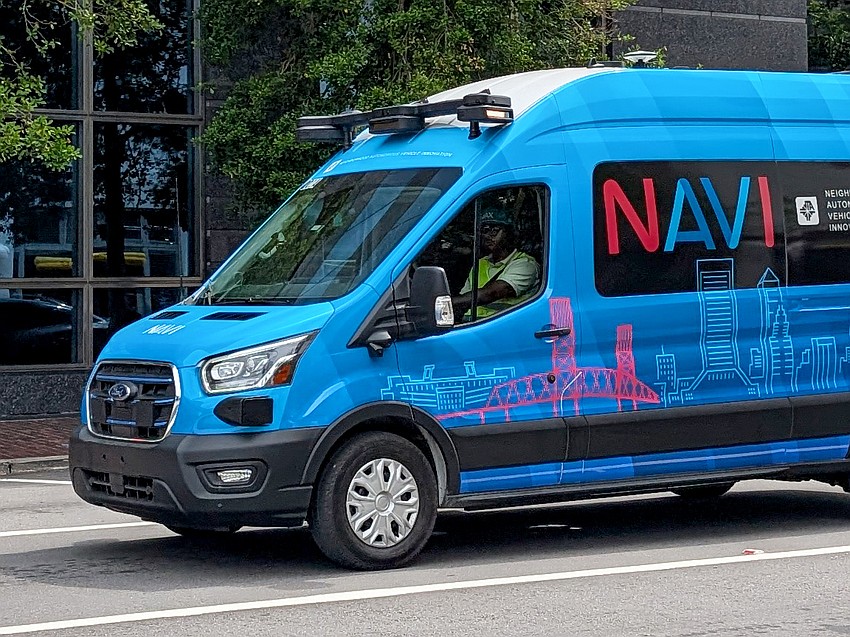
The U2C is JTA’s autonomous vehicle program, which launched in June with the start of service aboard the $65 million Neighborhood Autonomous Vehicle Innovation system.
NAVI, which operates on a 3.5-mile route mostly along Bay Street, was designed as the first leg of a system that would eventually involve adaptation of Jacksonville’s Skyway system for the U2C and expansion of service to neighborhoods surrounding Downtown.
“If the Union had legitimate safety concerns with the autonomous vehicle program, the Union was contractually obligated to raise those concerns, including at any Safety Committee meetings. Yet the Union’s representatives did not even attend the Safety Committee’s monthly meetings from February to July 2025, much less articulate any such concerns,” JTA wrote in the complaint.
“Further evidence of that bad faith is that the Union is misusing its PTASP approval as a bargaining chip over negotiations that have nothing to do with safety issues and that are not part of the PTASP.”
According to the complaint, the union said it would sign the safety plan if JTA allowed the union to organize the operating employees of the NAVI service and St. Johns Ferry Service.
Another condition was that JTA give the union employees a $1 an hour raise for the duration of JTA’s contract with BEEP, which operates U2C vehicles through its Balfour Beatty subsidiary. JTA has not disclosed the length of that contract.
In the complaint, JTA asked the court to order the union to arbitrate its dispute over the safety plan, and to award damages to JTA in an amount to be determined based on any lost federal funding because of the union’s actions.
JTA did not respond to questions asking about the union’s refusal to sign the safety plan and expectations for the litigation between the JTA and the union before publication.
The union’s refusal to sign the safety plan is not the first threat to the U2C’s funding.
City Council member Rory Diamond has called for the city to divert local-option gas tax funding from the U2C program toward street repair. He also said city funds for public transit would be better spent on credits for ride-share services like Uber and Waymo to provide rides for Jacksonville residents.
JTA, in a statement sent by text message Nov. 19, said any changes to the agreement would require bilateral agreement by the city and JTA.