

This report was updated Oct. 27 with the news that the 100% tariffs could be averted.
Jordan England, owner of Jacksonville-based Industry West, said Oct. 23 that the e-commerce furniture company has scaled back the business because of tariffs, especially those on goods from China.
“It’s a very challenging time for anyone who has an exposure to Asia,” he said.
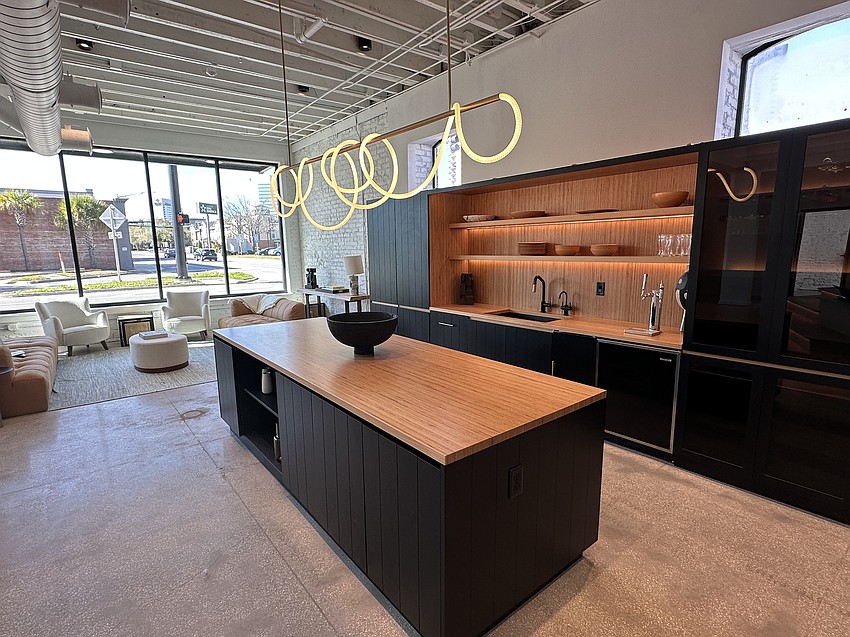
England provided his comments as Seacoast Bank leased his company’s former headquarters space on the Downtown Southbank and a default judgment was filed for back rent on Westside warehouse space.
Since its founding 14 years ago, Industry West has sold commercial and residential furniture for offices, restaurants, hotels, high-tech startups and residences throughout North America.
It has been working with manufacturers worldwide for furniture such as tables, desks, chairs, sofas, barstools and other products and accessories.
England said the top five sources of the furniture he sells are China, Indonesia, Romania, Thailand and Vietnam.
He said there are tariffs on goods from all of those countries, with the “most punitive on China.”
“You can’t even begin to pass on that cost increase to your customers,” England said.
TaxFoundation.org summarizes that April 2, President Donald Trump announced a universal tariff of 10%, with higher tariffs on trading partners, as high as 50%, depending on their trade balance with the United States.
On April 7, in response to China’s retaliation, Trump indicated another 50% tariff would apply to China beginning April 9, which was increased April 9 to a total rate of 125% under the reciprocal tariffs.
The rate on most imports from China is 145% when accounting for the International Emergency Economic Powers Act border security and fentanyl tariffs, TaxFoundation.org reported.
“When he did the 145% tariff in April, that’s when we said we had to change this model,” England said of his business.
“You throw a business plan out the window.”
A recent new tariff on upholstered furniture is another 25%, he said.
England also is watching for a potential additional tariff on Chinese imports. Trump has set Nov. 1 as the deadline for additional 100% tariffs announced earlier this month.

“Here we are seven days away,” England said.
CBSNews.com reported Oct. 12 that the new 100% tariffs will add on to any existing import taxes on Chinese goods.
On Oct. 26, The Washington Post reported that negotiators reached a framework of a trade deal to avert the additional 100% tariffs as Trump is scheduled to meet with Chinese leader Xi Jinping on Oct. 30.
“Not a fun time for small business”
Jordan England and his wife, Anne England, started Industry West in 2011 from their home, eventually moving to a series of larger locations.
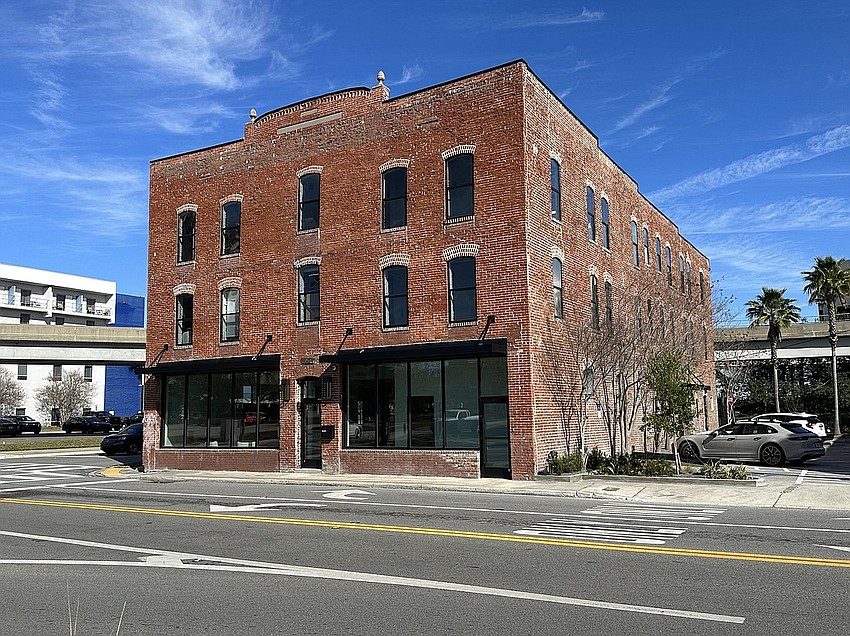
With partners, they bought and renovated the historic, three-story building at 1001 Kings Ave., investing more than $5 million, for the headquarters. They moved there about January 2023.
By this spring, when the tariffs were announced, England said he was adjusting, including leaving the office space to work remotely.
“You make adjustments,” he said.
“You stop ordering stock, you cut costs and operate as efficiently and as lean as possible,” he said.
That includes labor.
In early 2023, Industry West counted about 40 employees, with 10 in a New York City office, 15 at a West Jacksonville distribution center and 15 at the Southbank headquarters.
England declined to say Oct. 23 how many employees remain on staff, but said everyone still on the team is working remotely. Some functions, like creative work, were outsourced. Some employees are working on contract.
There also are cost increases in other parts of the business and in the market as a whole.
“It’s not a fun time for small business,” England said.
“What this sort of trade policy does is companies go back to where they are incredibly lean.”
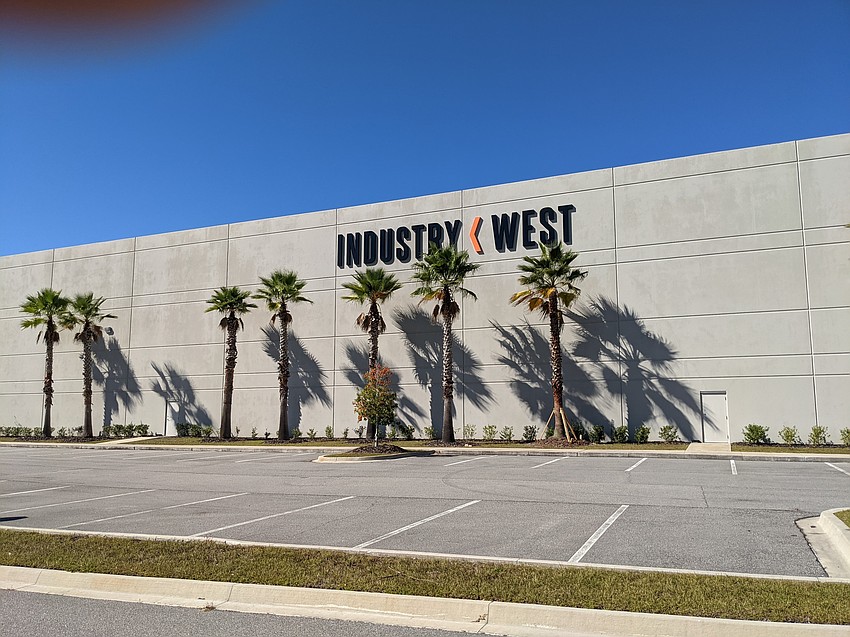
Industry West also left its leased warehouse space in AllianceFlorida at Cecil Commerce Center in Westside.
Its lease began in August 2018 and was extended. But the landlord filed a complaint against England Trading Co. LLC in May 2025 for nonpayment of rent or late charges from Dec. 1, 2024, through March 6, 2025.
The 4th Judicial Circuit Court entered a final default judgment in July 2025 for rent, operating expenses and other charges totaling $245,522.27.
Industry West said by email May 6, 2025, that it made the best business sense to move back to a third-party logistics center, meaning another company manages the warehousing and management of orders. It continues to do so.
England declined Oct. 23 to comment on the litigation.
Businessofhome.com said the retail outpost in Manhattan closed last year.
Business in the pipeline
To adjust, Industry West is clearing out a lot of its inventory on final sales, while continuing to work with clients on a made-to-order basis.
“We are working on large projects across the country,” England said.
England said there is tremendous demand, but not all companies are willing to pay what it costs for businesses like his to remain profitable.
At the same time, England said Industry West can sell to clients who are willing to pay the higher costs for it – because they can’t find those specific goods elsewhere.
“We still have a lot of hospitality trade projects that we are focusing on,” England said.
“We have a lot of business in the pipeline.”
Industry West is a national company. “Our market has always been across the country,” England said.
California and West Coast clients have included Silicon Valley customers.
Industry West is working through its in-stock inventory.
“We still have a good bit of stock in the U.S.,” England said.
As of Oct. 22, IndustryWest.com featured “final sales” on most but not all of the 239 furniture and related items being sold online.
“As we continue to assess the impact of new trade policies on our pricing, we’re proactively highlighting a selection of high-inventory items in our warehouse that are not subject to upcoming tariff increases,” the site said.
There’s more out there, but it is costly to bring it here.
Industry West has “thousands of cases of furniture sitting at factories in Asia because we can’t ship it out,” England said.
The goods will “sit there until we can navigate it.”
“Complete chaos”
England said he feels like he is in the middle of politics.
“In my circles around the country, everybody is like, do you wait this out? What do you do? Wait and see? What are you doing?”
England said there is only so much to be done to prepare for the unknown.
“There is complete chaos to the supply chain,” he said.
“You can’t wait for the policy to change. You have to react pretty quickly.”