

HIGHER EDUCATION
President, Florida State College at Jacksonville
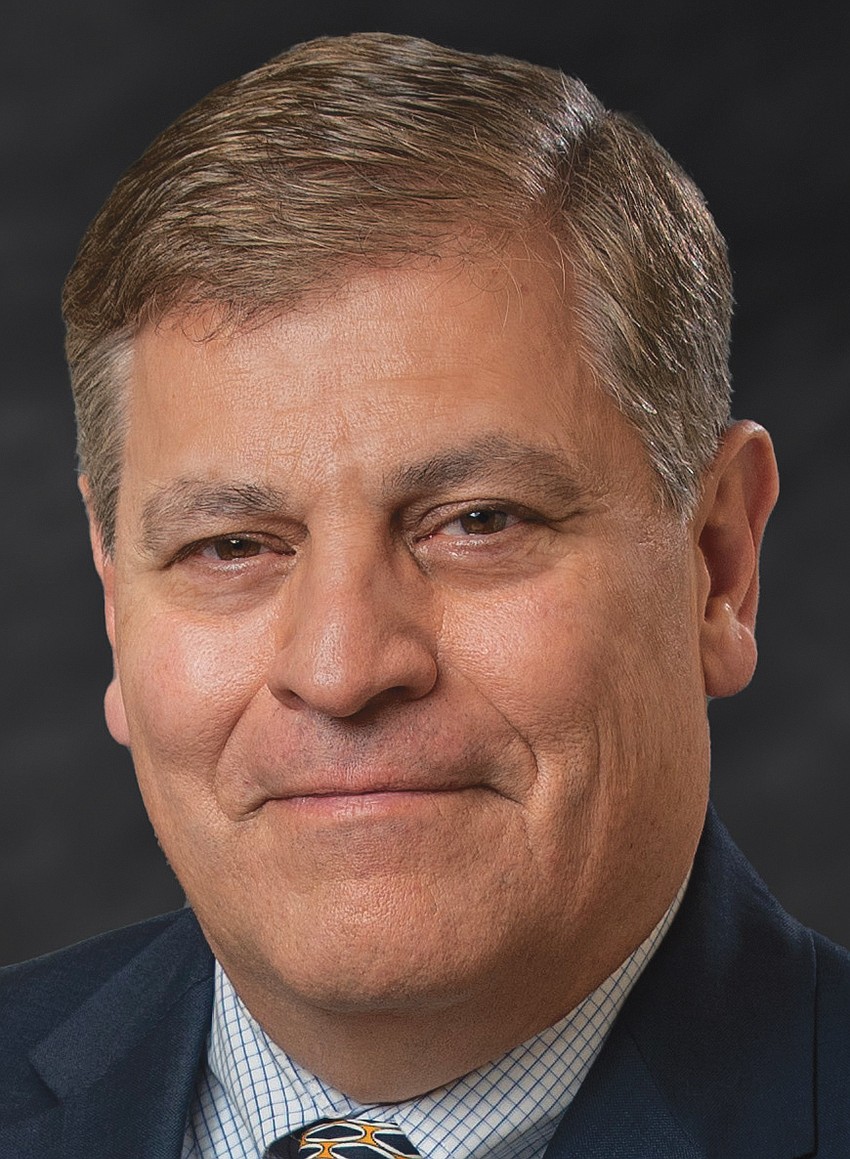
The primary economic issue is the ability to stand up and implement short-term workforce programs to meet the current and future needs of businesses and industry.
Florida State College at Jacksonville is meeting the economic challenge of rapidly delivering short-term workforce programs by building strong partnerships with leading community employers.
Through collaborations with companies like HCA Florida and Brooks Rehabilitation, FSCJ offers fast-track training for certified nursing assistants to advance to licensed practical nurses to meet critical health care shortages.
With Goodwill Industries and Sulzbacher, FSCJ provides short-term skills training that connects underserved learners to jobs in electrical, HVAC, IT and other essential trades.
These programs are designed and updated quickly based on real-time industry needs, allowing FSCJ to supply skilled workers while giving students affordable, rapid pathways into high-demand careers.
This rapid response model is a major component of what allows FSCJ to continually add about $2 billion to the regional economy annually to meet business and industry needs.
SMALL BUSINESS BANKING
Executive Vice President, Market President, Seacoast Bank

The primary economic issue is the squeeze between rising operating costs and persistent uncertainty around demand.
This combination makes owners cautious about taking on new debt, even when they need to grow.
At Seacoast Bank, we’re seeing many business owners navigate higher labor, insurance and supply costs while still feeling uncertain about the pace of local and national growth. In this environment, access to credit matters, but so does clarity.
Our approach is to spend more time on cash flow planning, helping clients understand different scenarios and determine how much leverage is truly comfortable for their business.
We are also seeing greater interest in flexible credit structures and Treasury tools that can smooth out volatility in receivables and expenses.
By pairing local market insight with disciplined underwriting, we’re helping businesses make measured, confident decisions rather than delaying investment altogether.
COMMERCIAL BANKING
Area Manager, Pinnacle Financial Partners

The primary economic issue is “layered” uncertainty which makes it difficult for our business clients to accurately project revenue, capital spending and profit margins.
We use the term “layered” because there are several contributing factors – AI impact, the political/regulatory landscape, housing affordability (and its impact on hiring), interest rates, inflation and supply chain/tariffs.
In today’s economy, financial flexibility is key. At Pinnacle, our commitment is to provide distinctive service anchored with effective advice – early and often.
We are working with our clients to understand these impacts on their business.
MILITARY/VETERANS AFFAIRS
Director, City of Jacksonville Military Affairs and Veterans Department
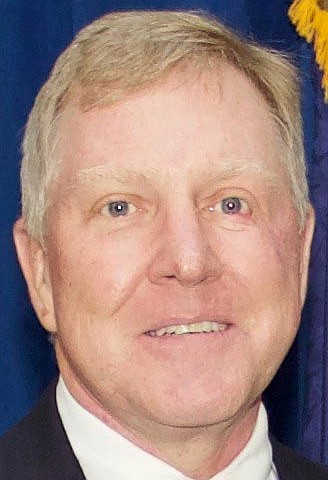
The most important economic issue is maintaining Jacksonville as the most military- and veterans-friendly community in the U.S.
Jacksonville is one of the most requested duty stations in the U.S. Navy. This popularity stems from several factors, including its strategic location, quality of life and cost of living.
As the home to two of the largest naval installations in the U.S., with an annual economic impact of $12.1 billion, we are focused on issues that support military families.
The Military Affairs and Veterans Department has opened two Food Farmacy locations that provide fresh groceries to active-duty military families twice a month.
We have expanded our Jobs4Vets program, which consolidates more than 500 local employers who have open positions for service members that are transitioning out of the active-duty military and area veterans into one website which eases the job search.
Jobs4Vets now has opportunities for military spouses including supporting career assistance information.
In 2026, we will again host our Military Spouse Night Out program to honor military spouses with an evening of food, prizes, pampering and services.
RESTAURANTS
Owner, Ember & Iron and Gemma Fish + Oyster

The primary economic issue is “perceived value.”
It’s hard to compete with a LongHorn Steakhouse and Chili’s because they have massive purchase power that enables them to drive prices lower and “give more bang for your buck” to the customer with more overall perceived value.
We, as in mom-and-pop restaurants, have to retain and/or exceed the same standards and portions, with better quality, while having much higher purchasing and labor costs, and still try to compete with the “5 meals for $40” game that these larger corporations are pushing.
Labor is really tricky at the moment as well with the rising minimum wage of tipped employees, and back-of-house staff in general.
We try to compete by offering happy hour, off-premise sales and utilization of salaried employees.
What 30 Northeast Florida leaders are saying about the issues and challenges in the year ahead. Their insights will be published online over the next several days:
Jan. 2: John Avendano, Allison Bovee, Debbie Buckland, Harrison Conyers and Brittany Cooney.
Jan 5: Michael Corrigan, Brian Coughlin, Julia Epstein, Cindy Funkhouser and Eric Green. Story here
Jan. 6: Patrick Green, Chris Hand, Jessie Spradley, Joanne Kazmierski, Pepper Lindsey. Story here
Jan. 7: Lauren Little, Steve Livingstone, Albert Loh, Tyler Mathews and Sabeen Perwaiz. Story here
Coming up....
Jan. 8: Lisa Rinaman, Jackie Rowland, Gracie Simendinger, Buck Smoak and Bill Sorenson
Jan. 9: Jim Stallings, Colin Tarbert, Aundra Wallace, Travis L. Williams Sr. and Chris Wilson