
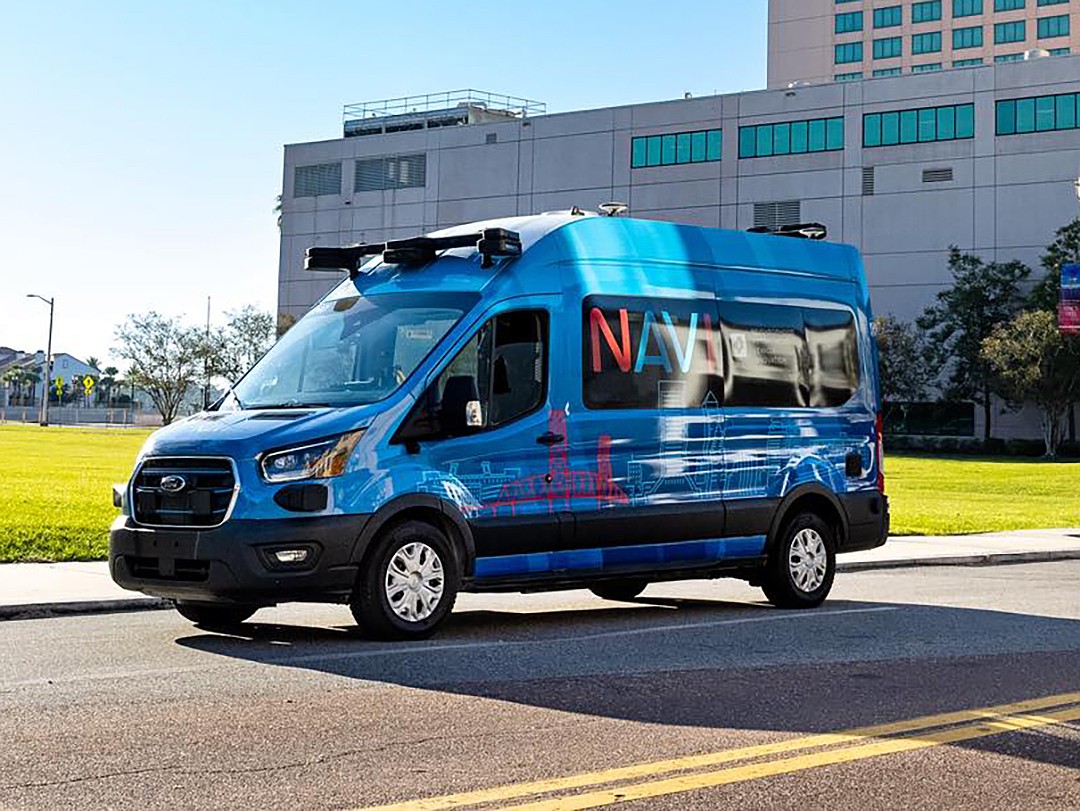
At its final meeting of 2025, the Jacksonville Transportation Authority board of directors approved a six-month pilot program to lower fares for JTA’s bus systems and remove all costs to ride its Neighborhood Autonomous Vehicle Innovation shuttles Downtown.
Those moves came shortly after JTA recorded an $18.99 million budget shortfall and amid a drop in ridership for the NAVI program, a Jacksonville City Council auditor’s report shows.
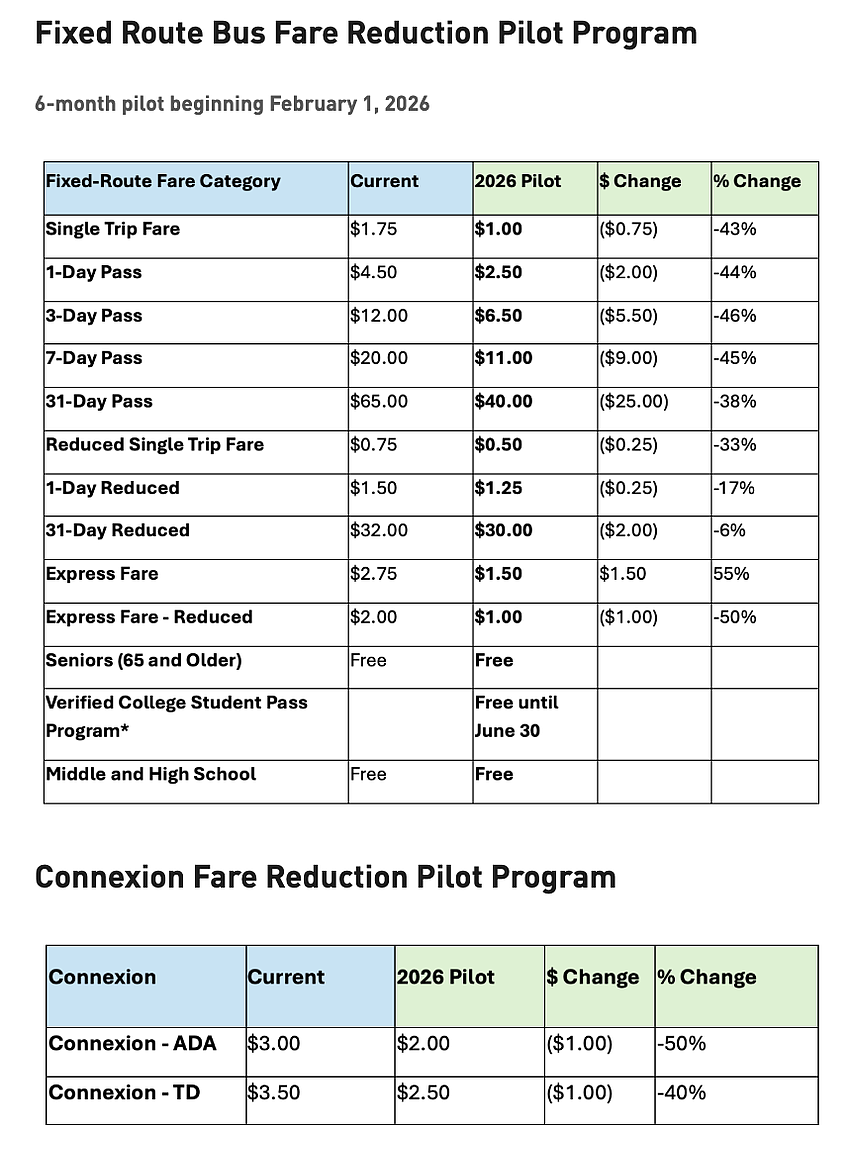
At the Dec. 11 meeting, JTA board members removed all ridership fees for NAVI effective Dec. 15. Members also voted to reduce fares for 10 fixed-fare options and both Connexion fare options. Rates were cut as little as 6% and as much as 55%, with fare reductions for non-NAVI service scheduled to take effect Feb. 1.
The deficit was reported during a Jan. 6 Jacksonville City Council Finance Committee meeting, as Council auditors presented findings from the end of the fiscal year for the city and independent authorities such as JTA, city utility JEA and the Jacksonville Aviation Authority.
JTA’s reported budget deficit represented a swing of about $23 million, as JTA had reported a $3.94 million budget surplus for the first nine months of its 2024-25 fiscal year. The authority reported the $18.99 million deficit at the end of the fiscal year. JTA’s fiscal year, like the city’s, is from Oct. 1-Sept. 30.
JTA’s total budget for the 2024-25 fiscal year was $186.62 million.
A JTA spokesperson did not answer a question from the Daily Record asking for an explanation for the budget deficit. Council members did not directly question JTA administrators during the Finance Committee meeting.
“The first thing that caught my eye is $19 million over budget ... 10% over is a pretty big overage,” Council member Will Lahnen said.
“It’s a pretty big shift, projected to be under budget and now nearly $20 million over budget for the year. I don’t think it’s anything we’re going to solve here. ... I’m hoping to get an answer.”
Council Auditor Kim Taylor said $7 million of the cost overruns came from NAVI operational costs, while a smaller portion stemmed from collective bargaining agreements that had not been included in the budget.
The NAVI program began in July 2025 without fares for riders. JTA initiated a fare of $1.75 per ride Oct. 1.
After the fee went into effect, JTA recorded a drop of 978 monthly riders from September, the last month of free ridership, to November, the last full month of paid ridership, according to records provided to the Daily Record.
JTA reported 1,797 riders in September and 819 riders in November.
After the JTA board adopted the pilot program of reduced fares in December, JTA said the program was designed to improve affordability for riders and to improve their experience.
“As part of our Better Together campaign, we wanted to say thank you to all of our riders, and what better way to say thank you for riding than reducing fares,” JTA spokesperson Taniel Koushakjian wrote in an email.
“The JTA is committed to putting our community first and ensuring transportation remains accessible and affordable for everyone.”
JTA did not directly answer a question from the Daily Record about why NAVI fares were cut 48 days before other JTA programs. JTA did not respond to questions asking if it had calculated the impact the fare reductions would have on revenue.
“The purpose of a pilot is to gather real data. During those six months, we’ll monitor ridership trends, customer feedback, and overall financial impact to guide future decisions,” Koushakjian wrote.
“We view this pilot as an investment in the community, one that could generate long-term benefits through higher ridership and broader mobility access.”
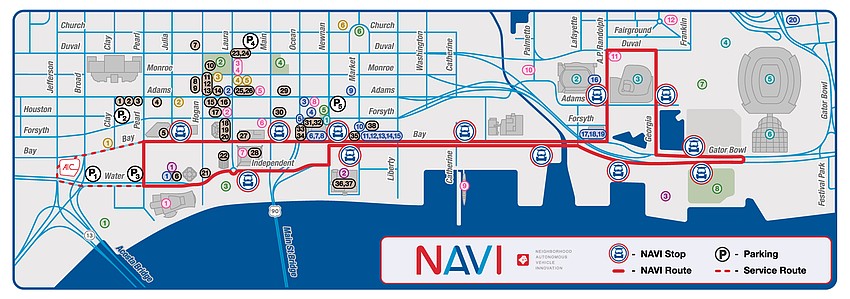
NAVI is the first portion of JTA’s Ultimate Urban Circulator (U2C) program. The first phase, which cost $65 million, runs autonomous vehicles along a 3.5-mile stretch mostly along Bay Street. NAVI vehicles are operational weekdays from 7 a.m. to 7 p.m.
The second phase of the U2C, which includes renovations to the Downtown Skyway tram to accommodate autonomous shuttles, is expected to cost $247 million.
The third phase, which would expand the U2C into Brooklyn, San Marco, Springfield and San Marco, is expected to cost $95 million.