
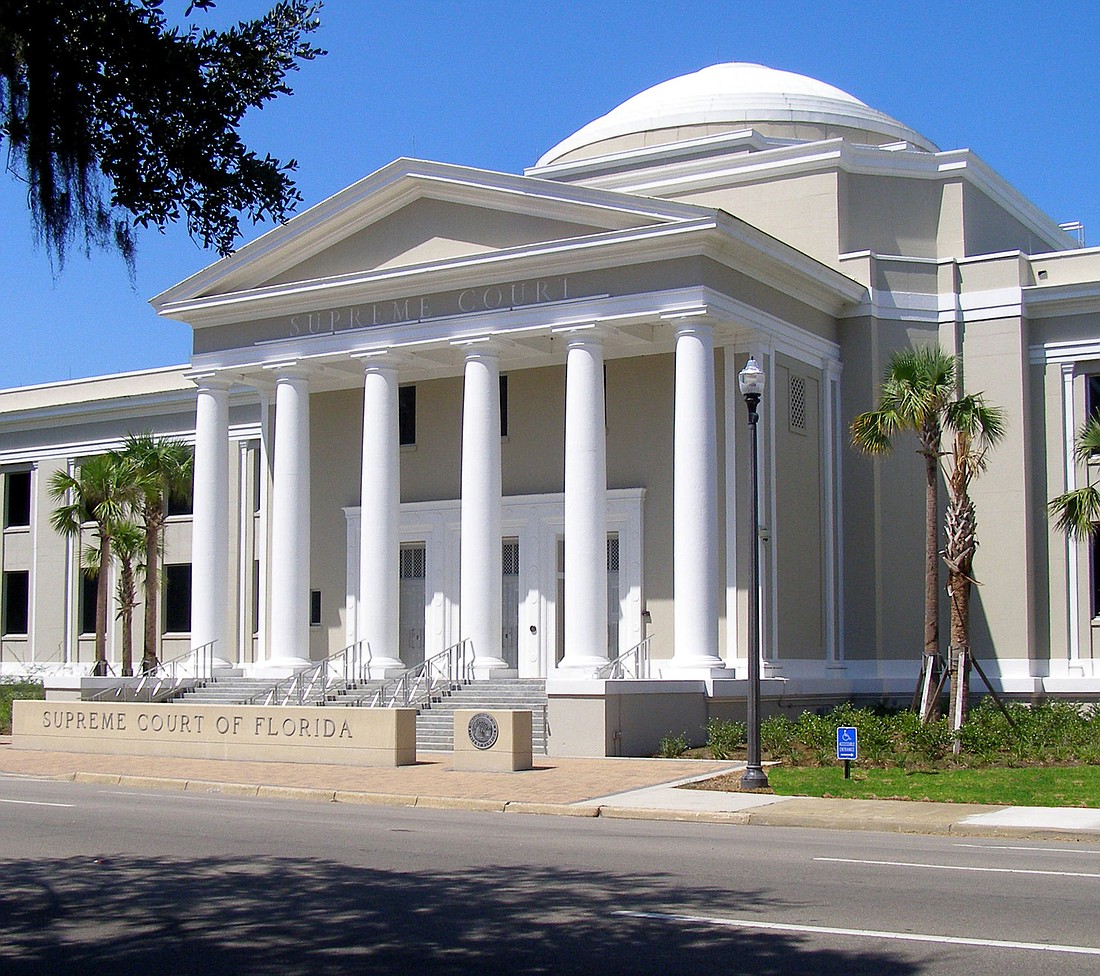
The state Supreme Court on Jan. 15, based on a workgroup’s report, amended its Rule of the Supreme Court Relating to Admissions to the Bar to end the rule’s reliance on the American Bar Association as the sole accrediting agency for law schools whose graduates are eligible to sit for Florida’s General Bar Examination.
Now, about six weeks later, a similar evaluation is underway on a larger scale.
The Conference of Chief Justices and the Conference of State Court Administrators have established a joint working group to examine law school accreditation and its role in Bar admission requirements nationwide.
The creation of the new working group derives from one of the nine initial recommendations proposed by Committee on Legal Education and Admissions Reform, a standing committee of both conferences, in July 2025.
The working group will operate from March through December and will submit its draft report of findings and recommendations to the CLEAR committee no later than December 2026.
One recommendation the group will consider says that state supreme courts should: “Encourage law school accreditation that serves the public. State supreme courts should encourage an accreditation process that promotes innovation, experimentation, and cost-effective legal education geared toward lawyers meeting the legal needs of the public.”
In Florida, the court appointed the Workgroup on the Role of the American Bar Association in Bar Admission Requirements in March 2025 to study the possibility of expanding law school accreditation opportunities. The group submitted its final report in October and the court, at its December conference, voted approve the rule changes.
One of the report’s recommendations: “Based on its independent study and its consideration of the workgroup’s report, the Court is persuaded that it is not in Floridians’ best interest for the ABA to be the sole gatekeeper deciding which law schools’ graduates are eligible to sit for the state’s General Bar Examination and become licensed attorneys in Florida. Instead, the rule changes create the opportunity for additional entities to carry out an accrediting and gatekeeping function on behalf of the Court.”
At present, the ABA is the sole programmatic accreditor recognized by the U.S. Department of Education to accredit programs in legal education that lead to the first professional degree in law.
The court acknowledged that additional programmatic accreditors for legal education programs may be recognized in the future and expresses its support for that possibility; this amendment is intended to accommodate that outcome, the motion states.
The amendments will become effective at 12:01 a.m. Oct. 1, 2026.
No additional accrediting agency has yet been identified in Florida, and the court has not finalized procedures for approving additional accreditors.