
Jacksonville City Council members are six months from considering the city budget for the 2026-27 fiscal year, but several are proposing plans to pay off grants that could weigh on the city’s financial health.
Council members are transferring money between city accounts to pay off completion grants, which make up a substantial portion of the city’s expected budget deficit in the next fiscal year.
Completion grants are financial incentives paid by the city to a project developer after work has been completed.
Those grants were expected to account for $44.61 million of spending in the budget for the next fiscal year, which begins in October.
Deliberations start in August for the budget, which takes effect Oct. 1.
In advance, Council members and the mayor’s office have introduced or passed legislation to pay off $37.34 million of the obligated incentives without dipping into city reserves.
“I’m really pleased that the Council now, as we’re finding pockets of money, instead of spending it on something, we’re saying, ‘What obligations do we have? And let’s get those paid off first,’” said Council member Ron Salem, who introduced and co-introduced two pieces of legislation to pay off completion grants.
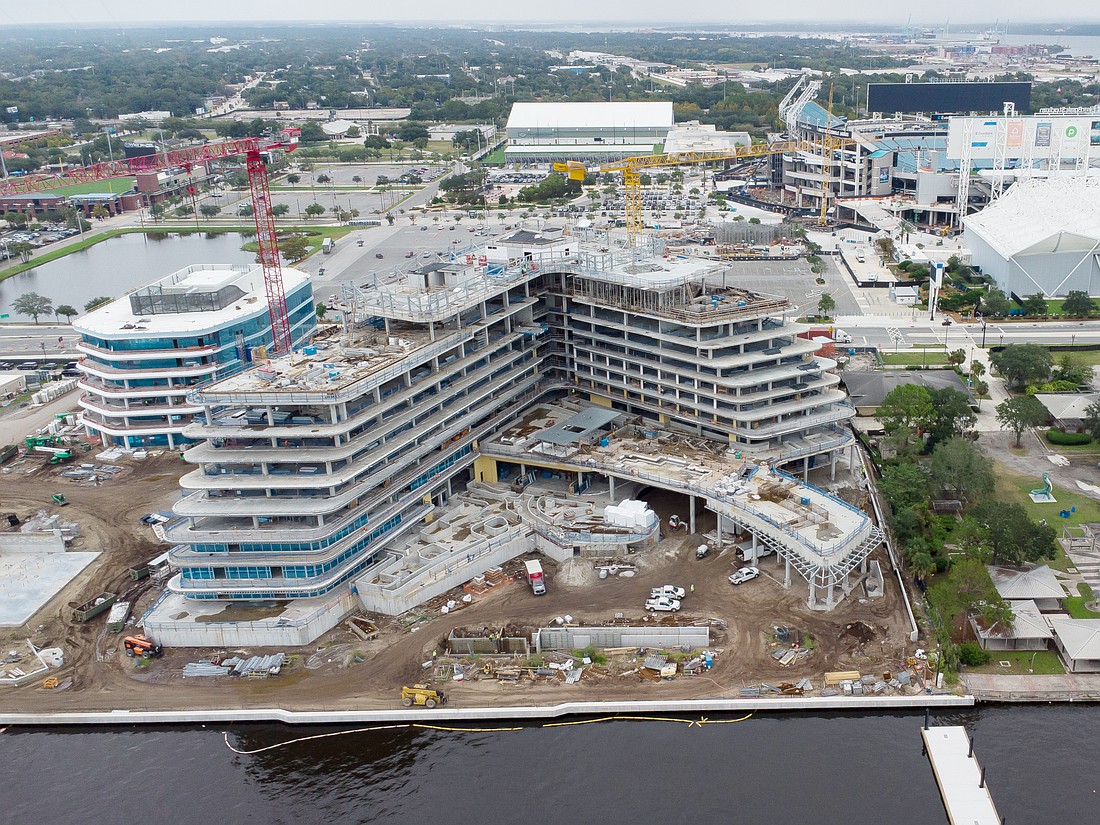
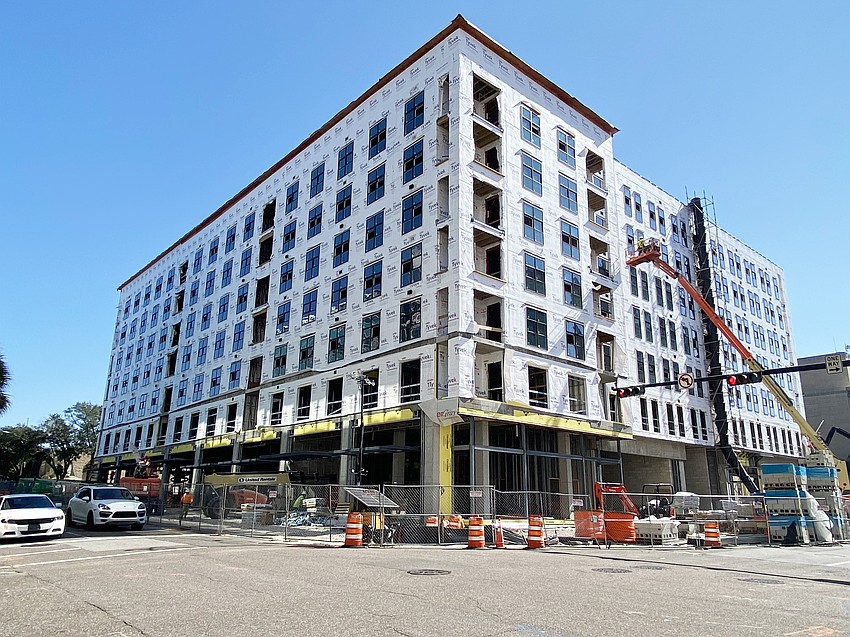
The $44.61 million in completion grants expected to come due in the 2026-27 fiscal year comprise for four projects in Gateway Jax’s Pearl Square development; the Juliette Balcony restoration project at 225 N. Laura St.; a Corner Lot redevelopment project at 520 N. Hogan St.; the Homes2Suites by Hilton hotel at 600 Park St.; and Jaguars owner Shad Khan’s Shipyards project, which includes the Four Seasons Hotel and Residences near EverBank Stadium, according to the Downtown Investment Authority.
Other completion grants could be offered before the budget is finalized, but those would likely come due in coming years.
Council members have made an effort to rein in completion grant spending, favoring incentives that offer loans or property tax rebates.
While loans are repaid and property tax rebates involve the city refunding a portion of tax revenue it would otherwise receive, completion grants are paid from the city’s operating budget or reserves and can add to deficit spending.
Members said former Councils did not focus on how the city would pay for the completion grants they approved.
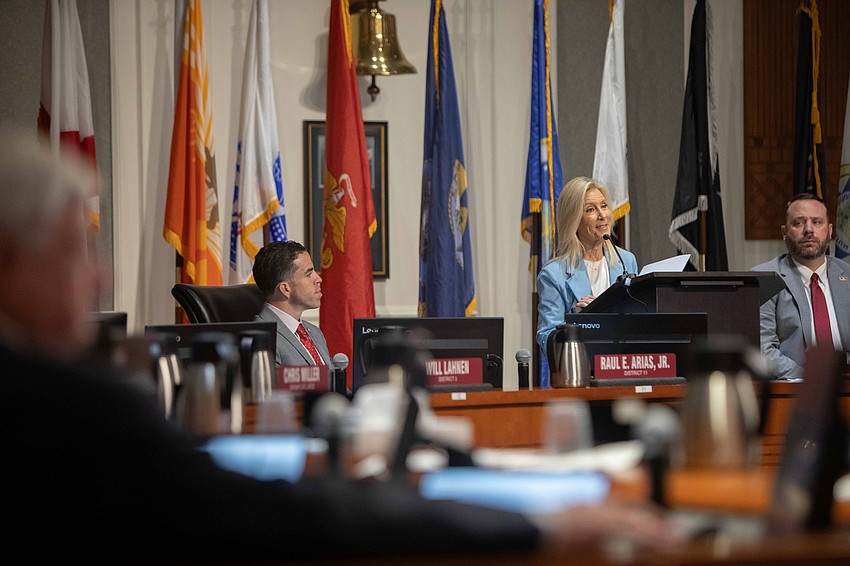
“I think those completion grants were in an attempt to jump-start (Downtown development) in that direction and to try to speed that up,” Council member Chris Miller said.

“However, I think with every good intention, sometimes we may not think through the whole process and say, ‘OK, how do we track all of that?’”
Miller introduced legislation Feb. 10 that would require the city to designate funding sources in its budgets for any completion grants expected to be due in that year.
He said he plans to add an amendment to his bill, Ordinance 2026-0102, that would restrict the city from funding those grants through debt spending or drawing down its reserve accounts.
“Going forward, I’m hoping this will help us also take a good, hard look at completion grants and say, ‘Should we be doing this?’” Miller said.
To satisfy the grants, city officials and Council members found funding sources that include the city’s self-insurance fund and capital improvement plan’s debt management fund.
In a statement, a city spokesperson said the city budgeted more in debt-service payments than turned out to be necessary, leading to extra funding.
“Therefore, those savings are being used to put toward the payment of completion grants coming due in the future, which are essentially other city obligations that are akin to debt.”
The city’s discretionary spending could be tighter in 2026-27 after Council approved a one-eighth mill reduction in the millage rate during 2025-26 budgeting. While this year’s budget was boosted by a $40 million one-time contribution from city utility JEA, that money will not be available to spend in 2026-27.
“It might be tight. It might be, but at least I’d rather it be more tight, and then for us to say, ‘OK, let’s give it a little more leeway here,’” Miller said.
“But we have to get very serious when the auditors tell us we have a $60 (million) to $70 million deficit before we’ve even started the process.”
During budget hearings for the 2025-26 budget, Council auditors expected the city to operate at a $61.69 million deficit during the 2026-27 fiscal year.
The city budget for 2025-26 is $2.02 billion.
“As we always do, we will propose a balanced budget where fiscal year revenues cover all fiscal year expenses,” a spokesperson for the mayor’s office wrote in response to questions about Miller’s bill and amendment.
Before Council turns its attention to its budget process, Salem said he hopes to continue whittling down the city’s completion grant obligations.
“It’s a fiscally responsible thing to do,” Salem said.
“If you and I had some cash available and we had credit cards that had balances, what’s the first thing you do? You’re going to pay off those credit cards. That’s essentially what we’re doing.”