
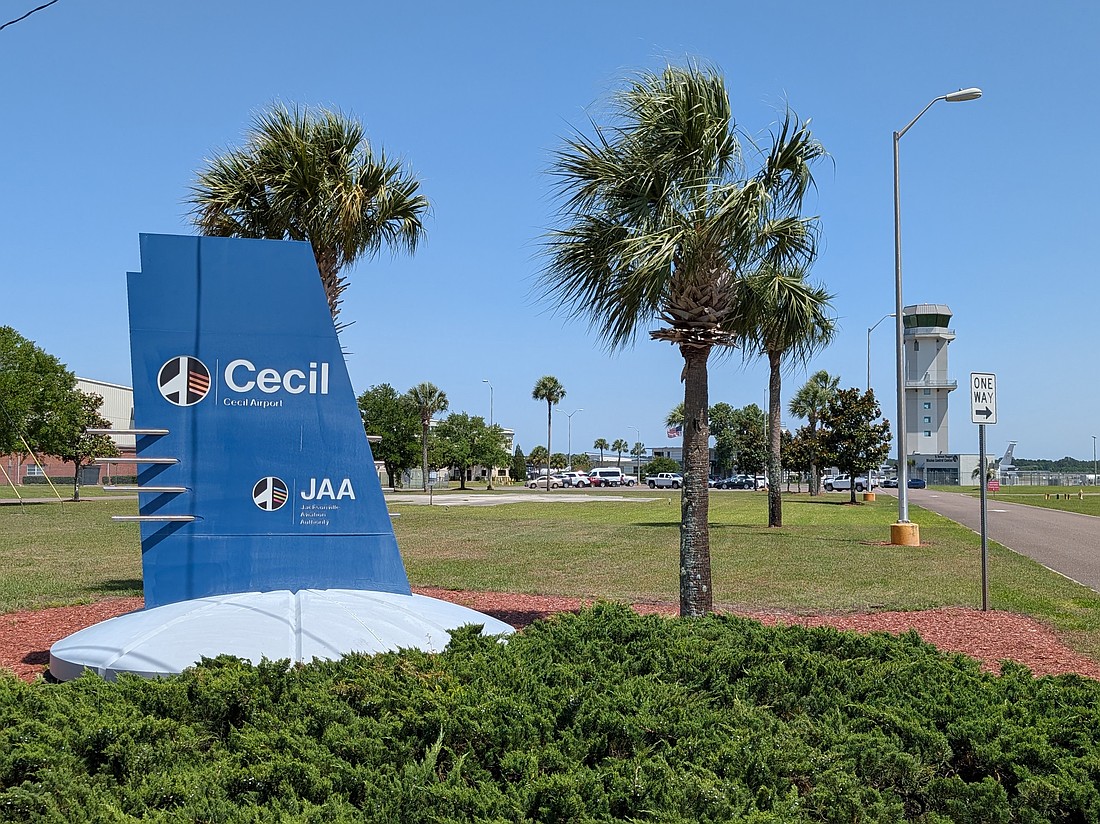
The Florida Senate unanimously approved legislation March 11 that amends the Jacksonville Aviation Authority charter, articulating the authority’s responsibility to attract business at Cecil Airport and to grow the former U.S. Navy base as an aerospace hub.
The approval was on HB 4045, which requires JAA to take responsibility for the economic development of Cecil Airport, including workforce development and training, infrastructure investment, job creation and technology innovation. The bill also assigns responsibility to the airport authority for establishing Cecil Airport as a regional, state and national aerospace hub in partnership with the city of Jacksonville.
The Florida House of Representatives approved the measure Feb. 11. While the Legislature is in session, Gov. Ron DeSantis has seven days to sign or veto the legislation now that it has cleared both chambers.
Cecil began as a military training facility in the buildup to World War II and eventually grew to become a facility with the third-longest runway in Florida.
JAA is seeking a consultant to guide an application for a federal re-entry license, with proposals due March 13, 2026.
A re-entry license is a Federal Aviation Administration authorization required for commercial spacecraft to safely return from Earth orbit or outer space, ensuring public safety during landing or impact. FAA review criteria include safety and risk, environmental concerns, financial responsibility and compliance.
In June 2025, Texas-based Otto Aerospace announced it would establish a manufacturing and production facility at Cecil to build its Phantom 3500 jet. The announcement came after Jacksonville City Council approved a $20 million incentive package for the aircraft company in the form of a 20-year, 75% Recapture Enhanced Value Grant. A REV Grant is a refund on added tax revenue generated by a new development.

Otto plans to relocate its headquarters to Jacksonville. In total, the move is expected to create about 1,200 local jobs. The company plans a $430 million capital investment in Jacksonville, aided by a $34.9 million Jacksonville Aviation Authority incentive package, including abatements and rent credits, plus the $20 million city-approved REV Grant.
The authority is preparing for Otto’s arrival with a request for qualifications issued Sept. 18, 2025, seeking a consultant to oversee the $22.5 million extension of Taxiway E at Cecil Airport.
The Jacksonville City Council granted final approval Oct. 14 to a resolution requesting that the Duval County Legislative Delegation ask the state Legislature to file the JAA charter bill.
The charter amendments followed an agreement between Council Vice President Nick Howland and JAA in which the authority said it would establish a joint committee with Council to focus on attracting aerospace companies to Northeast Florida, particularly to the Cecil site.
Howland, who introduced the resolution and is liaison to the JAA board, agreed in return to drop provisions that would have renamed the authority the Jacksonville Aviation and Aerospace Authority and required that two of its board members have experience in the aerospace industry.
The agreement came after JAA accused Council of interfering in its operations through Howland-led actions that included approval of a $13 million transfer in JAA’s 2025-26 budget for improvements to Cecil and related expenditures for aerospace development.
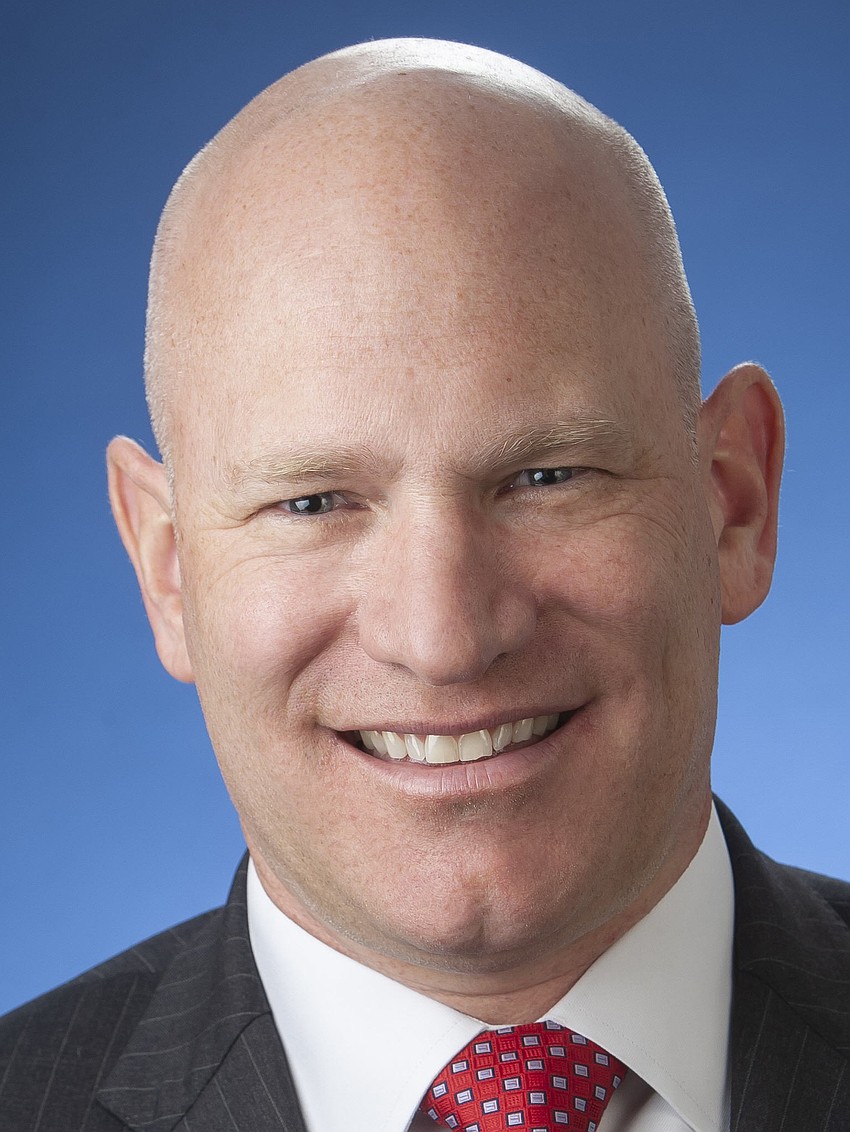
Howland applauded the spirit of cooperation between City Council and the Jacksonville Aviation Authority during the Oct. 14 Council meeting.
“Cecil Field is destined to have an outsized role in our state’s thriving aerospace industry and to emerge as a major job growth engine for Northeast Florida,” he said.
JAA, an independent authority created in 2001 by the state Legislature, owns and manages Jacksonville’s airport system, which in addition to Cecil includes Jacksonville International Airport, Jacksonville Executive at Craig Airport and Herlong Recreational Airport.
HB 4045 contains other provisions for JAA as well, including requiring the authority to provide annual presentations to the city on its economic development plan as well as its budget. Additionally, the bill revises the airport authority’s threshold for expenses that require a competitive bidding process, raising the limit from $50,000 to $325,000 for construction and repair costs, and from $25,000 to $65,000 for supplies, equipment, machinery and other material costs.