
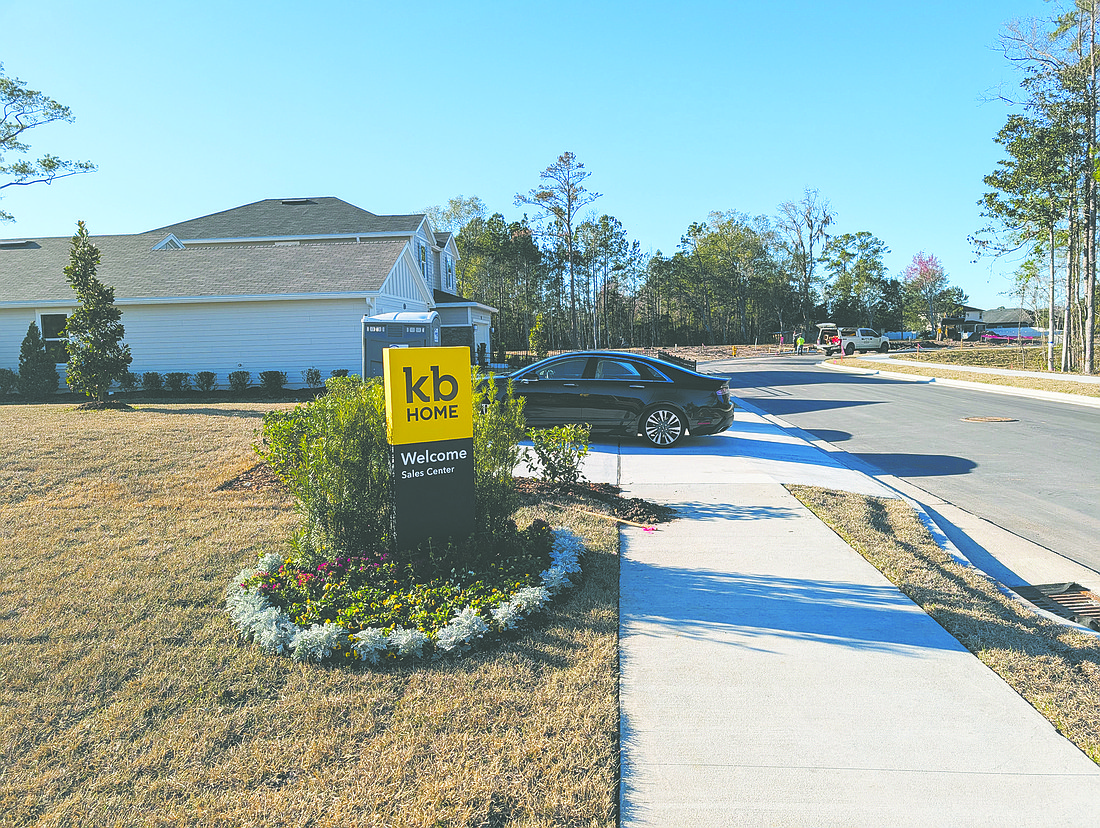
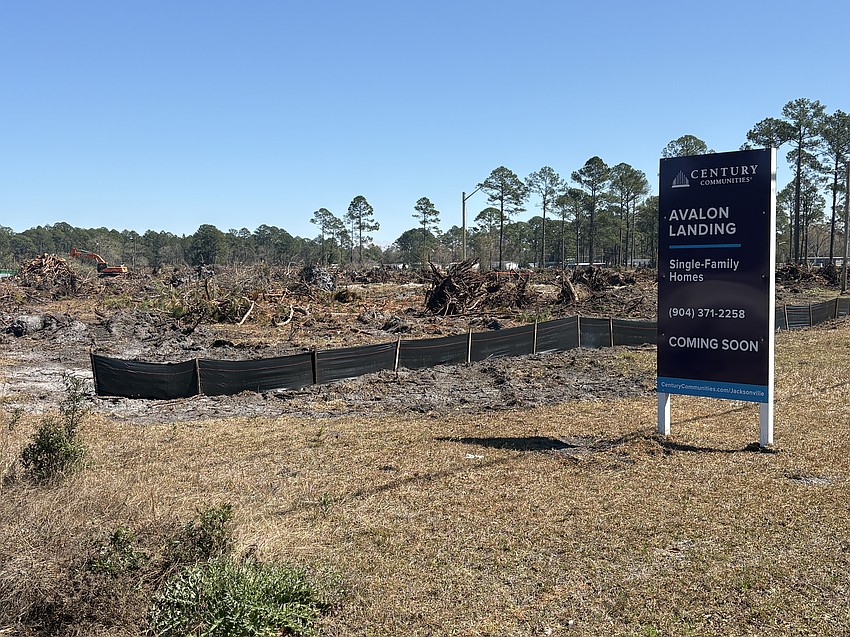
Two-hundred and twenty town homes on Starratt Road. Ninety single-family homes off Scarwin Lane. Forty-eight single-family homes on Yellow Bluff Road. Forty-seven homes on Cedar Bay Road.
That adds up to 405 single-family residences approved in North Jacksonville since January 2025, a period of contentious growth.
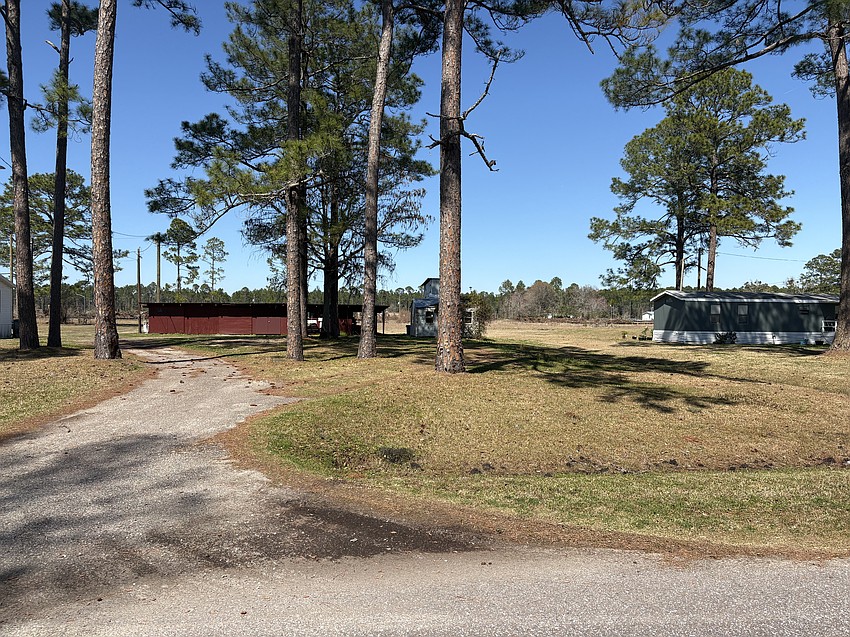
Little by little, residential development is taking up space in the historically rural area, the boundaries of which are generally considered the St. Johns and Trout rivers to the south, the county border to the north, Thomas Creek to the west and the Intracoastal Waterway to the east.
Many residents who were there first are not happy and spent hours saying so at meetings of the Jacksonville City Council and the Council Land Use and Zoning Committee.
In the past several years, Council has approved dozens of rezonings and land use amendments allowing for denser development in residential areas that have previously been characterized by single-family homes on large lots.
While the votes to allow development have reached near-unanimous approval from Council, community advocates have repeatedly told representatives the area cannot handle the growth it’s experiencing.
“I understand property rights, and you have a right to build. But there again, we don’t want to build something that’s determined to (be a) detriment to the community,” Council member Mike Gay said in an interview.
“We’re not saying not in my backyard, but we’re saying build something that’s compatible.”
Gay represents Council District 2, Jacksonville’s second-largest district, which is experiencing much of the growth. Many of the North Jacksonville residents who have spoken at public meetings live in Gay’s district, and praised him for his efforts to slow what they see as bad development.
Gay is one of two district Council members representing the area.
In a group interview with the Daily Record and during Council meetings, residents said they felt their comments went unheard by many Council members. They also aired concerns that their roads and schools could not bear the brunt of Jacksonville’s growing population.
Other Council representatives feel development is inevitable and that North Jacksonville residents will have to learn to deal with the consequences.
Those Council members say as Jacksonville’s need for housing grows, subdivisions and multifamily communities will be needed where the city has the land to build them.
Those Council members and others who share their opinion say that amid growth of Jacksonville’s population and shrinkage of inexpensive land that can be used for expansive subdivisions and mulitfamily communities, infill housing is an increasing need in North Jacksonville and elsewhere.
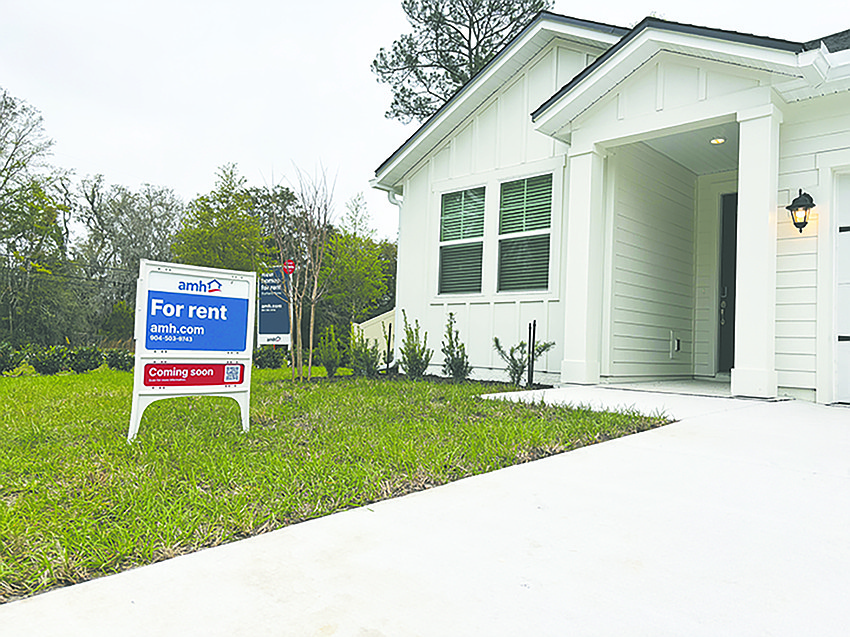
Low-cost bountiful land creates opportunity
Relatively cheap land can make the area attractive for developers.
Much of Jacksonville has already seen its share of residential development closer to the Beaches, Downtown or St. Johns Town Center. North Jacksonville, parts of which are closer to Georgia than Downtown, has the kind of open space that is harder to come by elsewhere in Duval County.
“It’s cheap land. It’s rural. You have the airport that’s close by,” said Council member Reggie Gaffney Jr., whose District 8 also includes part of North Jacksonville. “You have River City Marketplace close by. You have a lot. You have entertainment, you have shopping, you have the whole nine yards.”
Gay said that recently, property owners are giving up large swaths of land to developers. The transfers have prompted an increase in 60-foot lots in an area that traditionally saw 100-foot and acre-sized residential parcels.
“What we’re seeing is the property that’s been in the family, the heirs don’t particularly either live here or want to live here. There’s a difference in direction that they’re going,” Gay said.
“They’re wanting to cash out. You can’t blame anybody for wanting to capitalize on what their investments are.”
That land is a boon for developers, and for those who want to see more development come to Jacksonville.
“On my side, in eTown, there’s a lot of development happening, too,” Council member Raul Arias, who represents some of the Southside, said during a Council Land Use and Zoning Committee meeting.
“It’s not fair for me to tell the developers, ‘Hey, only RLD-100 because I don’t want any density.’ So the fact is, if people don’t want density, go somewhere else. It’s coming to Jacksonville.”
Residential low density land uses are typically denoted by the width of the property. Uses range from RLD-120, with 120-foot lot widths, to RLD-TNH, with 15-foot lot widths.
Arias apologized for those comments during the following week’s full Council meeting but affirmed he wanted to see more development in North Jacksonville.
The Daily Record requested interviews with multiple developers with area projects. None responded.
As Jacksonville grows, new residents head north
U.S. Census numbers show that Duval’s population rose from 864,263 in 2010 to 995,567 in 2020.
That isn’t stopping. A University of Florida study projects Duval’s population at 1.29 million by 2050.
To account for the growth, the city should expect to create 92,282 housing units between 2020 and 2045, according to its 2045 Comprehensive Plan, which guides the city through short- and long-term development goals.
While some Council members say they lean on the plan to advise their votes, it has its critics.
“Where does that compass come from? Everything is speculation,” Gay said.
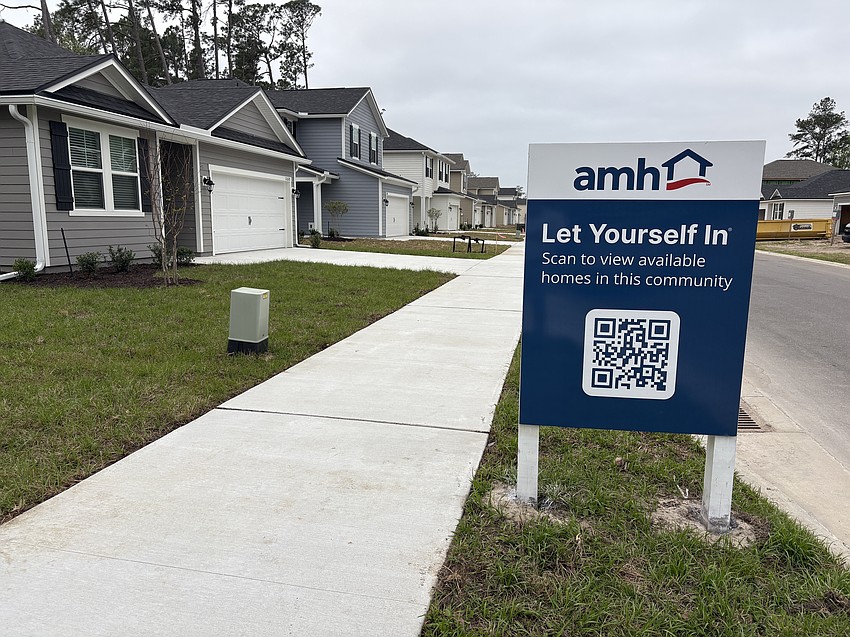
Many of the new developments on the Northside, Gay said, have not seen expected sales realized. Properties that were originally for sale have been bought by companies that turn around and rent them to tenants.
“To say you need to build X number of homes, I think you really need to grasp where we’re at, what the climate is of development,” Gay said.
John Greco lives on Amelia Bluff Drive, due east of Interstate 95 and just south of Nassau County. He, along with other residents who spoke to the Daily Record, protested developments on Starratt Road, Jake Road and Scarwin Lane during an October 2025 LUZ meeting.
“I think the 2045 plan is a good plan,” he said. “But if you’re going to look at every line item in there to try and figure out how to work around it and come up with a workaround and not follow it, or not have the courage to stand up and say, ‘No, we should follow what’s here,’ then it has no value.”
Residents say they aren’t against all development, and they shunned the term “NIMBY” – meaning “not in my backyard” – during an interview. Like proponents of developing the Northside, they said they want smart development that is more compatible with surrounding land uses and infrastructures capabilities.
They have not protested all developments. During an LUZ meeting in September that lasted more than six hours because of backlash to other developments, the committee recommended approval on a Northside development that would create 650 single-family homes along Pecan Park Road.
That application, which encompassed 344 acres east of I-95 near Jacksonville International Airport, moved through LUZ with no protest. The project’s attorney, T.R. Hainline of Roger Towers, credited the developer for working with the community throughout the process.
“One (development) is out adjacent to Amelia View. They’re putting half-acre lots in. There was no opposition to it, and it is basically booming,” Gay said.
“It’s doable, but it may not fit the business model of certain builders.”
“It’s not the fact that they’re developing, it’s just what they’re developing,” said Linda Mack, who lives on Preserve Landing Drive, in the same development as Greco. “Our roads cannot handle more than what we’ve got.”
Strain on infrastructure
A common concern among North Jacksonville residents: Their roads are not prepared to handle any increase in traffic that would come with new developments.
As the district Council representative, Gay has pushed for widened and improved roads to keep up with demand. The process has been slow, he said in an October interview.
In January, Council approved $6.96 million in spending for improvements to Pecan Park Road and Dunn Avenue improvements.
Residents also voice concerns their schools are overcrowded, and that bringing in more families will compound that.
North Jacksonville schools are not operating at full capacity. Duval County Public Schools reports that capacity of schools serving 15605 Yellow Bluff Road, the site of one protested development, are 67% for Louis S. Sheffield Elementary, 82% for Oceanway Middle and 90% for First Coast Senior High.
“They’re trying to build all these subdivisions, there’s not adequate schooling for our children,” Mack said. “I don’t have any children in school, so it shouldn’t matter to me, but it does, and there’s just so many things that need to be developed before all these hundreds of homes are being built.”
New development, while adding to demand on the North Jacksonville’s infrastructure, could bring the funds necessary to boost those needs through an increased tax base and fees paid by developers, although there are no guarantees those funds are routed to the area.
“Thankfully we have the infrastructure to support that growth – at least in most areas – and when roads need to be widened, like Normandy Blvd., we are able to make those improvements,” LUZ Chair Joe Carlucci wrote in an email.
“We are also getting a lot of mobility fees from new developments to fund things like sidewalks, parks and road resurfacing.”
Mobility fees are a type of impact fee paid to the city used to mitigate the transportation impacts of new development.
Residents: no one’s listening
LUZ meetings, at their quickest pace, include an hour or two of approvals of uncontroversial rezonings and land use changes.
At their slowest, like an October 2025 meeting that included several controversial North Jacksonville projects, hearings that start at 5 p.m. can stretch toward midnight.
As the hours add up, residents say, they feel Council members pay less attention to their concerns. Council members can sometimes be seen leaving the dais, looking at their phones or talking to each other during public participation.
“I certainly see the concern, but I can speak for most of my colleagues when I say we do listen and read just about all the emails we receive,” Carlucci wrote.
“Even if the committee member steps away and goes into the greenroom, we have the audio and video playing in there. Even in the bathroom! We are never tuned out even when we step away for a moment.”
Residents also feel Council’s ability to make proper decisions also is inhibited by the way projects are presented to them.
Council approves one rezoning or land use at a time, instead of creating a master plan for what North Jacksonville can or should look like.
There has been a push to give residents there more input into what happens in the area. In 2025, Gay advocated for creating the North Jacksonville Development Review Board, which would have taken the place of the city’s Planning Commission in reviewing projects in North Jacksonville.
“City Council, when they’re presented with these things, it’s like they’re presented with one piece of it,” said Karen Curtin, who lives on Sunset Landing Drive, in the same development as Greco and Mack. “They should look at this big picture. And our concern is they’re not looking at the big picture.”
“Sixty-five residents that came to the community meeting on (Ordinance 2025-0494 about Jake Road). There were 70 residents that came to (the community meeting on 2025-176 Scarwin Lane). There were 37 people (at Council) in opposition to those bills,” said Robert McFeeley, who lives on Preserve Landing Drive. “The Council is not listening. They don’t care about the community.”
Ordinance 2025-0176 passed 12-6, with members Tyrona Clark-Murray, Rory Diamond, Gaffney, Gay, Ju’Coby Pittman and Ron Salem voting no.
Ordinance 2025-0215, at Starratt Road, passed 13-5, with members Clark-Murray, Terrance Freeman, Gaffney, Gay and Chris Miller voting no.
Ordinance 2026-0494 passed 15-1, with Gay casting the lone no vote.
Future up for debate
Those on all sides of the North Jacksonville debate say they understand that development is inevitable.
They have differing opinions on what the area should look like as its population increases.
“It can’t just be larger lots only, because that’s what I’m hearing,” Arias said. “I want to see a little bit mixed-use, too. Some density, some townhouses, some condos.”
“What I would hope to see is a vibrant, flourishing, thriving district,” Gaffney said. “You have homes with lot sizes (for) kids to go play. You have the schools to accommodate these homes. Traffic is not light, but it’s not a long waiting period, too. … I would like to see my district where you can eat, play, sleep in the district, you don’t necessarily have to go by (St. Johns) Town Center, by Mandarin.”
“If you’re going to build a neighborhood, build it so that it’s similar to what we all have out here,” said JoAnn Greco, who lives on Amelia Bluff Drive.
“Jacksonville does not need to look cookie cutter all over it. I used to live in Orlando for 16 years. It is a concrete jungle right now. There is not a tree to be found because they have wiped it clean. I’m sorry, we don’t want to become that.”