
by Michele Gillis, Staff Writer
The FBI needs your help in identifying potential mortgage fraud, short sale schemes and mail fraud.
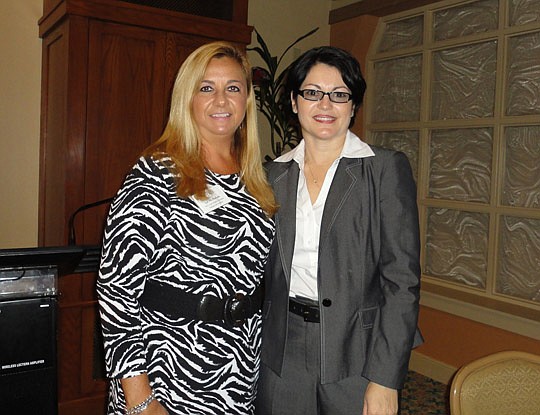
Special agent Diana Moyet-Trerotola spoke to the Jacksonville Women’s Council of Realtors at the San Jose Country Club last month on what scams to look out for and how people can protect themselves from potential scammers.
“The best way to help the FBI identify and prevent fraud in the real estate industry is awareness,” said Moyet-Trerotola. “If you know what the FBI is concentrating on. If you know the type of violations we are pursuing. If you know the type of perpetrating that we are targeting. If you know the emerging themes that we have within the FBI within the jurisdiction of mortgage fraud, that’s the best awareness we can provide to real estate professionals.”
Moyet-Trerotola said her door is open in case you are ever exposed to any activities that you find are suspicious and that you’d like to bring to the attention to the FBI.
“It’s always important to be the first or one of the first persons to contact the FBI with instances of suspicious activity because you can get entangled in a situation that we may not be very aware of and it can elevate to some form of criminal activity,” she said.
Though there is a lot of criminal activity going on as far as mortgage fraud, the FBI has to prioritize who they go after. Moyet-Trerotola said the FBI has made it a priority to target industry professionals, bank institutions and executives at financial institutions.
“We are targeting the most prevalent mortgage fraud schemes and the most egregious offenders,” she said. “In 2009 and 2010, cases involving the subprime mortgage crisis escalated. Even though our cases are sort of leveling off, the type of cases and type of fraud the perpetrators are involved in are more dynamic.”
It’s a revolving door, too — when criminals see what the FBI is after, they will find other ways to keep going with illegal activity.
“As a real estate professional, you can help us by letting us know when you see these new creative ways so we can direct our resources to those type of fraud and also we can take that information and alert the nationwide FBI of the emerging trends we are seeing,” she said.
Emerging trends the FBI is seeing include loan origination fraud and schemes targeting distressed homeowners.
“We are still seeing loan origination fraud to be the most prevalent mortgage fraud threat with approximately 80 percent of pending mortgage fraud contributing to loan origination fraud,” she said. “What we are also seeing is schemes targeting distressed homeowners are picking up. It’s about 20 percent of our cases.”
Moyet-Trerotola said mortgage fraud schemes employ some type of material misstatement, misrepresentation, or omission relating to a real estate transaction which is relied on by one or more parties to the transaction.
These schemes include:
• Foreclosure rescue schemes
• Loan modification schemes
• Illegal property flipping
• Builder bailout/condo conversion
• Equity skimming
• Silent second mortgages
• Home equity conversion mortgage
• Commercial real estate loans
• “Air loans.”
Foreclosure rescue schemes are prevalent now.
“What happens is the perpetrators are going to target distressed homeowners because they are vulnerable and that’s why victims get caught up in this because they are vulnerable and are looking for a way out,” she said. “These people tell them they are going to help modify their loan with lenders for a fee. It gives the victims some reassurance that they are going to get out of this situation. They collect advanced fees and perform little or no work and the victim loses their home anyway.
“What we are finding is that many of the perpetrators are attorneys or falsely represent themselves as associated with attorneys. They will trust the attorneys to bail them out of the situation.”
Fraudulent deed transfers are also another way perpetrators are targeting distressed homeowner.
“They tell the person to deed the house over to them and they can stay in the house, pay rent and they will pay the mortgage for them and eventually will allow the person to buy the house back from them,” she said. “They target low-income, elderly or individuals who are really at a loss as to what to do. The perpetrators don’t pay the mortgage payments, sell the home or secure a second mortgage on the home. They own the house and can do whatever they want to do. We consider this scheme very significant because it had a huge impact on the victims.”
The third type of scheme Moyet-Trerotola discussed was a short sale scheme.
“This type of fraud involved a lot more players,” she said. “You have a perpetrator who recruits a storefront buyer to purchase a property. He secures a mortgage for the 100 percent of the value of the property. He has the storefront buyer refinance the home and secure $30,000 for repairs. He doesn’t do the repairs and pockets the money. He doesn’t make any payments and the storefront owner can’t make the payments.
“The storefront owner goes to the bank and says they want to sell the home in a short sale and, by the way, I have a buyer. The buyer is the original perpetrator who approaches the bank and buys it for less than the bank wants. Then he sells the home for full value of the property. There are a lot of moving parts to this. These are the type of cases we like to pursue.”
Moyet-Trerotola said it is very important to immediately alert the FBI if you are approached to be a part of any kind of suspicious activity.
“It’s important for you to understand because as real estate professionals you may be put in a vulnerable position where you see something like this happening and you really need to walk away and call someone,” she said. “Your participation in any way can lead to charges against you.”
Main charges she discussed regarding mortgage fraud include loan fraud, conspiracy and mail fraud. These activities can earn you from five years up to 30 years in jail and or fines of up to $1 million.
“If you participate in criminal activity, you can be held accountable,” she said.