
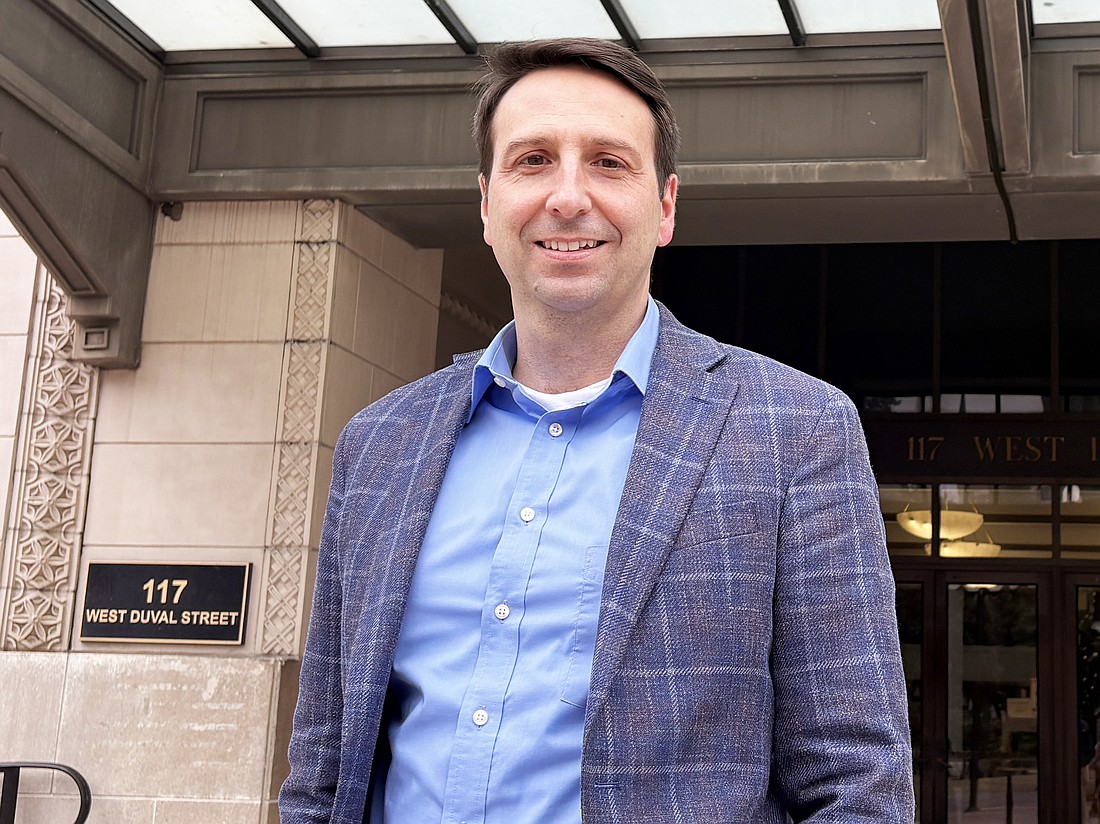
For decades, Jacksonville residents were told that Downtown revitalization would reach a tipping point when 10,000 people were living in the city’s core.
The new head of the Downtown Investment Authority offers a different message.
“I don’t know if it’s the magic number,” CEO Colin Tarbert said of the 10,000 threshold.
Tarbert, who joined the DIA in August, said he believes a key to success is creating critical mass in and around what is traditionally considered Downtown, versus the entire footprint that includes Brooklyn and the Southbank.
“If you build RiversEdge (a mixed-use development on the Southbank) and on the Duval County Public Schools site, how much is that really going to transition to Laura Street? I’m not sure,” he said.
Laura Street is in the heart of the Downtown core on the Northbank.
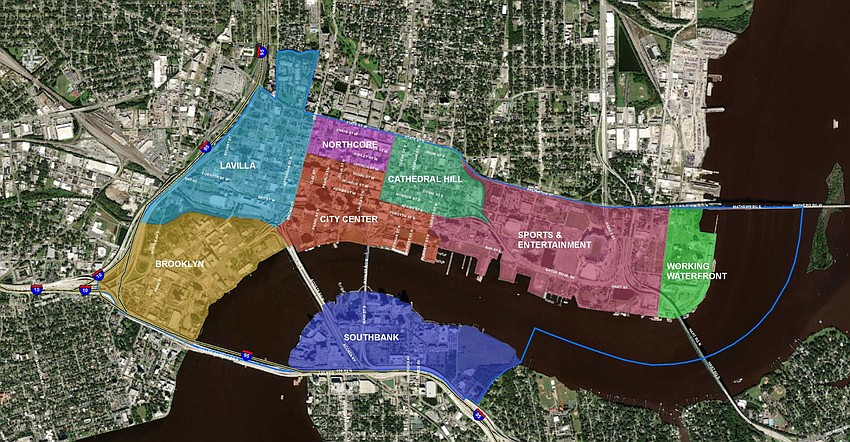
Tarbert said he’s focused on doubling the population to 8,000 in the area spanning LaVilla, City Center, NorthCore, Cathedral Hill and the Sports and Entertainment District.
His objective is to create adequate support for a sustainable environment of restaurants, nightlife, retail, parks and activities.
As in other cities that have undergone downtown redevelopment, the idea is to create a wheel effect in which greater activity and an improved quality of life draw in more residents, employers, visitors and commerce.
Reaching Tarbert’s goal will require development of about 2,500 residential units in his six target districts, he said. About 750 are under construction or starting to lease to renters.
“If we’re able to do nine or 10 (more) apartment projects in that geography over the next couple of years, I think that would be pretty meaningful,” he said.
Tarbert, who came to the DIA after leading the Baltimore Development Corp., said he believed the goal of 10,000 residents was easily achievable and that the city should aim at least twice as high.
The population across all eight Downtown districts is nearing 9,000, according to the nonprofit advocacy organization Downtown Vision Inc.
Those residents are spread across 3.9 square miles stretching from Brooklyn on the west to the Working Waterfront east of EverBank Stadium, and including the Southbank.
“A typical Downtown is going to house somewhere between 2% and 5% of the city’s population,” Tarbert said.
“So if you do those numbers, you’re somewhere between 20,000 and 50,000 people.”
His inherited landscape
Tarbert discussed the population target and other topics during an hourlong interview Dec. 1.
In June, the DIA board selected him from among three finalists to replace Lori Boyer, who retired after leading the DIA since 2019.
He spent about 20 years in Baltimore, where his positions included serving in the Baltimore mayor’s office as deputy chief of strategic alliances and deputy mayor in the Office of Economic & Neighborhood Development.
In Jacksonville, he’s being paid $297,000 a year to push the city over the hump in its decades-long effort to revitalize Downtown.
His arrival comes amid signs of progress, for which he credits Boyer, her staff and city leaders.
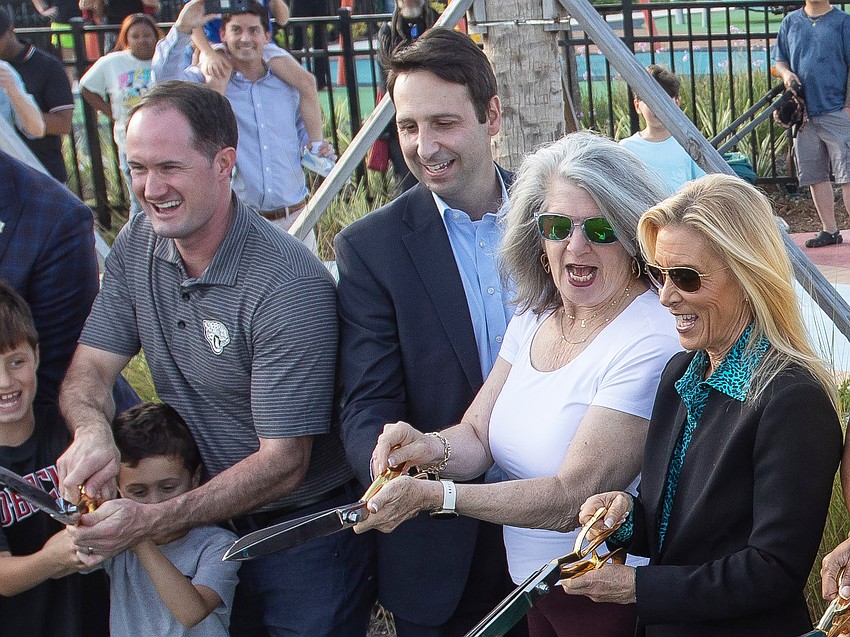
Public projects are coming to completion, including the first half of the Riverfront Plaza park on the former site of the Jacksonville Landing on the Northbank and a set of public parks in the RiversEdge project on the Southbank.
Private developments also are progressing, such as the Gateway Jax development, the Whole Foods-anchored One Riverside project on the former site of The Florida Times-Union, and Iguana Investments’ Shipyards project, comprising the Four Seasons Hotel and Private Residences, plus One Tower Court, the Jacksonville Jaguars headquarters building.
Not all trends are positive. Office vacancy remains well above pre-pandemic levels because of remote work. Further vacancies are on the horizon, with Downtown employers such as Citizens Property Insurance Corp., Regency Centers and Duval County Public Schools announcing relocations to the suburbs.
Some Jacksonville City Council members are working to rein in Downtown incentives, particularly completion grants and other forms of assistance drawn from city operating funds as opposed to property tax breaks.
To Tarbert’s point about Downtown’s population, the vision of an influx of retail and a thriving seven-day-a-week bar-and-restaurant environment hasn’t happened even as the residential population nears 10,000.
Downtown Vision Inc. lists Downtown’s population at 8,941.
Tarbert said that in his four months on the job, his view of Downtown’s challenges hasn’t changed.
“My main concern is timing,” he said.
“We’ve got to move faster in general, whether it’s DIA or the city. We don’t want to miss an opportunity. While we’ve got projects lined up and we’ve got developers and investment, I think if we hesitate or we don’t move through some of these really catalytic projects, we might not ever get to where we want to get to.”
Council concerns
One factor that could influence Tarbert’s pace is the extent to which Council will continue to support taxpayer-supported incentives for projects.
Members Will Lahnen and Nick Howland, in particular, have advocated for the city to instead use Recapture Enhanced Value Grants, which are property tax refunds and do not directly draw down the city’s general fund.
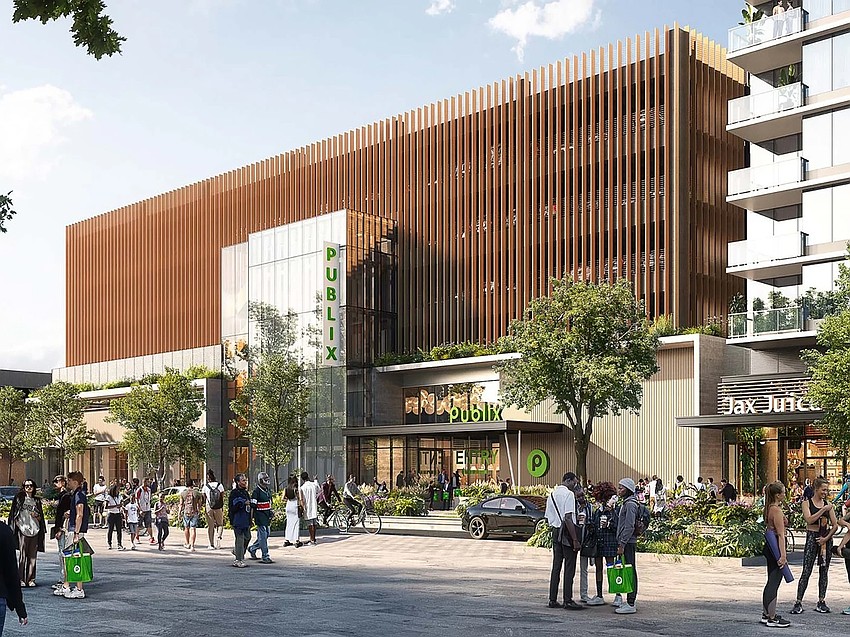
During a Nov. 24 meeting of the Council Special Committee on the Future of Downtown, members questioned Tarbert on a potential request for about $48 million in incentives – including a $28.5 million completion grant – from the Gateway Jax development partnership for the Publix-anchored mixed-use tower it has proposed on the site of the former First Baptist Church main auditorium.
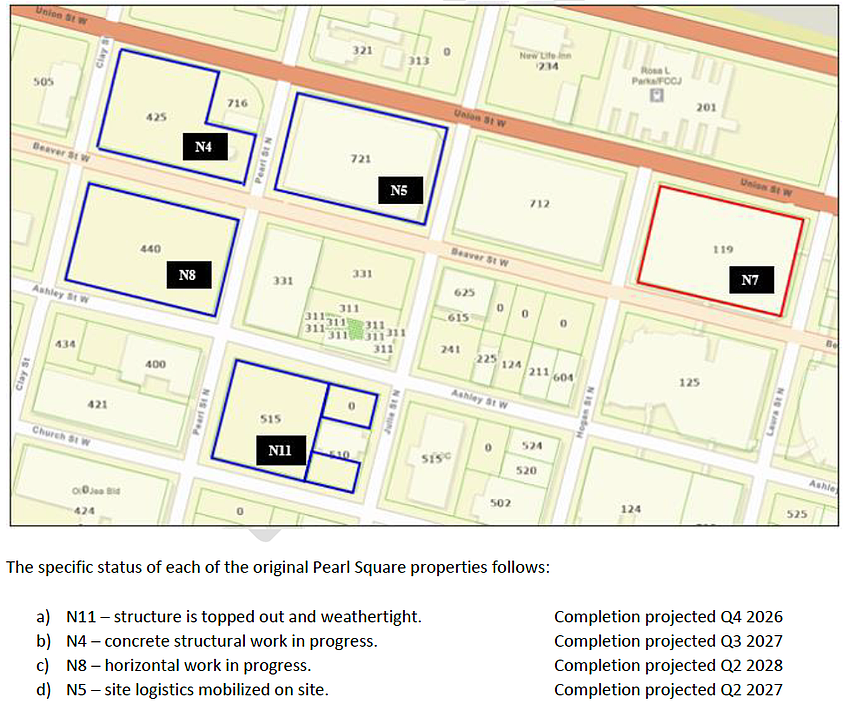
Committee members, echoing concerns raised in relation to other projects, expressed that the city was overcommitting on completion grants amid upcoming payouts for projects such as $38.95 million for Jaguars owner Shad Khan’s Shipyards development, $39 million for Miami-based Related Group’s proposed 25-story Southbank residential tower and grants for Gateway itself. Those include $38.95 million in completion funding in a $98.58 million incentives package for four blocks of Pearl Square.
Tarbert said his impression was that in past years, Council tended to approve projects on their individual merits without necessarily considering their cumulative effect on future budgets.
Now, he said, Council members are seeking to make decisions on projects with an eye toward long-term budget impact.
That shift began in 2022, when Council member Ron Salem requested that Council auditors start maintaining a spreadsheet showing when project completion grants would come due.
During the Nov. 24 meeting, Salem requested that auditors provide that information for any Downtown incentive discussion by Council and its committees.
Committee Chair Joe Carlucci urged Tarbert to present “the whole picture” to Council about incentive commitments.
“I don’t want to see this little snippet and then you bring another $10 million, another $10 million, another $10 million. I want to know the total dollar amount,” he said.
On Dec. 17, the DIA board voted unanimously to recommend approval of a $49.66 million incentive package for the Publix-anchored Gateway Jax project, sending it to Council.
Lahnen reacted by saying he hoped the city and Gateway Jax could reach “a REV-grant only solution instead of using unbudgeted general fund dollars that are funded by all of Jacksonville’s taxpayers.”
‘I’m trying to paint a larger picture’
Tarbert said he understood the concerns. He said the DIA would cooperate by providing information and strategic recommendations on the types and locations of developments best worth pursuing.
At Tarbert’s direction, DIA staff is preparing to examine its incentives programs to determine whether updates are needed and whether priority areas need to shift.
For instance, if residential redevelopment is more important than hospitality or commercial, the DIA may adjust its programs to spur its investment.
“I’m trying to paint that larger picture, then figure out how much money we have to do incentives,” he said.
“And then, we’ll hopefully have a collaborative effort (with Council) to figure out where we’re going to place those incentives to get the most bang for our buck.”
Tarbert said that although he would like to see the DIA offer nothing but REV Grants, Downtown’s redevelopment hasn’t reached a point where those incentives alone will bring projects out of the ground.
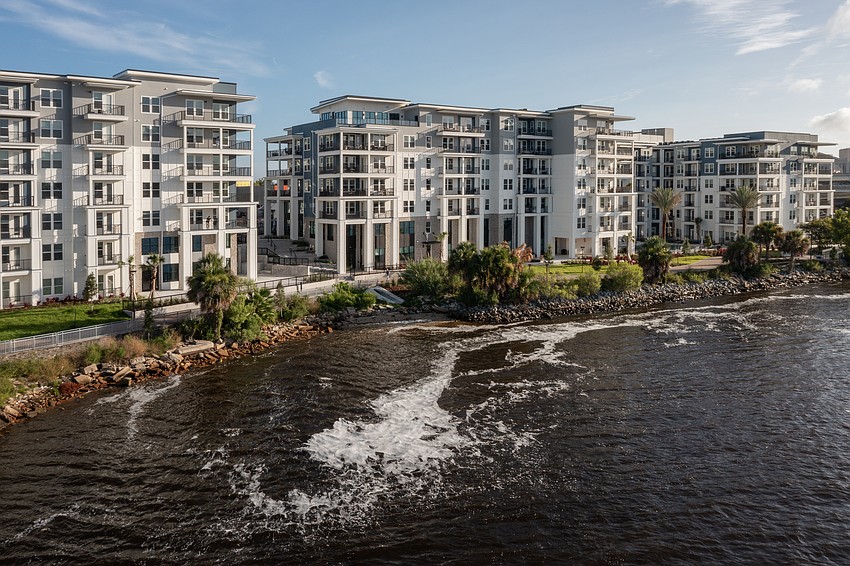
He said that will require a higher return on investment for developers than Downtown offers today, which he believes will happen when major developments and improvements like Gateway Jax, the One Riverside mixed-use development and Downtown riverfront parks come online.
The completion of those projects will drive up rents, he said, making greater up-front investment by developers financially viable and reducing the need for completion grants.
“We will get there,” he said.
“It’s just a question of when. It could be three years from now. Could be five years from now. Hopefully it’s not more than 10 years from now.”
His stamp on the DIA
During the hiring process, Tarbert told DIA board members his priorities included honing the organization’s promotional and marketing messages to show the community what it does, how to connect with the organization and why Downtown investment is a value proposition for investors.
He took a step in that direction by starting what he called a “guerrilla marketing” campaign on LinkedIn, where he began posting a few items per week about Downtown redevelopment projects and the DIA.
“I think it is really important to build a following of people who care about Downtown,” he said, adding that his goal was to build a “support base” for projects and incentives.
He said the DIA’s account had grown from fewer than 200 followers to nearly 1,300 since he began his posts.
He said he chose LinkedIn because of its appeal to business-related users.
A long-term strategy is to use social media to help promote investment opportunities Downtown and attract out-of-market developers.
Tarbert is showing other signs of not taking a business-as-usual approach to leading the DIA, including leaving open a vacant communications and marketing position and instead collaborating with Downtown Vision Inc. to fill those needs.
He also is taking a measured approach to an upcoming vacancy in a key position. Steve Kelley, the DIA’s director of Downtown real estate and development, announced he is retiring effective Jan. 2.
Kelley’s duties include underwriting the DIA’s redevelopment agreements and taking a lead role in policy development.
At Tarbert’s direction, the DIA is seeking to contract with a financial consultant to study its programs and projects.
“Hopefully, we can onboard that consultant in the first quarter of the year to help us through projects as needed,” Tarbert said.
“That’s kind of the stopgap measure (for Kelley’s position), and then we’ll decide if that suffices to fill the gap with Steve, or whether or not we want to bring on another person in Steve’s role.
“I just want to see where it lands with the financial consultant and how efficient we can be with them, and whether or not we need a full-time staff person.”