

Weak demand for freight transportation continues to impact two big Jacksonville-based companies, CSX Corp. and Landstar System Inc.
Heading into a new year, analysts say the outlook for freight traffic remains uncertain.
“After 3.5 years of freight market doldrums, the demand picture doesn’t look any less cloudy, in our view,” Stifel analyst J. Bruce Chan said in a Dec. 16 report on trucking stocks.
“With numerous headfakes at a cycle inflection over that time, industry stakeholders are understandably cynical about calling the next one,” he said.
“Demand in 2025 was stop-start due to tariffs and other variables and there are some signs that point to a better 2026, though we acknowledge that these signs have been misleading in the past 18 months,” Morgan Stanley analyst Ravi Shanker said in a Dec. 8 report on both trucking and railroad stocks.
Shanker has a positive outlook for 2026, upgrading his rating on the entire freight transportation industry from “in-line” to “attractive.”
“We believe risk-reward is the best it has been since 2020, even if the coast is not entirely clear,” he said.
Shanker and Chan both cited reduced supply, as some players exit the trucking business, as a factor that could help the remaining freight companies.
“Excitement comes from regulatory-driven supply catalysts next year, which could take 5%-20% of lingering overcapacity out of certain markets, finally bringing hope of a trucking spot rate inflection after 3.5 years of malaise,” Chan said.
Both analysts have cautious views on trucking company Landstar, with Chan rating it at “hold” and Shanker at “equal weight.”
“Landstar’s 2026 story will center on pricing strength fueled by tightening industry supply, though the stock’s performance will hinge on whether rate gains can offset ongoing insurance cost pressures and only modest volumes,” Shanker said.
“Expect modest growth in ‘26 with upside dependent on a truckload recovery and improved agent productivity, rather than multiple expansion,” Chan said.
Shanker also rates railroad company CSX at “equal weight.”
“CSX will be on investors’ radar in 2026 on two fronts. 1) New CEO (Steve) Angel comes in with high expectations and with the expensive and disruptive growth projects behind them, the market will be expecting volume wins, especially if the upcycle shows up, and 2) what role CSX plays in Rail M&A, both current and potential,” he said.
RBC Capital Markets analyst Walter Spracklin rates CSX at “outperform.”
“We still see opportunity in CSX shares, but are mindful of the weaker than expected Q4,” Spracklin said in a Dec. 18 report on the major railroads.
“Operationally CSX has really turned it around, and we therefore expect the core CSX business to perform much better looking ahead regardless of what happens with the UNP/NSC merger,” he said.
The July merger agreement between Union Pacific Corp. and Norfolk Southern Corp. to create a transcontinental railroad will continue to be a hot topic for the industry in 2026 as the two companies seek regulatory approval for the deal.
One other Jacksonville-based company covered by Chan is Proficient Auto Logistics Inc., which transports automobiles from manufacturers to dealers.
Chan rates it as a “buy” and lists it as one of his “best ideas” among truckload carriers.
“Higher volatility name but could see material upside if auto demand and supply chain rebalancing improve, especially at current valuation,” he said.
GEE Group Inc. reported lower revenue and a net loss for the fiscal year ended Sept. 30, as the slow labor market continues to impact the Jacksonville-based staffing company.
“We continue to face very difficult and challenging conditions in the hiring environment for our staffing services, which have been ongoing since the second half of 2023, and throughout 2024 and 2025,” CEO Derek Dewan said in a Dec. 18 conference call, according to a company transcript.

“These have stemmed from what is now acknowledged as over hiring that took place in 2021 and 2022, in the immediate aftermath of the pandemic, and the macroeconomic uncertainty, interest rate volatility and inflation that followed,” he said.
“These conditions have produced a near universal cooling effect on U.S. employment, including businesses’ use of contingent labor and the hiring of full-time personnel.”
A relatively new factor affecting the staffing industry is artificial intelligence.
Dewan said AI “is gaining ground at an accelerated pace and is further complicating the HR and project planning opportunities and risks facing virtually all companies, including consumers of our services.”
GEE Group reported revenue for the fourth quarter ended Sept. 30 fell 10% to $23.5 million and revenue for all of fiscal 2025 also fell 10% to $96.5 million.
The company had a net loss from continuing operations of $34.7 million in fiscal 2025, which included noncash impairment charges of $22 million.
Chief Financial Officer Kim Thorpe said despite the net loss, GEE Group had positive free cash flow for the year and remained in a strong liquidity position with $21.4 million in cash on its balance sheet at the end of the fiscal year.
“Our goal is to return to profitability in early-to-mid fiscal 2026,” Thorpe said.
“As the uncertainty and volatility currently gripping our economy and labor markets begins to subside, I am very confident that we are positioned to meet the increased demand from existing customers and win new business,” Dewan said.
Treace Medical Concepts Inc. announced Dec. 18 it entered into a five-year $175 million loan agreement with credit funds managed by SLR Capital Partners.
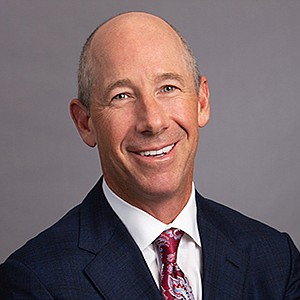
The Ponte Vedra-based company, which offers surgical treatment products for bunions and related midfoot deformities, has been reporting disappointing sales growth for the last year and a half and is developing new products to treat foot issues.
“This financing gives us a capital-efficient vehicle, helping our business stay well-capitalized as we work to expand our market and strengthen our competitive position,” CEO John Treace said in a news release.
Treace Medical said the completion of the financing gives it total liquidity, including cash and unused availability under the credit facility, of about $165 million.
A second analyst downgraded his rating on Regency Centers Corp., despite a strong performance by the Jacksonville-based developer of grocery-anchored shopping centers.
J.P. Morgan analyst Michael Mueller downgraded Regency from “overweight” to “neutral” in a Dec. 18 report by the firm on real estate investment trusts.
“This change is simply a ‘stock call’ as we continue to think that Regency has one of the best platforms and long-term growth prospects in the overall REIT space,” Mueller said in the report.
Mueller’s downgrade follows a Dec. 5 downgrade by KeyBanc Capital Markets analyst Todd Thomas from “overweight” to “sector weight,” saying Regency’s outperformance among its peer group left it with limited upside.
Regency experienced a smaller impact than other REITs from bankruptcies and store closures by major retail chains. Mueller sees fewer bankruptcies affecting strip mall operators in 2026.
“This dynamic, in our view, could level the playing field somewhat between grocery-heavy/high quality portfolios such as what Regency owns, and the ‘cheaper’ pack,” he said.
“Putting the rating change aside for a moment, nothing on-the-ground has changed with the Regency story and we still see the stock as having the setup for long-term outperformance,” Mueller said.
“It owns a high quality portfolio in markets with strong demographics and it has a unique growth differentiator with its self-funded development (and redevelopment) program that arguably gives it a head start on external growth and NAV (net asset value) value creation.”
Regency announced Dec. 16 it is expanding its board of directors by adding the CEO of another publicly traded real estate operator.
Regency is adding Mark Parrell, CEO of Equity Residential, to the board effective Jan. 1.
Chicago-based Equity Residential owns and manages apartment communities.
“His proven leadership and extensive experience in the real estate business, including as both CEO and CFO of a sector-leading S&P 500 commercial residential real estate company, will be invaluable as we continue to execute our strategy and create long-term value for our shareholders,” Regency Executive Chair Hap Stein said in a news release.
The addition of Parrell expands Regency’s board to 12 directors.
Rayonier Advanced Materials Inc., or RYAM, has lost money from continuing operations for more than six years but RBC analyst Matthew McKellar is projecting profitability in 2026.
He rates the Jacksonville-based maker of cellulose specialties products at “outperform.”
“While slow global growth is weighing on specialty cellulose demand, Rayonier Advanced has managed to increase prices, and we think recent industry capacity reductions could drive stronger pricing and CS volumes over the medium term,” McKellar said in a Dec. 18 report on the paper and forest products business.
“We expect paperboard and HY pulp markets to be somewhat soft in 2026, but see an attractive opportunity for upside with time given a more tensioned specialty cellulose market and new growth from the company’s Biomaterials business,” he said.
McKellar rated timber and real estate company Rayonier Inc., which split up with RYAM in 2014, at “sector perform.”
“We expect that the U.S. housing market will remain the main demand driver for the company’s timberlands and real estate businesses,” he said.
Rayonier announced an agreement Oct. 14 to merge with Spokane, Washington-based PotlatchDeltic Corp.
McKellar also rates PotlatchDeltic at “sector perform.”