
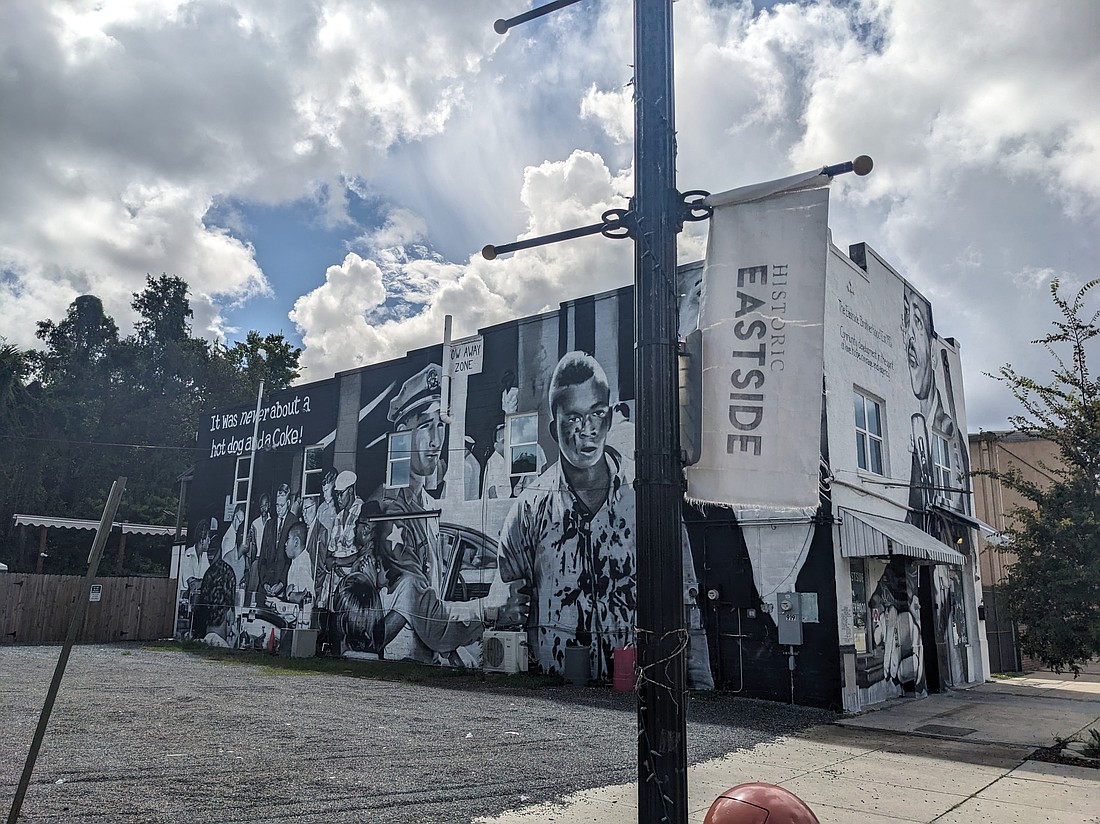
Two Jacksonville City Council committees endorsed changes to the plan for granting $40 million of public funding in the city’s community benefits agreement with the Jacksonville Jaguars to the Eastside neighborhood for affordable housing, workforce housing, economic development and homelessness services.
After the city’s Office of the Inspector General warned Council members that their original plan to create a nonprofit to disburse the funds could create opportunities for waste, fraud and abuse, the two committees voted to recommend a proposal for the city disburse the funding itself.
Council approved the CBA in 2024 in connection to the city’s agreement with the Jaguars to provide $775 million in public funding toward the $1.4 billion transformation of EverBank Stadium into the team’s “Stadium of the Future.”
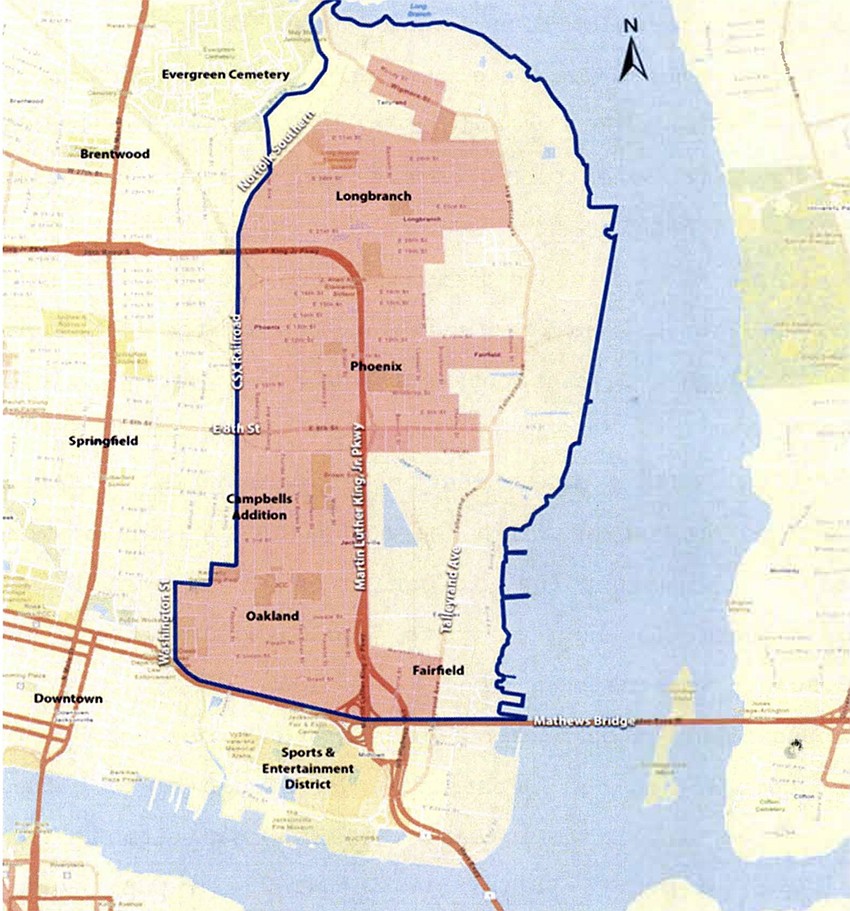
As part of the CBA, the city committed to funding the Eastside with $40 million over seven years, with no fewer than $4 million granted in any year. The Jaguars committed to contribute $2.5 million each year for the next 30 years.
Ordinance 2026-0036, which was introduced by the Council Special Committee on the Community Benefits Agreement 2.0, called for establishment of a 501(c)(3) nonprofit to disburse the city funding.
On Feb. 2, a substitute for that ordinance, introduced by Council member Ron Salem, cleared both the Rules Committee and the Neighborhoods, Community Services, Health and Public Safety Committee on 6-0 votes. Three members who were on the special committee for the CBA voted for Salem’s substitute.
The bill, as substituted by Salem, is scheduled to appear before the Finance Committee before a full Council vote on Feb. 10.
Like the earlier legislation, the substitute would support organizations operating or administering programs, services, projects, or initiatives in affordable housing, workforce housing, economic development and homelessness mitigation.
The substitute bill would follow the model of the city’s Opioid Settlement Proceeds Grants Program, which distributes funding from a city office.
Under Salem’s proposal, a board made up of nine members appointed by the mayor and Council president, along with one representative from the Jaguars, would score grant requests and award funding through the Eastside Community Grants Program.
That element of the substitute is the same as the original, but under the new proposal, the city’s Grants and Contract Compliance Division would be responsible for ensuring the funding was distributed as intended by the board. Under the original bill, the nonprofit would have had the oversight authority.
The nonprofit model proposed by the special committee was similar to an approach that generated mismanagement issues in the past, the city’s inspector general told committee members. The inspector general, Matthew Lascell, did not provide specific examples of mismanagement.
Under both proposals, organizations can request grant funding for projects that would benefit the Eastside. Requests would be scored by the grants committee before they would be awarded.
“I looked at this as a potential for having the (waste, fraud and abuse), where when you lose control or oversight of the dollars, sometimes bad actors do bad things,” Lascell said about the nonprofit model. “I’m not saying that that’s the case here. I just would like something in place where we have a little more control.”