
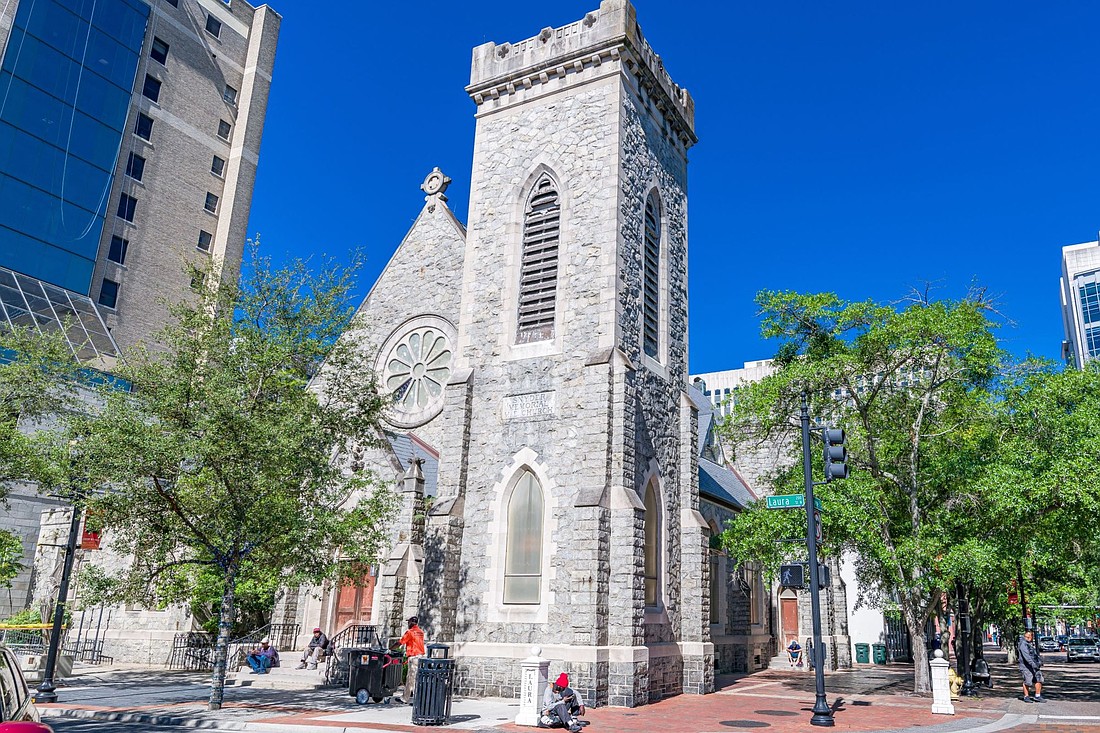
The Jacksonville Downtown Investment Authority board voted Feb. 18 to take a final preparatory step toward offering the city-owned historic Snyder Memorial for redevelopment proposals.
According to DIA documents, the former church at 226 N. Laura St. has not been used for religious services since the 1970s, and later was deconsecrated by United Methodist Church. It is on the National Register of Historic Buildings and has been designated as a local historic landmark by the city.
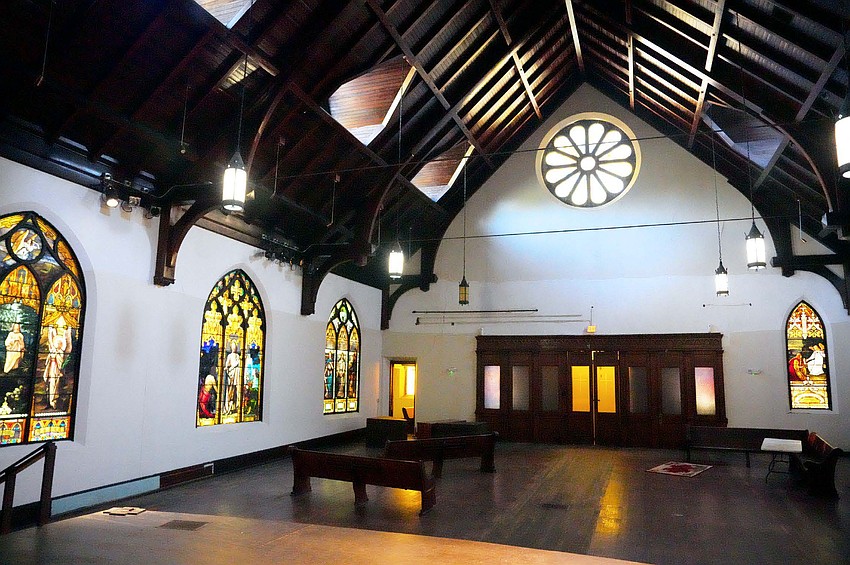
The board voted 9-0 on a resolution to establish a predisposition marketing period to garner interest from prospective developers and give them time to craft proposals for adaptive reuses of the 122-year-old building. The resolution also establishes a conceptual framework and evaluation criteria for a future notice of disposition.
DIA Resolution 2026-02-01 authorizes Cushman & Wakefield to assist the DIA during the predisposition period in soliciting proposals for sale or lease of the structure, which the city has owned since 2004.
As outlined in the scope of services for the proposed disposition, the DIA would seek a “qualified, experienced partner to re-develop/activate the Site, and seeks a development team that aligns with the DIA’s development vision” for the property.
Disposition is the process by which a city-owned property is placed in the hands of a private owner, returning it to the property tax rolls.
As outlined in the resolution and DIA documents, the predisposition marketing period would be followed by the city publishing a 60-day notice of disposition to solicit formal redevelopment proposals.
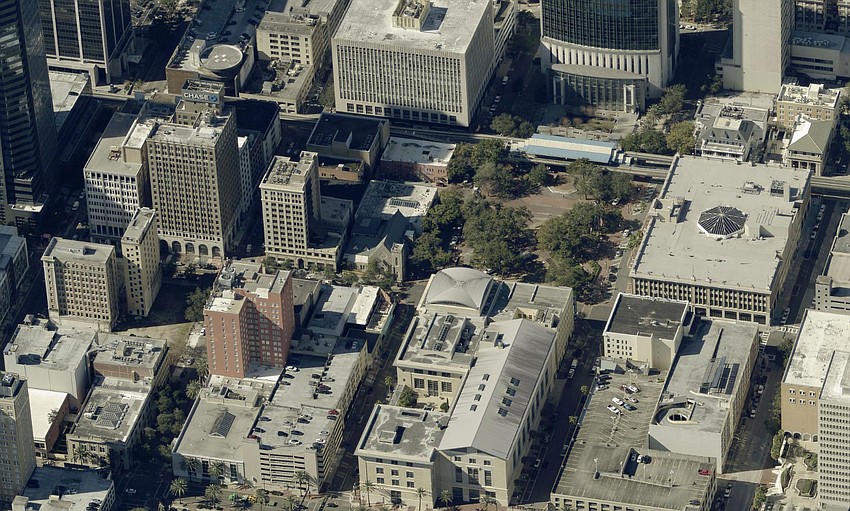
The DIA says it will seek a development that enhances the church’s surroundings, including James Weldon Johnson Park and the Main Library, respects the historical integrity of the church and “provides for street-level activation (e.g. retail, restaurant, art gallery, music hall).”
Ranking factors would include respect for the historical significance of the former church, the developer’s financial capacity and the strength of their business plan or pro forma, including an estimated construction schedule.
If the property is put up for disposition, the winning bidder could receive up to $4.5 million in incentives to redevelop it.
In November 2025, Jacksonville City Council approved a $1 million budget transfer to add to the $3.5 million already budgeted for incentives.
The DIA says the building has undergone $430,000 of structural repair work and a $600,000 project to install a fire suppression system.
The church was part of the first development wave Downtown after the Great Fire of 1901. It was acquired by the city in the 1970s, then later sold but bought back by the city in 2004.
In the 1960s, the church was used as a meeting place for Black and white religious and civic leaders for discussions about desegregating Jacksonville.
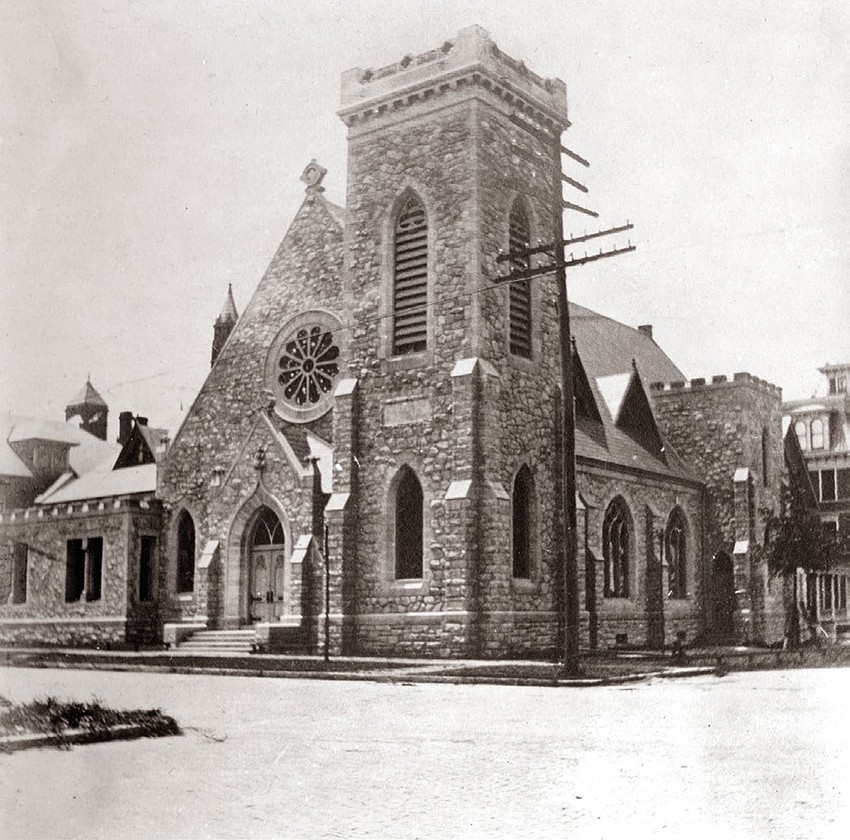
The DIA says construction of the church began in October 1902, with the first service held in December 1903. The building was enlarged in the 1910s.
In 2000, the city provided a $650,000 interest-free loan to St. Johns River City Band to purchase the building for offices and performance space. The St. Johns River City Band fell into arrears on the deal and requested that the city forgive the debt.
A plan to sell the building for $1.3 million to pay down the loan and satisfy construction liens fell through when the building failed to attract enough interest from qualified buyers.
After that plan fell through, the city took ownership.