
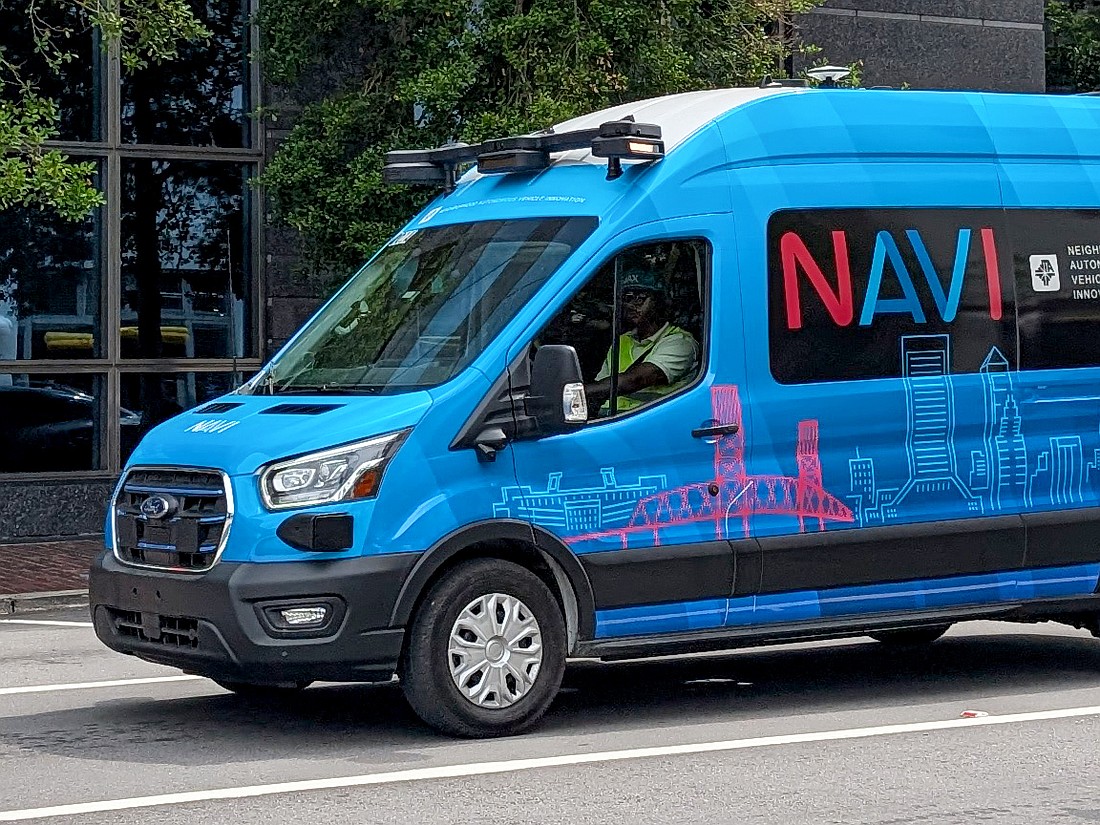
The Jacksonville Transportation Authority has begun seeking proposals for a pilot program that could include retrofitting JTA buses and passenger vehicles with autonomous technology, an early indication of interest in expanding self-driving public transit beyond Downtown.
In the request for proposals, filed as P-26-014, JTA says it “is soliciting innovative technology solutions through a structured Test & Learn Research & Development (R&D) program.
“This includes but (is) not limited to the following Areas: Advanced Autonomous Vehicle Operations, Smart Connected Infrastructure, and related Safety Technologies that will be appropriate for the Pilot deployment of the AVs and technology surrounding it in support of the Ultimate Urban Circulator (U²C) Project in the Jacksonville urban core,” the RFP reads.
“The JTA sees autonomous technology as an important part of the future of mobility solutions,” Taniel Koushakjian, a JTA spokesperson, wrote in a statement.
“While we are committed to ensuring a safe and successful deployment of AVs in downtown Jacksonville through the U2C program, we are also exploring opportunities to deploy this technology in other areas such as our ReadiRide Zones.”
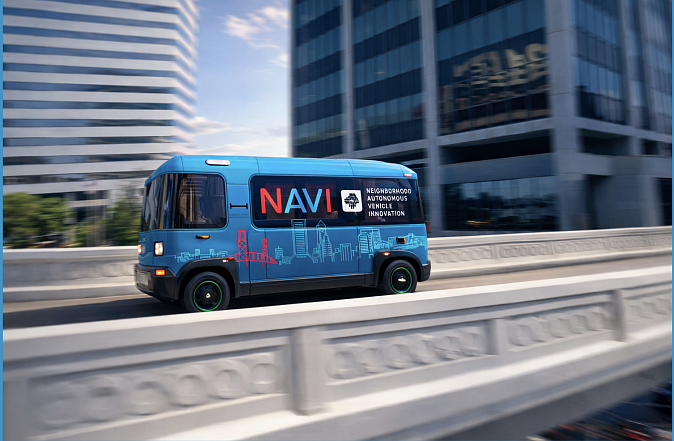
In mid-2025, JTA launched its Neighborhood Autonomous Vehicle Innovation system of autonomous shuttles along a 3.5-mile route Downtown, mostly on Bay Street. The NAVI service is part of JTA’s Ultimate Urban Circulator system, or U2C, which, if fully developed, would cost upward of $400 million.
NAVI is funded through a mix of state, federal and local funding.
The request for proposals comes as JTA develops successive phases of the U2C after starting with the $65 million NAVI component.
In a document provided in response to a public records request by the Daily Record, JTA says that respondents to the RFP are “expected to provide an Autonomous Solution(s)” that would include “Autonomous Vehicle Shuttles, Autonomous kit for Automobile Retrofits, Bus Retrofits, and other Autonomous Solutions deemed appropriate by the proposer for applicability within the project scope.”
The JTA spokesperson wrote that the proposal is part of a strategy “to stay current with emerging technologies and evaluate tools that may support both the U2C program and the JTA’s broader transit network.”
“While autonomous vehicles are one potential area of interest, the RFP is intentionally broad,” Koushakjian wrote.
“We are looking at any technology, mobility, infrastructure, operational, or otherwise, that can enhance safety, strengthen our services, improve the customer experience, and support the needs of Jacksonville as it continues to grow.”
The spokesperson said JTA’s interest went beyond self-driving vehicles.
“This RFP invites potential technology partners to propose innovative mobility and infrastructure solutions, including, but not limited to, autonomous vehicles and smart infrastructure,” Koushakjian wrote.
“The goal is to identify technologies that can enhance the safety, reliability, and efficiency of transit services in Jacksonville. The JTA is seeking the best ideas the market has to offer to benefit Jacksonville residents.”
Responses to the request for proposal are due by 2 p.m. April 17.
JTA’s RFP was issued after the authority decided to furlough 88 administrative employees and lay off 31 employees as JTA attempted to make up for lost expected revenue from fare increases to its paratransit service, Connexion Plus.
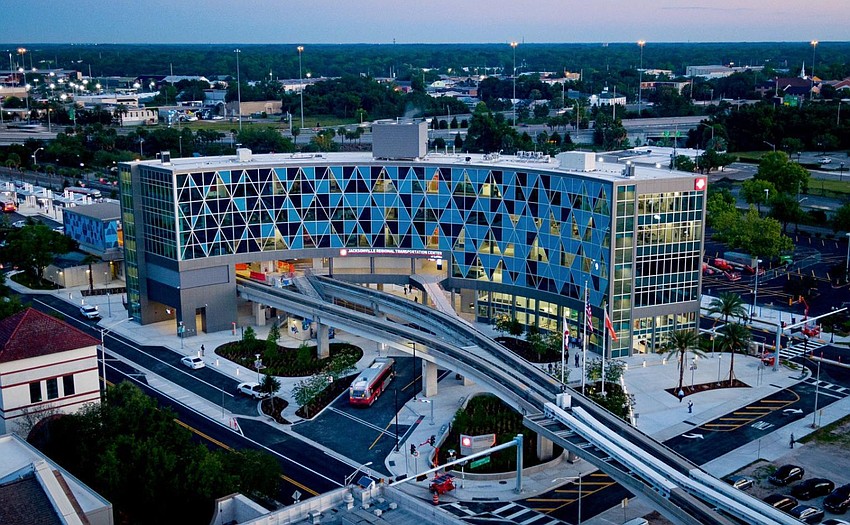
The second phase of the U2C, which includes renovations to the Downtown Skyway tram to accommodate autonomous shuttles, is expected to cost $247 million. In February and March, JTA held community meetings to gather public input on six potential uses for the 2.5-mile Skyway system, including conversion for NAVI vehicles, demolition and replacement by ground-level NAVI service, rehabilitation and remaining in place.
The third phase, which would expand the U2C into Brooklyn, San Marco, Springfield, the Southbank and San Marco, is expected to cost $95 million.