
“So nigh is grandeur to our dust, So near is God to man, When Duty whispers low, ‘Thou must,’ The youth whispers, ‘I can.’”
That is a stanza from Ralph Waldo Emerson’s poem, “Voluntaries.”
It was a call to selfless duty at a horrifically tumultuous time in American history of fearsome danger, disruption, discord and conflict over the denial of equal inalienable rights to life, liberty and the pursuit of happiness.

Those inspiring words were taught to me by my grandmother, Edna, a U.S. Navy nurse from a small farm in Advance, North Carolina.
Growing up we lived with her in New York. Edna could recite volumes of poetry from memory, paint gorgeous watercolors and cook a great Sunday roast with sherry before and coffee after meals for everyone out of diapers. Our grandma loved to take us “tykes” into Manhattan where she seemed to know everyone and everything.
Her captivating, lifelong and irrepressibly fun wild streak propelled her on a journey from sporting the first short bob haircut in Davie County, North Carolina, to a bareback horse ride past windows of the astounded students and teacher in the nursing school classroom where she was supposed to be.
She was refusing to tolerate intolerance in segregated hospital wards and had three husbands including my grandfather, a sailor who had been her patient in the Brooklyn Navy Yard Hospital, where later my mother Lillian was born.
Edna drove a sporty red Karmann Ghia convertible and played sandlot baseball with the neighborhood kids in her white uniform and nurses cap as soon as her shift ended in the Veteran’s Administration mental hospital, except while wearing a cast over the bones she broke bare handing a line drive.
My muse, Edna always believed I would be a lawyer.
She beamed when she heard Emerson’s words at our high school graduation. That speech about character and service occurred in the 1960s during an American era marked by the painful struggle for civil rights, assassinations, conscripted military service and sacrifice far away in an unpopular war by unheralded heroes.
All that coincided with massive protests at home about the Vietnam War, political animosity, anarchy, abuse of power, corruption and heated friction from cultural tectonic shifts that enflamed disagreements about sex, drugs, rock ‘n’ roll, miniskirts, fishnet stockings, platform shoes, Nehru jackets, peace medallions and other abandoned fashion gaffes of the era.
For 250 years of astounding but imperfect progress, so far, Americans eventually have come together to withstand and overcome even the most difficult unimaginable challenges. As this epic real-life story has unfolded, the score of constitutional and legal notes lawyers use to conduct the harmonious and often sharply dissonant lives of every different dulcy free man, woman and child sustain the beautiful unfinished symphony of our democracy.
Emerson’s verse underscores how important new generations are to preserve the union, care for others and help us emerge from cold days of political winter.
As does John Donne’s poetic reminder that no one is an island and the bell signaling anyone’s loss tolls for thee.
These are not old-fashioned pompous platitudes. Similar contemporary lessons about the resilient strength of human spirit abound.
For example, consider “Hamnet,” the new film and play based upon Maggie O’Farrell’s novel. It portrays how creativity and selfless love can overcome the most painful tragedy.
In a pivotal scene Agnes asks her estranged husband, William Shakespeare, to explain to her the meaning of the word “quintessence.” She heard that word in the play “Hamlet” that rekindled their lost relationship by immortalizing Hamnet, their child who died from the plague.
The bard lovingly explains that the word, derived from ancient cosmology, means the purest light, the most perfect ideal and the best essence of a person or object, such as the enduring healing memory of their dead son.
The privilege of daily work with law students also bolsters confidence about the prospects for a better and brighter world. Their talent, ambition and genuine desire to do good should motivate every teacher, judge, lawyer and professor to train students how to use in the service of others the most powerful tool ever invented, a legally trained mind.
We welcomed a large group of our recently admitted students to our law school Downtown. They were undaunted by legal jeopardy – of the quiz show kind. Their dean gave them answers and challenged them to state the pertinent questions, which they did with alacrity. That is, until they quite boldly turned the tables and asked the dean for answers to questions about accreditation (which we embrace and are determined to sustain), finances (for which we strive to continue to make our J.D. affordable), how best to prepare for law school and why study law in Jacksonville, which for the dean was the easiest question to answer.
My short trip over spring break to England was packed with informative, useful meetings with educators, judges, lawyers and students. In London, one of the U.K.’s most respected educators, Baroness Pauline Perry, hosted lunch in the House of Lords. We learned a lot from this conservative politician, academic visionary and champion of educational opportunity.
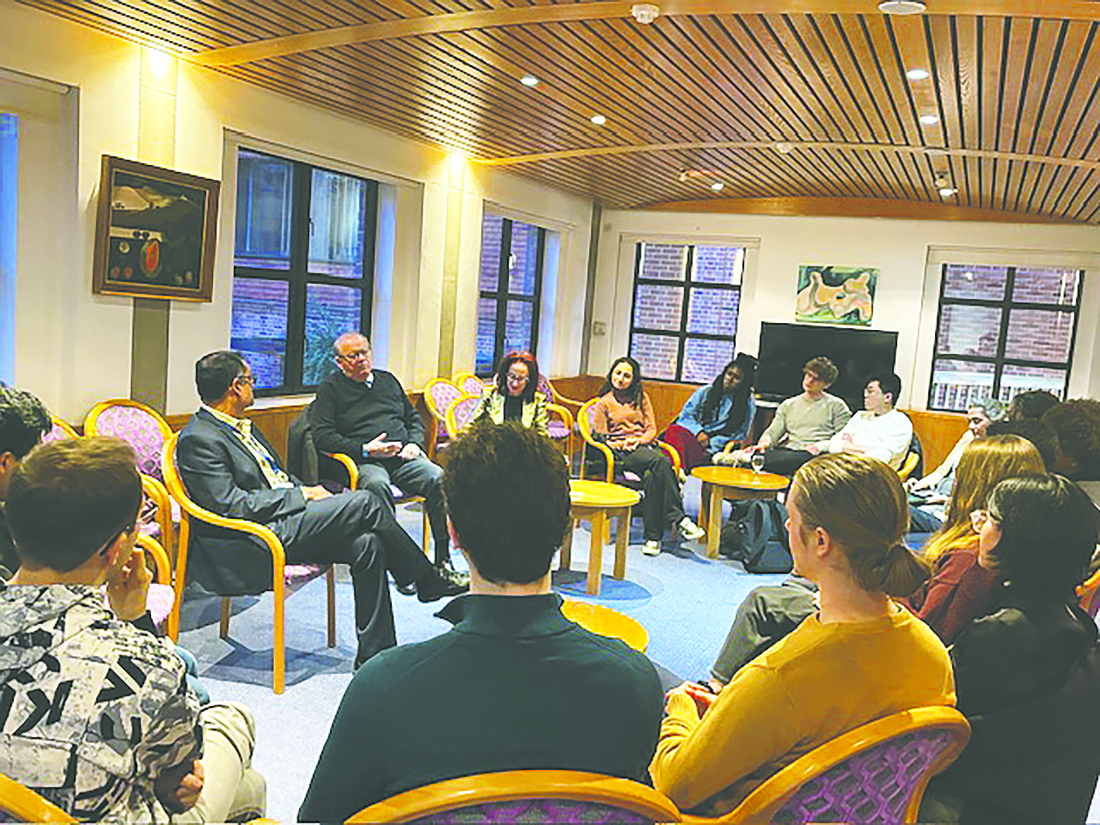
Then in programs and events at the University of Oxford and Cambridge University we participated in lively conversations about fighting the good fights and solving the big questions in a world of organized political and legal chaos.
The similarities we found between our own law students and those who we met in England’s highly regarded universities is striking and favorable in terms of their comparable intelligence, talent, character and dedication to learning how to uphold the rule of law with equal justice for all.
For aspiring new lawyers, it would be a sad fool’s errand to try to make law school the best time of their lives.
Instead, we strive to make legal education the most transformative time of students’ lives so that for them, and for those they will serve, the best is yet to come.