

Before it was acquired by Intercontinental Exchange Inc. three years ago, Jacksonville-based Black Knight Inc. dominated the market for processing mortgage loans.
After merging with ICE’s mortgage technology unit, the business still headquartered in Jacksonville is even more dominant.
“ICE Mortgage Technology is the network of record for U.S. housing finance. Roughly nine in 10 mortgages touch our network at some point,” ICE President Benjamin Jackson said in the company’s quarterly conference call July 30.
The mortgage technology business has been in Jacksonville for more than 60 years under various owners and names. It handled processing for about two-thirds of all U.S. first mortgage loans before the $11.9 billion acquisition by Atlanta-based ICE.
ICE is a financial technology company best known as operator of the New York Stock Exchange, but it also had a subsidiary that provided mortgage lenders with loan origination software.
Putting the businesses together created a subsidiary that can handle a mortgage loan through every step of the process.
“It is packaged into securities, its servicing rights are sold, and it passes to the agencies. So, the same loan crosses our network many times over its life,” Jackson said, according to a company transcript of the call.
“What makes this network unique is that at every step, we know who should hold which permission and perform which task because access to data is deliberately segregated by role to protect the consumer.”
ICE reported revenue in the mortgage technology unit rose 5% in the second quarter to $557 million, and adjusted operating income rose 13% to $239 million.
ICE’s total net revenue rose 5% to $2.7 billion with adjusted earnings rising 3% to $1.07 billion, or $1.90 a share.
Jackson said ICE expects its position in the mortgage technology marketplace will continue.
“The technology will keep evolving, but the network it runs on and the trust and governance embedded in it is ours, and it compounds with every cycle,” he said.
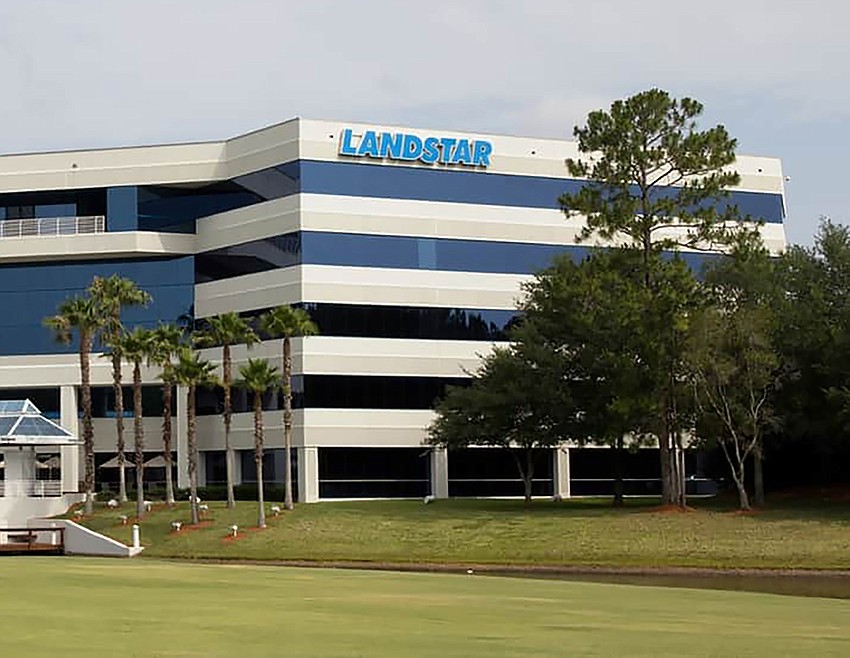
After three straight years of declines, Landstar System Inc.’s revenue is growing again as freight traffic rebounds.
The Jacksonville-based trucking company reported second-quarter revenue jumped 18% to $1.43 billion.
“The freight environment in the 2026 second quarter was characterized by solid demand from a seasonal perspective with the number of loads hauled via truck slightly outpacing normal seasonal patterns, the first time this has been achieved in the second quarter since 2021,” CEO Frank Lonegro said in a July 28 conference call.
“Market conditions, which have favored the shipper since late 2022, have begun shifting rather rapidly in favor of the transportation provider,” he said.
“Considering that backdrop, Landstar’s revenue performance was strong in the 2026 second quarter with truck revenue per load 17% above the 2025 second quarter and the number of loads hauled via truck up nearly 2% over the same period.”
Landstar’s earnings rose 17% to $48.95 million, or $1.44 a share.
“The recovery is taking hold. July rates increased 26% year-over-year while volumes continued to outperform seasonality, setting up accelerating revenue growth through 2H26 and 2027,” Wells Fargo analyst Christian Wetherbee said in a research note.
Evercore ISI analyst Jonathan Chappell thinks the freight market reached an inflection point after several down years.
“All told, we now forecast the mid-to-high teens revenue growth path to be maintained through 1Q27,” Chappell said in his note.
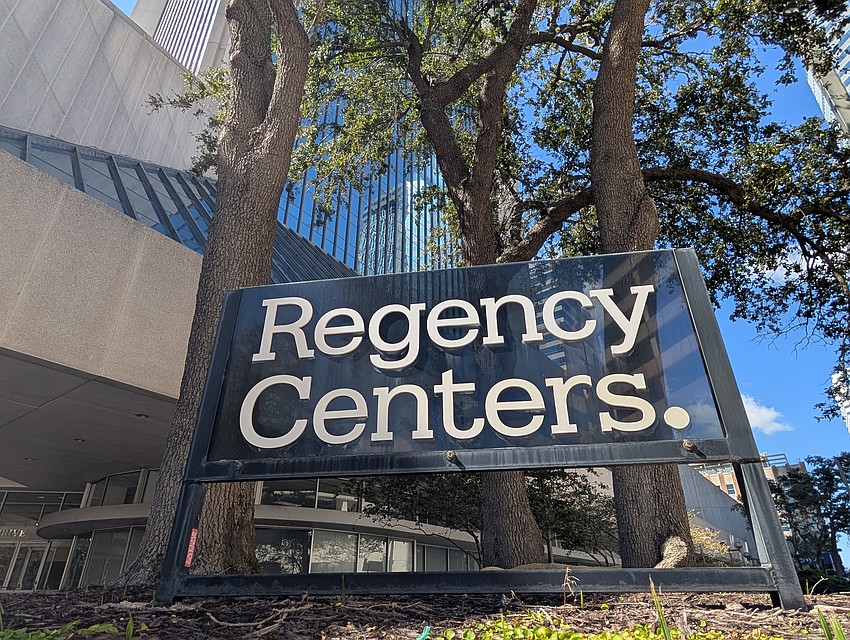
Regency Centers Corp. reported higher second-quarter earnings, saying demand by retailers for space at its shopping centers is strong.
Jacksonville-based Regency reported core operating earnings rose 8% to $217.7 million, with net operating income rising 6.8%.
“Leasing is active and broad-based across nearly every category and region in which we operate. Grocers, health and wellness concepts, restaurants, personal services, and value-oriented retailers continue to expand,” Chief Operating Officer Alan Roth said in a July 30 conference call.
Regency’s portfolio of 482 properties across the country, mostly grocery-anchored shopping centers, was 96.5% leased at the end of the second quarter.
The company is expanding its portfolio with new shopping center development, including one in St. Johns County.
“Year-to-date, we’ve started more than $140 million of new projects, one of the highlights of which was the start of The Berkeley at Durbin Park during the second quarter,” Chief Investment Officer Nick Wibbenmeyer said.
“This $55 million ground-up project will be anchored by Whole Foods and TJ Maxx, located within a vibrant master planned community in a strong suburb of Jacksonville,” he said.
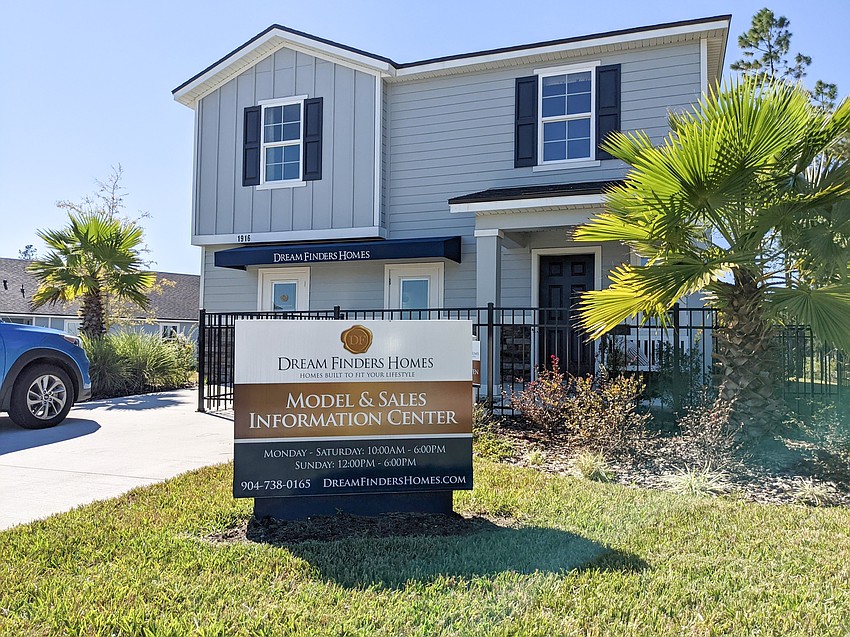
Dream Finders Homes Inc. reported second-quarter earnings dropped 51% to $27.8 million, or 27 cents per share, in a weak housing market.
“The home building market continues to be challenging, but our teams have worked hard to identify opportunities to improve our cost structure with the goal of delivering more affordable homes to our customers,” CEO Patrick Zalupski said in a July 30 news release.
“We believe costs will need to continue to trend down, perhaps significantly, to have a meaningful impact on market-wide housing results.”
Dream Finders said home closings rose 3% in the quarter to 2,290 but homebuilding revenue fell 8% to $1.06 billion, due to lower average selling prices.
Jacksonville-based Dream Finders does not hold quarterly conference calls to discuss its results.
The company’s news release did not give any update on its pursuit of Beazer Homes USA Inc.
Dream Finders has made several offers to buy Beazer in recent months but the Atlanta-based company has rejected them.
Cantor Fitzgerald analyst Brett Knoblauch initiated coverage of Jacksonville-based Duos Technologies Group Inc. with an “overweight” rating, seeing it as an “under-the-radar AI infrastructure play.”
Duos is focused on providing services for data centers.
“Duos is buying up and refurbishing smaller sites and then leasing those sites to both hyperscalers and enterprise customers,” Knoblauch said in his report.
“We believe Duos’ strategy is one that can scale quickly, is highly profitable, and is targeting a segment of the market that many peers are ignoring. We do not believe current valuation reflects this, and we see a significant re-rating opportunity on the horizon,” he said.
Knoblauch set a price target of $26 for the stock, more than triple its $8.14 trading price at the time of his July 31 report.
Credit rating agency AM Best said July 30 it affirmed its ratings for GuideWell Mutual Holding Corp. and its major subsidiary, health insurer Florida Blue.
GuideWell is the largest company headquartered in Jacksonville. As a mutual holding company, it does not publicly report earnings but Fortune magazine reported its 2025 revenue at $32.9 billion.
AM Best affirmed GuideWell’s long-term issuer credit rating at a-minus, or excellent, and Florida Blue’s rating at aa-minus, or superior.
It said Florida Blue’s Financial Strength Rating was A-plus, or superior.
In a news release, the agency cited Florida Blue’s “material market share in Florida, supported by strong brand name recognition, a large capital base and historically strong operating performance.”
AM Best said Florida Blue’s earnings declined significantly last year, “due to an increase in medical utilization and lower-than-expected premium volume driven by lower-than-expected enrollment. The company has taken action to improve profitability, including rate increases in its Affordable Care Act products.”
“Operating results through the first quarter of 2026 are positive,” it said.
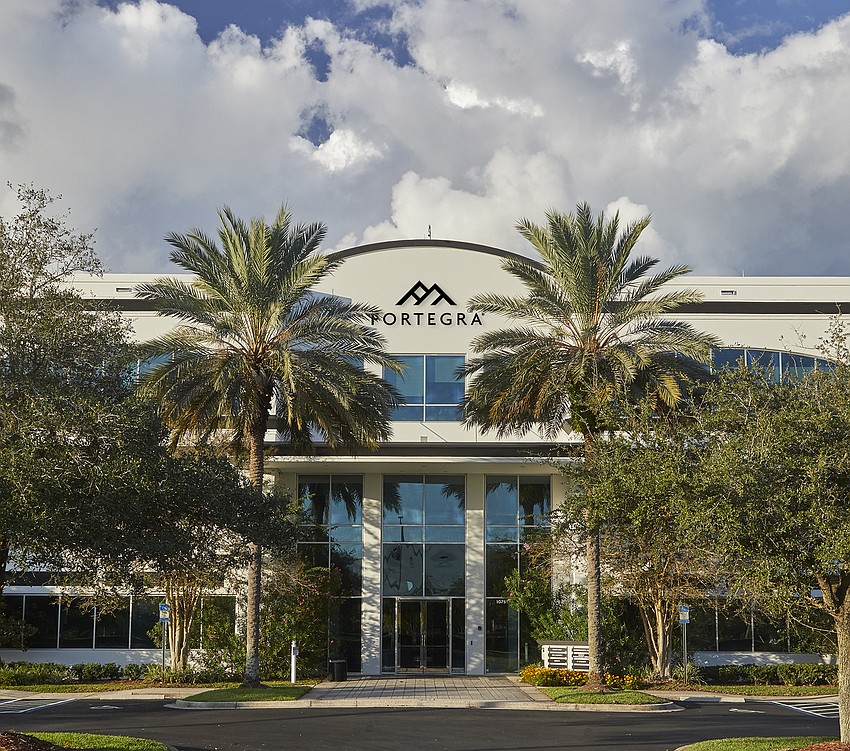
AM Best said July 31 it increased its rating on The Fortegra Group from A-minus to A, after the Jacksonville-based specialty insurance company was acquired in May by South Korea-based DB Insurance Co. Ltd.
“The upgrades reflect rating enhancement based on Fortegra’s strategic importance to DBI and the anticipated financial and operational benefits of ownership by a larger, higher-rated insurance organization,” AM Best said in a news release.
“Fortegra is expected to provide DBI with geographic and product diversification, advance its international growth strategy, and strengthen its long-term positioning across international insurance markets. AM Best expects Fortegra to benefit from DBI’s financial flexibility and operating scale, if needed,” it said.
Meanwhile, holding company Tiptree Inc., which sold Fortegra to DBI, has found an investment target to replace the Jacksonville-based specialty insurance company, which was its main operating business.
Tiptree announced July 29 it agreed to acquire Universal Shield Insurance Group, another specialty insurance company.
Connecticut-based Tiptree generated $1.12 billion in gross proceeds by selling Fortegra to DBI. When it agreed to sell Fortegra, Tiptree said it was looking for new businesses to invest in with the money.
The company is using a fraction of the proceeds, $100 million, to buy Universal Shield, an Ohio-based specialty property and casualty insurer.
“USIG provides Tiptree with a new foundation in the specialty insurance sector and a clear path for scalable growth,” Tiptree CEO Michael Barnes said in a news release.
In a May 29 news release announcing the completion of the Fortegra sale, Tiptree described itself as a company which “allocates capital to select small and middle market companies” and “has a significant track record investing across a variety of industries and asset types.”
Its July 29 release announcing the agreement to buy Universal Shield, Tiptree says it is “a specialized insurance holding company.”