
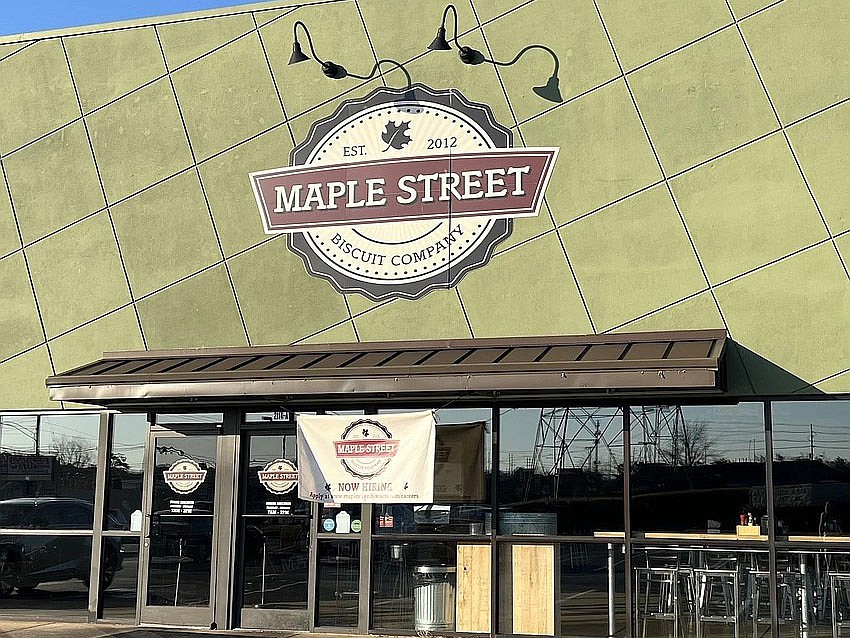
When Cracker Barrel Old Country Store Inc. acquired Maple Street Biscuit Co. in 2019, then-CEO Sandy Cochran saw the deal as an opportunity to reach new customers in the fast-casual dining business.
“We believe Maple Street will serve as a growth vehicle that complements Cracker Barrel by accelerating our penetration in this segment by providing increased exposure to urban and suburban markets and to the millennial and Gen Z markets,” Cochran said in Cracker Barrel’s first conference call after the acquisition.
While Cochran expressed high hopes to grow the chain founded in Jacksonville, Cracker Barrel seemed to lose interest in Maple Street after she retired in 2023.
Her successor, Julie Masino, stopped talking about Maple Street altogether in the last two years as the company downsized the chain, finally announcing a deal July 20 to sell the business to another biscuit-themed chain, Biscuit Belly.
The sale will mean the end of the once popular chain which started with a restaurant in Jacksonville’s San Marco neighborhood in 2012, as Biscuit Belly intends to convert the remaining Maple Street restaurants to its own brand.
Maple Street had 33 restaurants when the company then headquartered in Orange Park was sold to Cracker Barrel for $36 million in October 2019.
Cracker Barrel, which operates about 660 restaurants with retail stores in 43 states, attracts an older customer base. In a 2023 investor presentation, the company said 43% of its customers were 55 and older.
The company hoped Maple Street would complement the main brand by serving a younger demographic.
Cracker Barrel bought the company months before the coronavirus pandemic shut down restaurants across the country. Although Cracker Barrel never reported results for the Maple Street segment, it said Maple Street was outperforming Cracker Barrel as restaurants shifted to more takeout business during the pandemic.
“We remain excited about the future of Maple Street Biscuit Co.,” Cochran said in a June 2020 conference call.
“The resilience they’ve demonstrated in recent months has reinforced the attractiveness of their brand and their business model, and we look forward to accelerating their growth,” she said.
When Cracker Barrel’s new fiscal year started in August 2020, the company said it intended to open 15 new Maple Street restaurants in that year.
“I continue to be impressed with how the Maple Street team is navigating the difficult environment, and I’m excited about the brand’s future,” Cochran said.
Maple Street grew to 70 restaurants in early 2025 before Cracker Barrel began closing restaurants it characterized as underperforming, without giving financial details.
Wells Fargo Securities analyst Anthony Trainor estimated in a research note that Maple Street was generating about $50 million in annual sales, less than 2% of Cracker Barrel’s total sales.
“Cracker Barrel acquired MSBC back in 2019, as part of the old diversification strategy, but the concepts struggled to grow,” Trainor said in his note.
“Shedding Maple Street Biscuit is a small win,” he said.
Maple Street was down to 51 locations when it was sold to Biscuit Belly. Cracker Barrel said Biscuit Belly is acquiring 35 restaurants and 16 others would be closed, including sites in St. Augustine and Julington Creek.
Three other Maple Street restaurants in the Jacksonville area will be converted to Biscuit Belly, including the original San Marco site.
The two other restaurants that will be converted are in the Baymeadows neighborhood and Fleming Island.
The sale of Maple Street is part of an overall financial restructuring of Cracker Barrel, which has struggled with stagnant sales and lower earnings over the last three years.
The company did not announce the sale price for Maple Street but did announce a sale-leaseback deal for 26 of its Cracker Barrel restaurant sites that will generate net proceeds of $77 million.
A week after that announcement, Cracker Barrel announced July 27 that Massino is leaving the company, effective Aug. 10.
She will be succeeded by David Deno, former CEO of Tampa-based Bloomin’ Brands Inc., which operates Outback Steakhouse and several other restaurant brands.
Trainor said in a second note after the CEO change was announced that while some investors were concerned about the timing, discussions about the move had been ongoing.
“This transition was done in a thoughtful manner, David brings established credibility into the organization, and now is the ideal time to make a change,” he said.
Trainor also said he doesn’t see it changing the near-term outlook.
“Management is using this time with the wind at its back to reestablish a long-term turnaround plan and rebuild credibility with investors,” he said.
“While we’d be the first to tip our hat to Julie for navigating the challenges this past year, David is a great fit for Cracker Barrel and this should drive a new narrative to the story.”
Piper Sandler analyst Brian Mullan said in July 20 note, before the CEO change was announced, that he remains “neutral” on the company.
Mullan sees fiscal 2027 as a “recovery year” for earnings but “it is not obvious at this point” that earnings can recover to fiscal 2024 levels.
“While we will be on the lookout for reasons to think differently, that is our base case at this time,” he said.
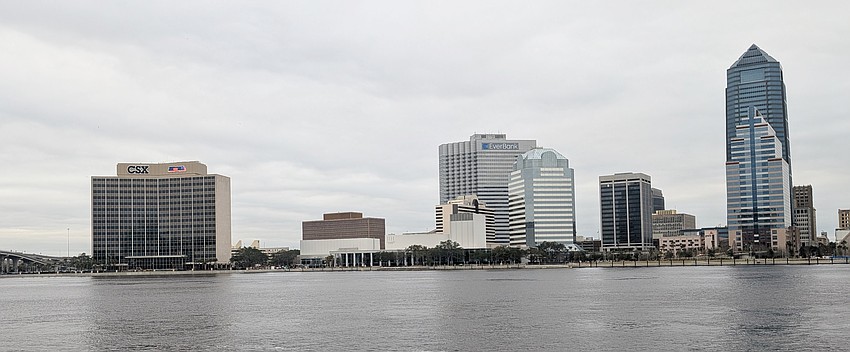
CSX Corp.’s stock jumped to a record high on an overall down day for the market, after reporting earnings above analysts’ forecasts and projecting bigger revenue growth for the rest of 2026.
The Jacksonville-based railroad company’s earnings of 54 cents a share were 2 cents better than the average forecast of analysts, and it increased its revenue growth forecast to a mid-to-high single digit percentage, from its previous prediction of mid-single digits.
CSX’s stock rose as much as $3.37 to $53.31 July 23, after announcing earnings after the market closed the previous day.
Meanwhile, the Dow Jones industrial average dropped 507 points and the Standard & Poor’s 500 index, which includes CSX, fell 1.21% that day.
“Growth is coming virtually across the board with CSX seeing notable truck to rail conversion (positive read thru for the sector) with both volumes and price ramping significantly in the truck-competitive Intermodal sector,” RBC Capital Markets analyst Walter Spracklin said in a research note as he reiterated his “outperform” rating.
Raymond James analyst Patrick Tyler Brown also reiterated an “outperform” rating.
“CSX continues to execute its internal initiatives, which we expect will continue to drive operational and cultural improvements that should translate to stronger margins, EPS (earnings per share), and FCF (free cash flow) in out years,” Brown said in his note.
“Newly minted CEO Steve Angel’s focus on combining improved service with a unique internal (industrial development) strategy, while having a disciplined focus around ROIC (return on invested capital), could open growth conduits and market share opportunities over time — possibly stronger than currently anticipated, in our view,” he said.
“We continue to believe the combination of improving volume growth, future pricing gains (2027) and execution of their cost programs supports margin improvement, EPS growth and upside for CSX stock,” said UBS analyst Thomas Wadewitz, who has a “buy” rating.
However, not every analyst is expecting more gains for the stock.
Morgan Stanley analyst Ravi Shanker maintains an “underweight” rating.
“All in, management is doing a good job tidying house but we believe the market may be underestimating a potential share shift back to Truck when demand shows up and pressure from resource uplift/inflation when volumes ramp,” Shanker said in his note.
Even if earnings estimates rise after CSX’s report, “it is hard to argue that this is not already more than priced in” to the stock, he said.
BMO Capital Markets analyst Fadi Chamoun is in the middle with a “market perform” rating.
“The recent influx of volume came alongside deteriorating operating and service metrics, leaving concerns around an inability to meet volume,” Chamoun said.
“Management is confident the deterioration is transitory, reflective of a seasonal reduction in employee availability which created a tightness in certain areas of the network, and expects operating and service metrics to improve sequentially in Q3,” he said.
A Nevada court appointed a receiver for Fuse Science Inc., a company formerly headquartered in Jacksonville, according to a July 17 Securities and Exchange Commission filing.
That was the first SEC filing for Fuse since 2022, but it has filed reports with the OTC Markets.
The OTC filings say Fuse operates a cloud-based workforce learning management system called Trainday, but its most recent report said it had no assets as of March 31 and no revenue.
Fuse’s annual report for the fiscal year ended Sept. 30, 2024, continued to list its headquarters in Jacksonville, but its annual report a year later listed it in Canada.
The latest SEC filing lists its headquarters in Lake Worth Beach in South Florida.
Fuse is incorporated in Nevada, and a Clark County District Court judge appointed a receiver June 17 saying the company had not satisfied a judgment against it of $643,471.
Fuse’s stock trades for under one penny per share, according to the OTC website.
The stock trades under the ticker symbol “DROP.”