

In a year when an artificial intelligence frenzy is sending the stock market to record heights, three other trends are propelling some Jacksonville companies to new highs: freight traffic, rebounds for beaten-down stocks, and Elon Musk.
Jacksonville’s two big transportation companies, CSX Corp. and Landstar System Inc., rose in the first half of 2026 as freight shipments showed signs of strength.
Treace Medical Concepts Inc. and Rayonier Advanced Materials Inc., or RYAM, rebounded after disappointing results sent their stocks plunging in recent years.
Redwire Corp. and Duos Technologies Group Inc. both benefited from ties to Musk’s businesses.
Railroad company CSX and trucking company Landstar both reached record highs in June, with CSX finishing the first half of the year up 31% and Landstar up 44%.
While many analysts are expressing confidence that the market for freight transportation will continue to strengthen after a post coronavirus slump, some think the stocks may have gotten ahead of themselves.
“We are more convinced than ever on the strength of the upcycle, though the debate now moves on to how high the record upcycle will peak and how structural the gains are,” Morgan Stanley analyst Ravi Shanker said in a July 6 report on transportation stocks.

“However, it would be naïve to ignore significant stock moves and relative valuation dislocations across the group,” he said.
“We believe stocks have priced in the easy early-cycle gains, with record valuations increasing the risk of greater volatility ahead, making us more selective.”
Shanker said he is increasing earnings estimates but downgrading his rating for the industry from “attractive” to “in-line.”
He downgraded Landstar from “equal weight” to “underweight.” The stock reached a high of $228.46 in early June and continued to trade above $200 through the month, but Shanker set a price target of $145.
“While flatbed (30% of the business) may be somewhat more protected from secular/digital disruption than the rest of the business, new entrants are about to target this area as well and the surge in the stock since early 2026 means valuation is now more stretched which leaves us underweight,” he said.
Shanker maintained an “underweight” rating on CSX.
“Execution under new CEO (Steve) Angel is progressing well, with productivity gains, improving efficiency, and a sizable project pipeline supporting volume growth into the cycle,” he said.
“However, we believe this turnaround is now largely reflected in both estimates and the stock.”
Shanker set a price target of $32 for CSX with the stock trading at $49.21 at the time of his report.
“With CSX trading at a premium multiple vs. history and peers, we think the stock has run too far, too fast. Without incremental positive surprises, we see downside risk, particularly as expectations build and competition from truck intensifies deeper into the cycle,” he said.
RYAM’s stock has been pummeled by seven consecutive years of losses from continuing operations. But the cellulose specialties products company’s stock was lifted by speculation of a possible buyout.
The stock rose 34% overall in the first six months of this year but after doubling in price in the first quarter, the stock fell 29% in the second quarter after the hiring of a new CEO, Daniel Krawczyk, dampened the enthusiasm about a possible deal.
Treace’s stock has been down for two years amid disappointing sales results.
The maker of surgical products to treat bunions reported first-quarter revenue fell 10% to $47.2 million, but the stock rose in April after the company expressed confidence that new product launches will increase sales.
Treace finished the first half of the year up 62%.
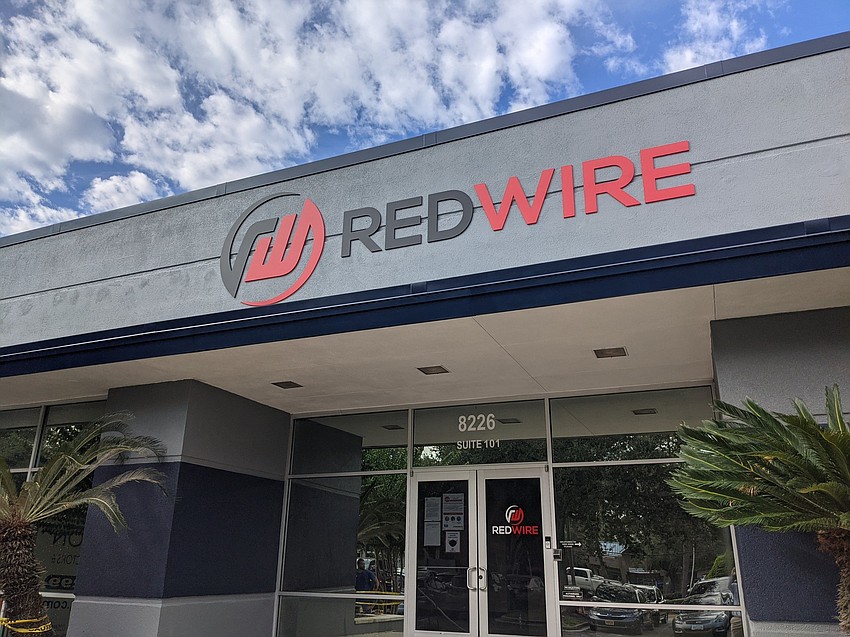
Space technology company Redwire has bounced up and down during its five years as a public company.
But the stock rocketed higher, along with other space industry stocks, after Musk’s SpaceX filed for an initial public offering in May.
Redwire finished the six-month period up 61%, but its June 30 closing price of $12.26 was well below its peak of $26.64 in May at the height of the space stock rally.
Redwire has no direct tie to SpaceX, but Duos benefited from its link to a company acquired by Musk.
Duos, which is now focused on services for data centers, owned 5% of Jacksonville-based APR Energy, which was acquired by Musk in May.
Duos received net proceeds of $50.4 million from selling its stake in APR, a windfall that will likely result in its first profitable year.
The company’s stock was up 7% for the first six months of the year after falling in the first quarter, but Duos jumped 75% in the second quarter as it recorded the big sale gain.

Dream Finders Homes Inc.’s stock bounced back from a down first quarter with a 24% gain in the second quarter amid more optimism for the housing market.
“The relative stability of 30-year mortgage rates appears to be the most positive news heading into 2H26,” Citizens JMP Securities analyst James McCanless said in a July 6 report on homebuilder stocks.
“Historically, mortgage rate stability over multiple weeks/months, irrespective of the actual level, has been more favorable for new home demand because buyers have a clearer idea of the down payment and monthly P&I (principal and interest) burden required to buy a new home,” he said.
McCanless rates Dream Finders at “market perform.”
“We continue to see move-up/luxury names as our initial preference for new money, however, the inexpensive valuations in some entry-level names may warrant a second look from investors,” he said.
“Entry-level names have seen a bifurcated performance, with land-light companies apparently out of favor with the market so we would focus investor attention on land-heavy names,” he said.
Dream Finders is one of the land-light homebuilding companies, “which means the majority of each company’s homebuilding lots are controlled via option contract rather than owning the land on balance sheet,” McCanless said.
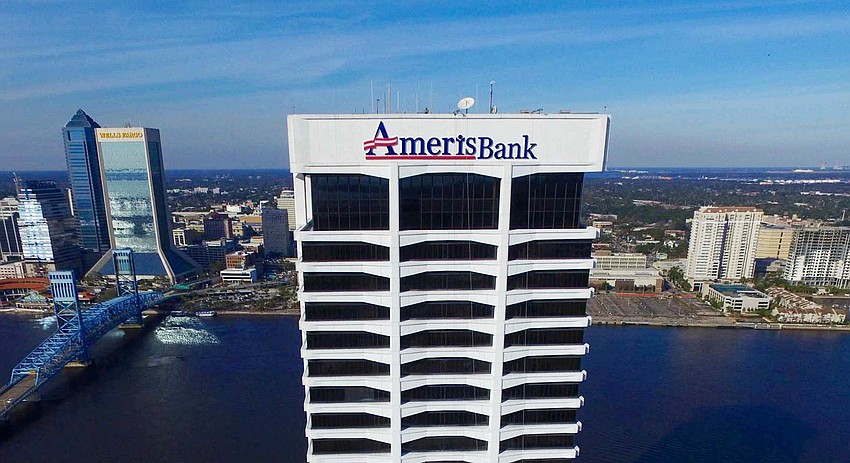
Raymond James analyst David Feaster downgraded Ameris Bancorp from “outperform” to “market perform” after its stock rose 22% in the first half of the year.
“We continue to view Ameris’ positioning in attractive Southeast markets as enviable and supportive of outsized loan growth, particularly as the bank remains well-positioned to capitalize on disruption across its footprint, notably in Atlanta, where it maintains a stronghold,” Feaster said in a July 1 research report.
“Ultimately, while we continue to view Ameris’ outlook favorably, we believe that strength is now reflected in the stock’s well-deserved premium valuation. Combined with limited near-term catalysts, this leaves the risk/reward more balanced for now, in our view,” he said.
Ameris had its executive offices in Jacksonville before moving its headquarters to Atlanta in 2019 following a merger.
It still has 19 branches in the Jacksonville metropolitan area with $2.47 billion in deposits as of June 30, 2025, according to Federal Deposit Insurance Corp. data, making it the fifth largest bank in the market
Comcast Corp. is returning to its roots as a cable television company, announcing plans June 29 to spin off its NBCUniversal business as a separate company.
Philadelphia-based Comcast offers cable, internet and phone services through its Xfinity brand and has been the dominant cable television provider in Northeast Florida for more than two decades.
NBCUniversal’s operations include the NBC television network, several cable networks and the Universal Orlando Resort, which operates three theme parks.
“When we acquired NBCUniversal, more than 15 years ago, the industry looked very different. At that time, the cable networks were widely viewed as the center of value creation and represented a strong strategic fit with our existing business,” Comcast co-CEO Brian Roberts said in a conference call, according to a company transcript.

“As we look ahead, it has become clear that our technology and media businesses each have compelling opportunities in front of them that are distinct in nature and best pursued with dedicated, focused, strategic flexibility, and tailored investment priorities,” he said.
Philadelphia-based Comcast has been in Northeast Florida since it acquired the Jacksonville-area cable franchise from AT&T Broadband in November 2002.
While traditional cable television services have lost market share to streaming, satellite and other providers, Comcast continues to be the main cable company for most of Northeast Florida.
The company’s media relations department did not respond to an email seeking current customer data for the market but a map in Comcast’s annual report shows Jacksonville has between 250,000 and 500,000 residential broadband customers in the market.
Comcast reported 293,000 customers in the Jacksonville market in 2006, according to a report in The Florida Times-Union.
The company has about 1,200 employees in the Jacksonville area, according to JAXUSA Partnership data.
Comcast reported total domestic video customers fell by 1.3 million in 2025 to 11.3 million and domestic broadband customers fell by 711,000 to 31.3 million.
However, residential connectivity and platforms were the biggest part of its business, accounting for 55% of its $123.7 billion in 2025 revenue.
That segment also accounted for 67% of its $37.4 million in adjusted earnings before interest, taxes, depreciation and amortization.
Comcast said it expects to complete the spinoff in about one year.