
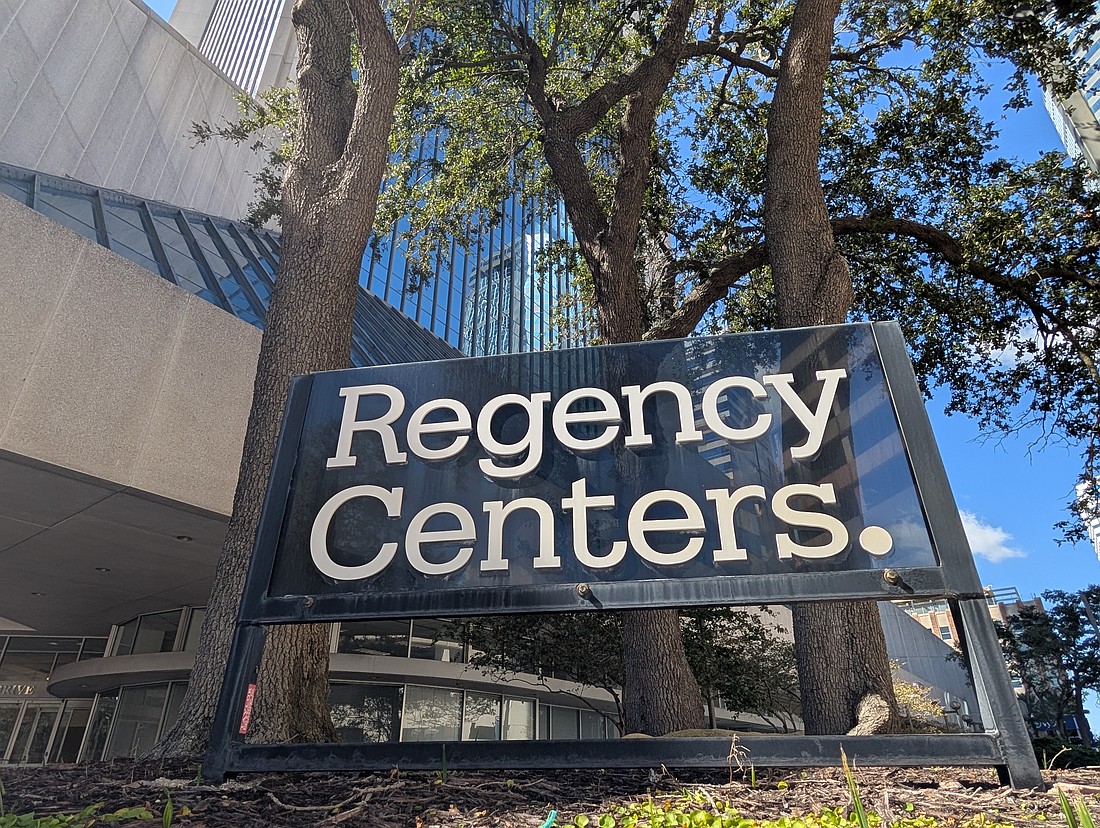
Regency Centers Corp. has long maintained its strategy of operating grocery-anchored shopping centers in thriving neighborhoods has made it resistant to the impact of economic downturns.
As the Jacksonville-based company reported higher first-quarter earnings, CEO Lisa Palmer said that is a lesson she learned from her predecessor, Hap Stein, before succeeding him six years ago.
“I do remember that when I was much, much earlier in my career, the ‘98 mini recession, the ‘01 tech bubble, he kept saying, ‘We choose not to participate,’ because we really grew right through it,” Palmer said in an April 30 conference call.
“When you think about the quality of the portfolio, the format of the shopping centers, the trade areas in which we operate, we’re able to grow right through it, and that’s the expectation,” she said.

Regency reported core operating earnings rose by 7 cents a share in the first quarter to $1.16, with properties operating for more than one year increasing net operating income by 4.4%.
Regency’s portfolio of 481 properties across the country, mainly grocery-anchored neighborhood shopping centers, was 96.2% occupied at the end of the first quarter.
“Our tenants are performing well in our centers, supported by the resiliency and spending power of consumers in our strong suburban trade areas, as well as our focus on essential retail anchored by top-performing grocers,” Palmer said.
Despite concerns that rising gas prices might reduce shopping center visits by consumers, Chief Operating Officer Alan Roth said foot traffic at Regency centers has been resilient.
“When we look at the portfolio in April, foot traffic is actually up 3% more than it was in Q1 during this time period of increased fuel prices,” he said.
“Our property type, the format of our shopping centers, neighborhood community centers, really are defensive and they produce consistent, durable, steady cash flows through all cycles,” Palmer said.
Regency’s stock reached a 52-week high of $81.66 a week before the earnings report but it dropped $1.53 to $77.85 on April 30 after the report on a day when the overall market jumped higher.
Ladenburg Thalmann analyst Floris van Dijkum said in a research note that an index of real estate investment trusts like Regency rose 1.5% on April 30 and the S&P 500 index, which includes Regency, rose 1%.
However, van Dijkum said Regency’s shares were up 12.7% year-to-date, outperforming the 8.9% gain in the REIT index and 5.3% gain in the S&P 500. He said Regency’s first-quarter results were “solid,” but “largely expected” by investors.
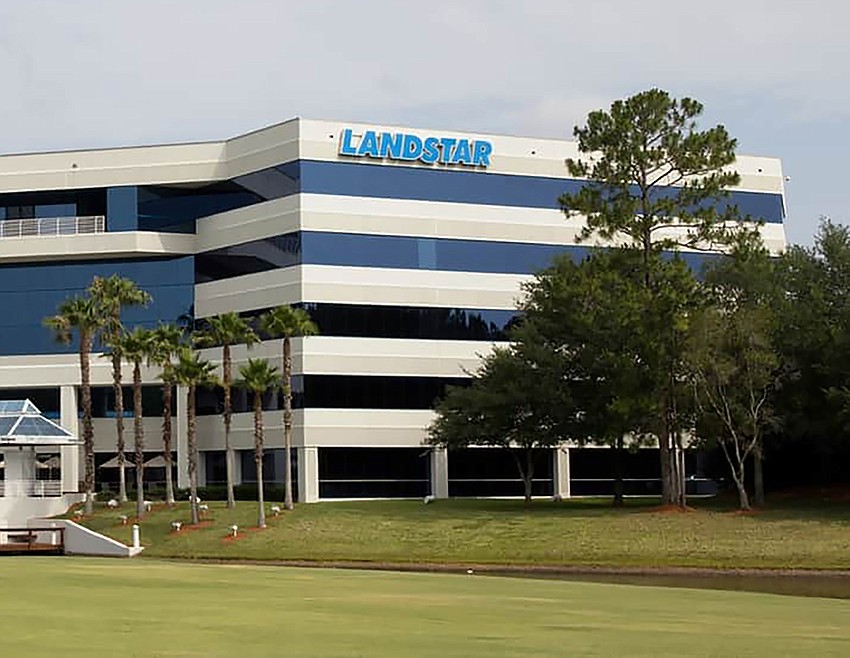
Landstar System Inc.’s stock jumped to a 52-week high after the Jacksonville-based trucking company reported higher first-quarter earnings.
Earnings rose 32% to $39.4 million, or $1.16 per share, with revenue rising 2% to $1.17 billion.

“The freight environment in the 2026 first quarter was characterized by relatively strong demand from a seasonal perspective and an improving price environment as we moved through the quarter,” CEO Frank Lonegro said in an April 28 conference call.
As the trucking industry seeks to recover from a slump in freight demand the last couple of years, Lonegro said he was encouraged by an increase in loads hauled per truck and revenue per load.
However, he said the company is not issuing any forecasts for the second quarter because of economic uncertainty.
“We, like everyone else, are monitoring the news on the geopolitical conflict in the Middle East and the related volatility in energy and diesel prices.” Lonegro said.
“We also continue to monitor the potential effect of tariffs and trade policy on our business, including the impact of the recent Supreme Court decision and tariff refunds from the federal government. Tariffs have certainly already impacted freight flows.”
Investors were encouraged enough by Landstar’s results to send the stock up by as much as $13.43 to $195.84 on April 29 after the report.
Wells Fargo analyst Christian Wetherbee raised his earnings estimate for 2026 by 50 cents to $5.90 a share “as we gain more confidence in the cycle and in particular, industrial-based improvements,” he said in a research note.
Wetherbee, who has an “overweight” rating on Landstar, raised his price target for the stock from $170 to $200.
“This is traditionally the time in the cycle when investors want to own Landstar,” Stifel analyst J. Bruce Chan said in his note.
But Chan remains cautious on the stock with a “hold” rating, citing uncertainty about freight demand.
“Valuation isn’t particularly cheap, which seems to be a consensus view, but more is going right for Landstar today than has been the case in a long time now, in our view,” he said.
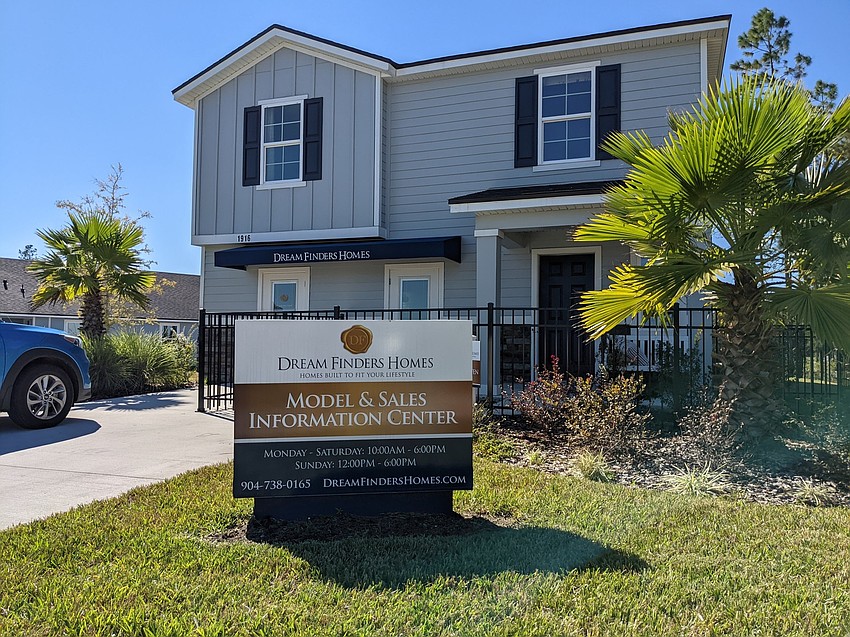
Dream Finders Homes Inc.’s first-quarter earnings dropped sharply in a difficult housing market.

The Jacksonville-based homebuilding company said earnings fell 75% to $13.6 million, or 11 cents a share, and revenue fell 10% to $887.8 million.
“We continue to operate in a challenging environment as elevated mortgage rates and broader macroeconomic uncertainty have impacted affordability and consumer confidence across our markets,” CEO Patrick Zalupski said in an April 30 news release.
Dream Finders said in the release the decrease in homebuilding revenue in the quarter was driven by fewer closings and lower average selling prices for homes, due to use of sales incentives and changes in the company’s geographic and product mix.
The company is maintaining its forecast to close on the sale of 9,250 homes this year, up from 8,608 in 2025.
Dream Finders does not hold quarterly conference calls to discuss its results.

Despite the tough housing market, Intercontinental Exchange Inc. reported earnings and revenue grew in the first quarter at its Jacksonville-based mortgage technology business.
Atlanta-based ICE said revenue in that business rose 10% to $539 million and adjusted operating income rose 4% to $212 million.

“The broader mortgage origination market remains well below its long-run normalized potential. And yet, we are growing, which speaks to the strategic value of what we have built,” Chief Financial Officer Warren Gardiner said in an April 30 conference call, according to a company transcript.
ICE, known mainly as the operator of the New York Stock Exchange, grew its mortgage technology business significantly with the 2023 acquisition of Jacksonville-based Black Knight Inc.
The company then decided in 2024 to put the headquarters of that business in Jacksonville.
Gardiner said the financial results from the business demonstrate the strategic logic of the merger, as the company now offers a complete range of products to mortgage lending companies.
It “has transformed what was once a collection of stand-alone products into a true end-to-end mortgage platform, processing a loan from initial contact through origination, servicing and secondary,” he said.

“The opportunity in mortgage remains significant and our platform is positioned to capture it across market cycles,” ICE President Benjamin Jackson said, and he sees more opportunities for expansion.
“Manual intervention still exists across parts of the mortgage workflow and we see a long runway to continue automating and delivering real savings for our clients,” he said.
ZenaTech Inc. agreed to pay nearly $2 million to acquire two Jacksonville businesses last year, according to the Vancouver, British Columbia-based company’s annual report.
ZenaTech announced in September it acquired A&J Land Surveyors Inc. and announced in December it bought Smith Surveying Group LLC, but its news releases did not disclose terms of the acquisitions of those two Jacksonville-based companies.
In its annual report, ZenaTech said it is paying $1.5 million to buy Smith, consisting of $900,000 in cash and $600,000 in a three-year amortization note.
The company is paying $450,000 for A&J, consisting of $225,000 in cash and $225,000 in a three-year note.
ZenaTech operates drones for inspection, monitoring and surveying services and has been seeking to grow through acquisitions.
The annual report said ZenaTech completed 20 acquisitions of land surveying companies in 2025, including the two Jacksonville deals.
ZenaTech reported revenue of $12.9 million last year.
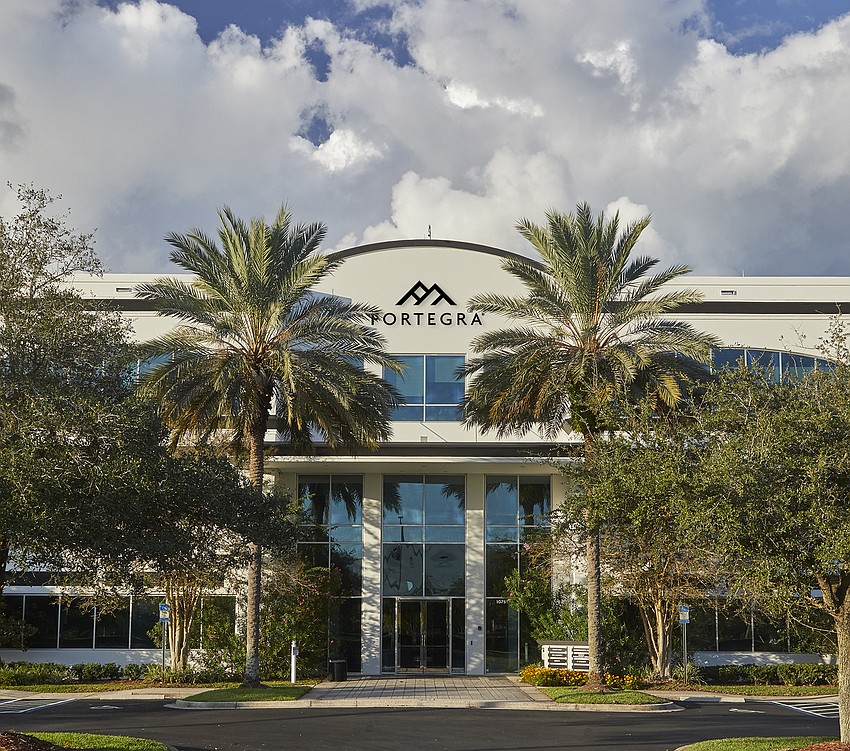
The Fortegra Group Inc.’s first- quarter earnings rose 33% to $20.5 million while revenue of $478.4 million was nearly unchanged from last year, according to a quarterly report by majority owner Tiptree Inc.
Tiptree agreed in September to sell Fortegra, a Jacksonville-based specialty insurance company, to South Korea-based DB Insurance Co. Ltd. for $1.65 billion.
The first-quarter report will likely be the last public financial report for Fortegra, with the sale to DB expected to close by midyear.
Tiptree did not give more details on Fortegra’s results, which it classifies as a discontinued operation pending the sale.
Without Fortegra, holding company Tiptree reported no revenue in the first quarter.
The company has said it expects to deploy the proceeds from the Fortegra sale to invest in other businesses.
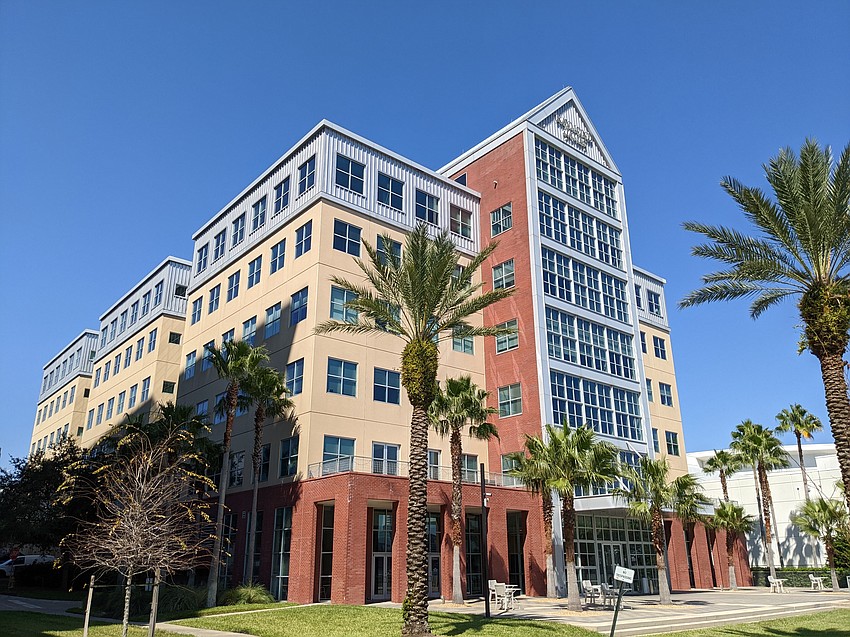
The St. Joe Co. reported April 29 that first-quarter earnings fell 21% to $13.9 million, or 24 cents a share, while revenue rose 5% to $99.1 million.
St. Joe said the lower earnings were due mainly to lower equity in income from unconsolidated joint ventures.
Panama City Beach-based St. Joe is a former industrial conglomerate based in Jacksonville that moved to the Florida Panhandle in 2010 to focus on real estate development.