

Beazer Homes USA Inc. resisted pressure for months from Jacksonville-based Dream Finders Homes Inc. to accept a buyout offer, but company officials said pressure from shareholders was a major factor in finally agreeing to a deal.
“Many of our shareholders have been very vocal that they would prefer a near-term cash premium rather than waiting for our differentiated product proposition to generate outsized sales paces and margins,” a Beazer executive told employees at an Aug. 7 town meeting, according to a Securities and Exchange Commission filing.
“Not that they don’t think we can do it, but they have expressed a preference to receive a cash premium now because it is less risky,” said the executive, who was not named in the filing.
Dream Finders and Beazer announced the agreement Aug. 7 for Dream Finders to buy the Atlanta-based company for $33.50 a share in cash, a total of $915 million.
“While that is certainly below book value, it is a very high multiple of earnings this year and of Wall Street’s expectations for earnings next year,” the executive told employees.
“It is also a big premium to where our stock was trading before a public offer was made, and a much higher price than the original $25.75 public offer.”
Dream Finders announced the $25.75-a-share offer in May and increased the bid after Beazer’s board rejected it.
“We have to remember, shareholders, in fact, own the Company. For these reasons and others, our Board concluded that Dream Finders’ revised proposal was in the best interest of shareholders,” the executive said.
“In our view, the Board accepted a reasonable outcome, as the structural case for remaining standalone weakened, even as operating execution improved,” Sidoti & Co. analyst Julio Romero said in a research note.
“In our view, the transaction highlights the disconnect between depressed near-term earnings and the value of Beazer’s asset base,” he said.
For Dream Finders, the merged company will operate about 520 active communities in 26 markets across the Southeast, Mid-Atlantic, Texas, the West and the Midwest.
“Assuming a successful close, we believe DFH will add Indianapolis, California (Sacramento and the Inland Empire), and Nevada (Vegas) as new markets. We believe the deal also backfills DFH’s presence in Nashville, Atlanta, Texas and other markets in the Southeast,” Citizens JMP Securities analyst James McCanless said in a research note.
New RYAM CEO says strategic review continues
In his first public comments since becoming CEO of Rayonier Advanced Materials Inc., or RYAM, Daniel Krawczyk said his appointment does not impact the company’s ongoing review of strategic alternatives.
“Let me be clear. My appointment does not alter, delay, or narrow the process,” Krawcyzk said in an Aug. 5 conference call after the Jacksonville-based maker of cellulose specialties products reported a second-quarter loss from continuing operations of $33 million.
RYAM has reported losses from continuing operations for seven straight years, and the company in April announced the review of alternatives which could include a sale of the company.
Krawczyk was appointed June 22.
“The comprehensive review of strategic alternatives remains a top priority for RYAM. It’s active, it’s progressing with urgency and discipline, and it’s focused on evaluating the full range of strategic and financial alternatives available to the company to determine the path forward that best maximizes value for the shareholders,” he said.
“We currently expect to conclude the strategic review and communicate a clear path forward during the fourth quarter.”
Rayonier Inc., which split up with RYAM in 2014, reported higher second-quarter earnings in its first full quarter after acquiring PotlatchDeltic Corp. in January.
The timber and real estate company said adjusted earnings were $31.5 million, or 10 cents a share, up from $9.6 million, or 6 cents a share, in the second quarter of 2025.
“Our second quarter results reflected solid performance across all of our business segments, as well as a full quarter of contributions from the legacy PotlatchDeltic businesses,” CEO Mark McHugh said in an Aug. 5 news release.
Rayonier is headquartered in Wildlight in Nassau County but is planning to move its headquarters to Atlanta next year.

Fidelity National Financial Inc. reported higher second-quarter earnings, as its title insurance business was helped by increased commercial real estate orders in a slower housing market.
Adjusted earnings rose 16% to $370 million, or $1.39 a share, with revenue rising 11% to $4.05 billion.
Jacksonville-based Fidelity said purchase orders closed for title insurance on homes rose 4% but commercial orders rose 11%.
“Commercial remains a meaningful driver of our performance as transaction activity and fee per file continue to trend higher, positioning us for what could be one of the strongest commercial years in our history,” CEO Mike Nolan said in an Aug. 5 news release.
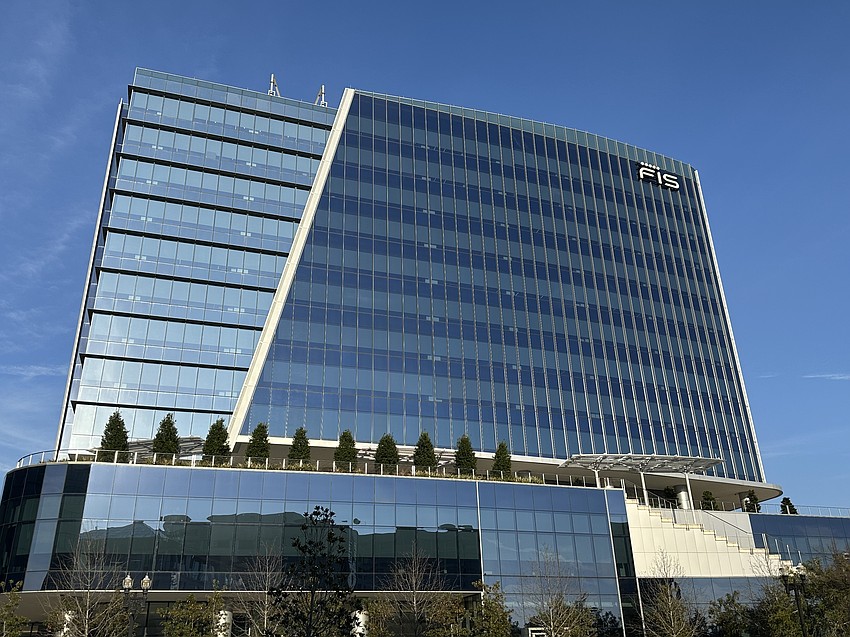
Fidelity National Information Services Inc., or FIS, reported higher earnings after its January acquisition of a credit processing business now called FIS Total Issuing Solutions.
The Jacksonville-based financial technology company said adjusted earnings rose 7% in the second quarter to $763 million, or $1.48 a share, with revenue up 5% to $3.38 billion.
“Our Total Issuing Solutions acquisition thesis is playing out as expected with real client wins and revenue growth across the portfolio as well as significantly improved cash flow,” CEO Stephanie Ferris said in an Aug. 4 conference call.
FIS was spun off from Fidelity National Financial in 2006.
Cadre earnings fall despite higher sales
Cadre Holdings Inc. reported Aug. 5 that second-quarter sales jumped 32% to $207.1 million, due to acquisitions and increased demand for its safety and security products.
However, earnings fell 7% to $11.4 million, or 26 cents a share.
Jacksonville-based Cadre said the lower earnings were caused by increased contingent consideration expense, compensation expense and adverse foreign currency fluctuations.
Before the earnings report, J.P. Morgan analyst Tomohiko Sano initiated coverage of Cadre with an “overweight” rating.
Sano said in his July 27 report that meeting with management “reinforced our view that Cadre is a mission-driven safety platform with leading positions in public safety and an emerging nuclear safety vertical, supported by a record $355 million backlog and a disciplined M&A playbook.”
“We believe the market underappreciates the durability of the replacement-driven public safety base and that the Cadre Operating Model playbook can drive meaningful synergies in recent and future acquisitions,” he said.
Sano set a $40 price target for the stock, which was trading at $30.86 at the time of his report.
Redwire Corp. is known as a space technology company, but it is generating more revenue from its defense technology business after its acquisition of uncrewed aerial systems company Edge Autonomy last year.
Jacksonville-based Redwire reported second-quarter revenue of $117.1 million with a majority of it — $61.9 million — from defense technology.
Redwire completed the acquisition of Edge Autonomy on June 13, 2025, near the end of the second quarter and only reported defense tech revenue of $5.1 million for that quarter.
Space revenue of $55.2 million in the 2026 second quarter was slightly lower than the year-earlier period.
Redwire reported an adjusted net loss of 9 cents a share in the 2026 second quarter.
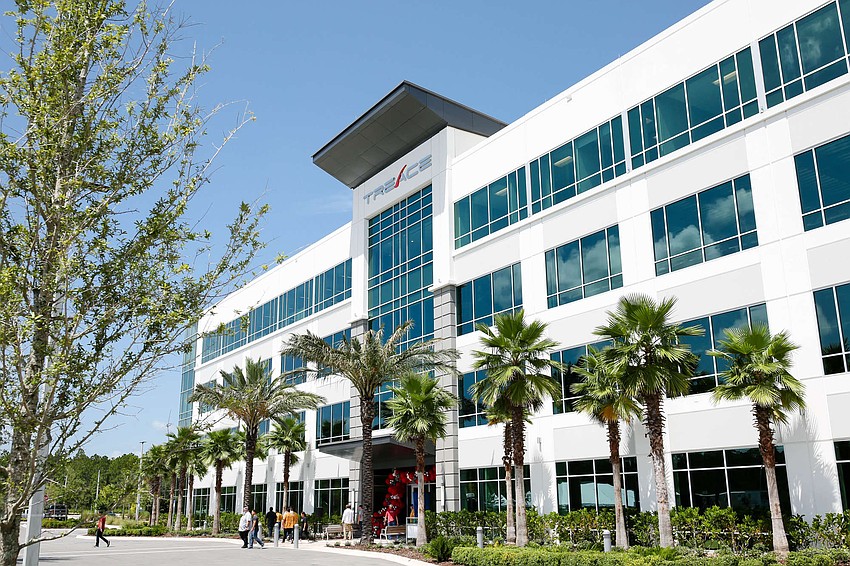
Treace Medical Concepts Inc. reported second-quarter revenue fell 4% to $45.4 million.
The Ponte Vedra-based maker of surgical products to treat bunions and other foot issues is counting on the introduction of new products to increase sales after two years of disappointing results.
“We continue to focus on investing in growth initiatives to leverage this growing portfolio while driving improved profitability, positioning us for stronger growth expected in the second half of the year,” CEO John Treace said in an Aug. 7 conference call.
“More specifically, this year we expect to return to positive revenue growth in our seasonally strongest fourth quarter,” he said.
FRP Holdings Inc. reported a second-quarter net loss of $344,000, or 1 cent a share, as revenue rose 2% to $11.1 million.
Jacksonville-based FRP develops commercial properties largely in the Washington, D.C., market.
“Second quarter results continued to reflect the occupancy pressure we flagged exiting last year across our DC multifamily assets and the Maryland industrial portfolio, alongside higher G&A tied to the Altman integration,” CEO John Baker III said in an Aug. 4 news release.
FRP acquired Altman Logistics Properties in October 2025.
“Our priorities remain unchanged: lease the Maryland industrial portfolio, stabilize occupancy across the DC multifamily assets, and deliver our active development projects on schedule,” Baker said.
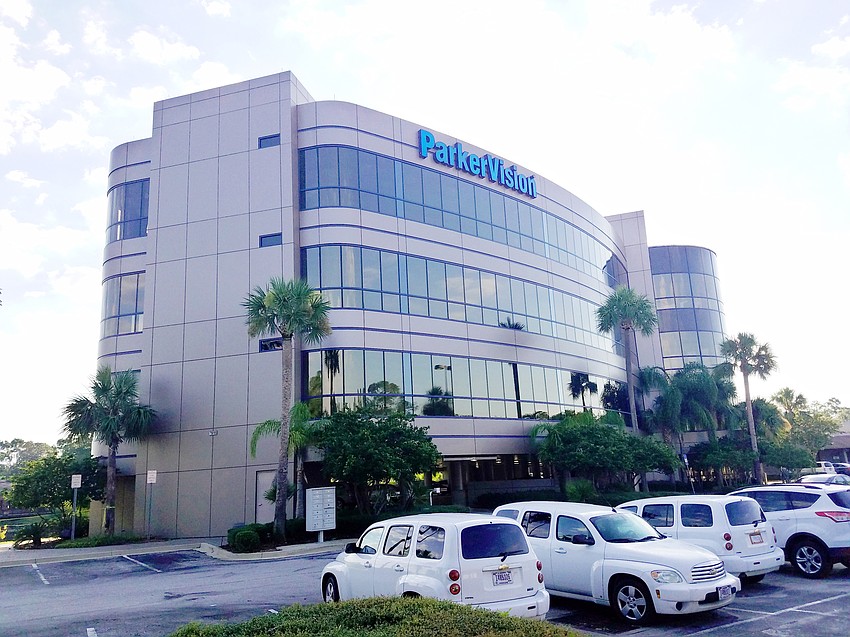
ParkerVision Inc. had no revenue in the second quarter but a noncash accounting gain gave the company a $148,000 net profit.
The Jacksonville-based developer of wireless technology has no products on the market and is focused on several patent infringement lawsuits against major telecommunications manufacturers alleging they are infringing on its technology.
In an Aug. 6 news release, CEO Jeffrey Parker said the company is in a “hurry up and wait period” in its pending court cases.
“While we are anxious to get through these delays, we remain confident on the merits of our cases and enthusiastic to get these cases to jury trials,” he said.