
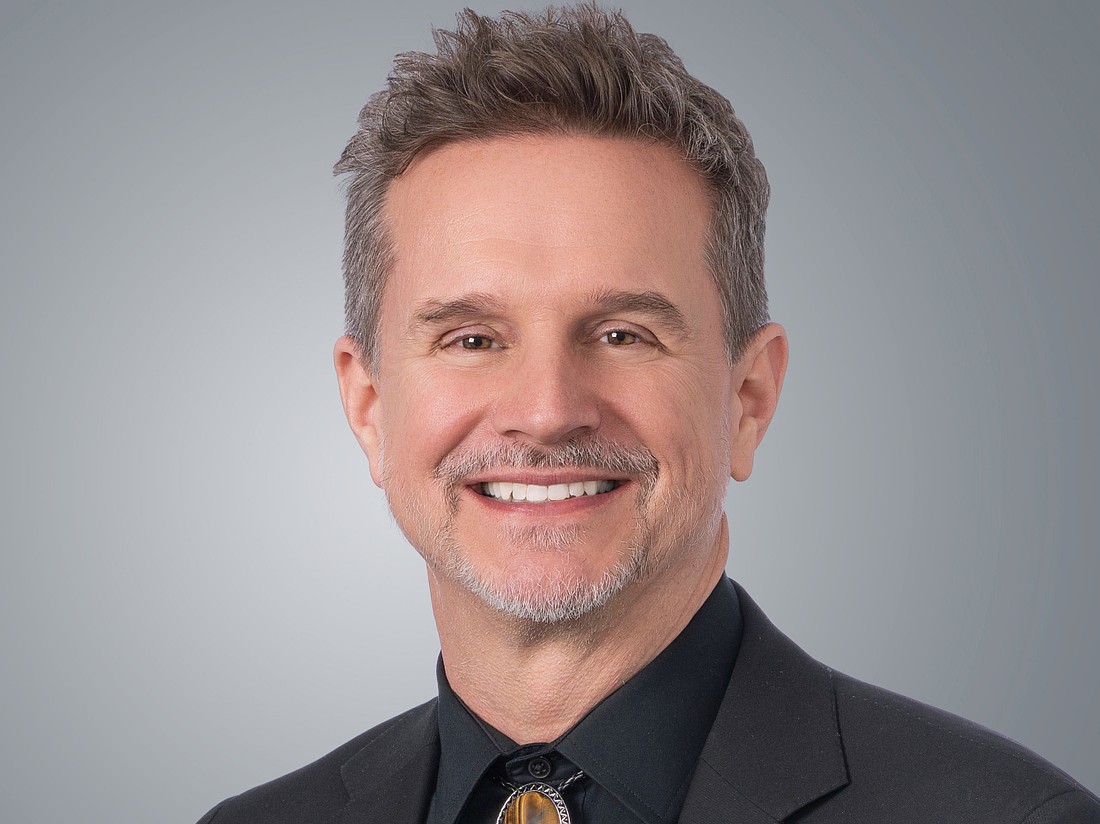
The Texas-based aircraft manufacturer that plans to move its operations to Jacksonville has a new CEO.
In a May 4 news release, Otto Aerospace announced the company’s board appointed Scott Drennan, its president and chief operating officer, to serve as president and chief executive officer.
Drennan succeeds Paul Touw, who had served as CEO since 2022.
“Great companies are built in chapters, and Paul was exactly the leader we needed to guide Otto through its formative years,” Otto Aerospace Board Chair Dennis Muilenburg said in the release.
“He had the vision to see what this technology could become and the conviction to build a great organization around it.”
The move comes after Otto’s business jet, the Phantom 3500, completed preliminary design review in February. It also follows independent test flights of a drone aircraft built by the company.

The release said Drennen is expected to “build on this foundation, to transform the Phantom 3500 from a visionary concept into a market reality, and to make Otto Aerospace a dominant force in next-generation aviation, including opportunities in defense unmanned aerial systems.”
Muilenburg said in the release that “as our company transitions from conceptual design to building and flying aircraft, Scott is exactly the right leader for our next chapter.”
On March 26, the Daily Record reported that the city was reviewing a permit application for a $12.1 million renovation of a Cecil Airport hangar for research and development.
Balfour Beatty Construction LLC is the contractor for the conversion of Hangar 825 at 6105 Flightline Road in West Jacksonville.
A March 23 city permit allowed the contractor to move ahead with interior demolition of 59,130 square feet of space at a project cost of $500,000.

The Jacksonville Aviation Authority owns the property.
Otto announced in June 2025 it would establish a facility to build its Phantom 3500 business jet at Cecil Airport. The company was known then as Otto Aviation but changed its name in September 2025.
Otto said it would build more than 600,000 square feet of office and manufacturing space by Jan.1, 2032. Plans called for creation of at least 400 jobs at an average $90,000 salary by the end of 2031, with possible expansions that would increase the workforce to 1,200 by 2040.

Otto said it plans to relocate its headquarters to Jacksonville.
The company said its total capital investment in Jacksonville would be $430 million.
Otto has said the first test flight of the Phantom 3500 is planned for 2027, with certification and deliveries targeted for 2030.
Otto said it designed the carbon-fiber twin-engine jet with fuel efficiency, extended range and reduced emissions in mind. The aircraft features a laminar flow design in which the fuselage is shaped somewhat like a football.
According to the company, the design reduces drag by 35% and fuel usage by more than 60% compared with traditional business jets.