
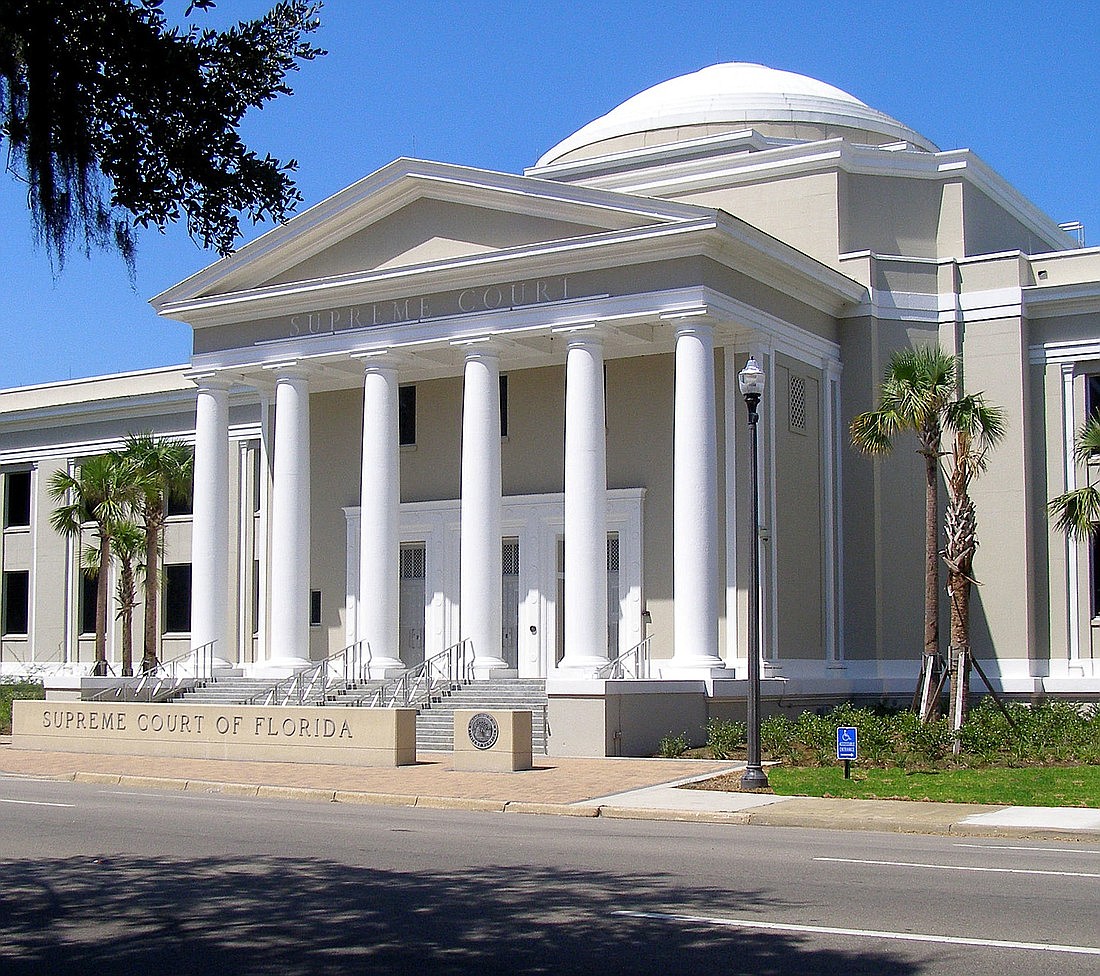
The Florida state court system began studying how technology could benefit judicial case management in 2021 when the Workgroup on Trial Court Technology Strategies was established within the state Judicial Management Council.
One of the work group’s recommendations was that The Florida Courts Technology Commission develop a template that could be used to develop a local technology governance structure in each of the state’s 20 judicial circuits.
The template established by the commission addresses electronic document and court record processes, electronic case management tools, security, and the judiciary’s and the clerk’s maintenance needs.
An administrative order signed May 7 by state Supreme Court Chief Justice Carlos Muniz directs each circuit’s chief judge to establish a committee by Dec. 31, 2026.
The committee will include the chief judge or their designee, judges, judicial assistants, trial court administrators, court technology officers or chief information officers, case management designee and clerks of court or their designees.
At the discretion of the chief judge, who is chair of the circuit committee, the committee also may include the circuit’s public defender, state attorney, county sheriffs and representatives of the state Department of Corrections and The Florida Bar.
The committees are directed to implement recommendations in the template, including:
The order from the state Supreme Court states that “establishing a baseline for circuit technology governance promotes consistent practices and procedures across the state, encourages coordination with justice system partners to share information and enhance services that benefit court users, and helps avoid technology-related disruptions to critical trial court operations.”