
Despite weak freight trends that have been hampering earnings, Jacksonville’s two big freight haulers basically led the local stock market in the first quarter.
Railroad company CSX Corp. rose 13% and trucking company Landstar System Inc. rose 12% in the first three months of the year during an overall down market for stocks.
The only Jacksonville-based company with a bigger gain was Rayonier Advanced Materials Inc., which jumped 88% after an investment company disclosed in February it made an offer to buy the company, which was rejected by its board of directors.
In an April 6 preview report on first-quarter earnings for freight stocks, Morgan Stanley analyst Ravi Shanker said investors have considered transportation stocks to be a defensive play in the weak market.
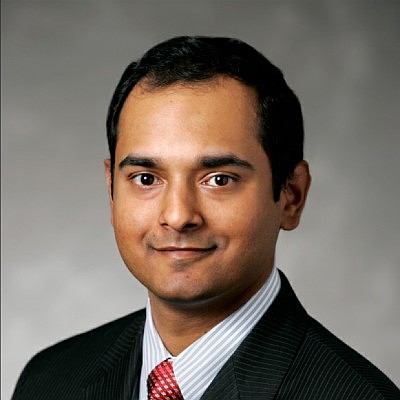
Shanker said while the Standard & Poor’s 500 index was down 6% from its 2026 high, transportation stocks had gained 1%.
As earnings reports come out, “focus will also be on perceived idiosyncratic winners in the space (particularly fueled by the likely temporary migration of tech investors) and whether they can keep their momentum,” he said.
Shanker has an “equal weight" rating on CSX with a price target of $30, well below its first-quarter closing price of $41.05.
“We believe US rails deserve to trade at discounts to historical valuation due to structural growth and pricing headwinds relative to history,” he said.
Shanker also has an “equal weight” rating on Landstar.
“Focus will also be on insurance updates as well as color on how Landstar might be relatively impacted by supply-side regulatory changes,” he said.
Landstar’s fourth-quarter earnings were reduced by elevated insurance and claims costs.
CSX is the first Jacksonville-based company to release earnings every quarter and is scheduled to report them April 22.
Landstar’s report is scheduled for April 28.
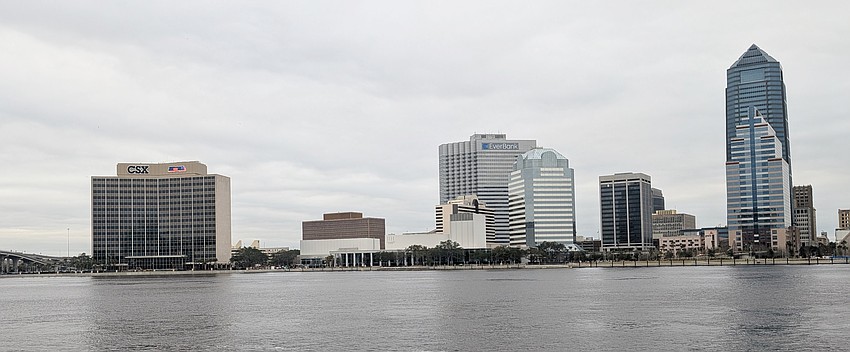
Federal railroad regulators ruled against CSX in a dispute with its main eastern U.S. competitor, Norfolk Southern Corp., about a short-line railroad in Virginia.
On April 6, the U.S. Surface Transportation Board approved an application by Norfolk Southern to control the Norfolk & Portsmouth Belt Line Railroad, over an objection by CSX.
The Belt Line Railroad operates a 36-mile rail line from Portsmouth to Norfolk that connects with CSX’s rail lines at Portsmouth.
According to the transportation board ruling, the Norfolk & Portsmouth Belt Line Railroad was established in 1896 as a joint venture of eight regional rail carriers and after consolidations, Norfolk Southern owned 57% of the railroad and CSX owned the other 43%.
Norfolk Southern applied to the Surface Transportation Board for full control in February 2025.
“The Board’s approval of control here is based on finding that, as conditioned, the transaction would not likely result in a substantial lessening of competition, the creation of a monopoly, or restraint of trade in freight surface transportation,” the ruling said.
CSX will still have access to the Belt Line Railroad.
In a previous Surface Transportation Board filing, Norfolk Southern said it will “continue to adhere to NPBL’s century old governance principles to be an impartial terminal railroad operated on a uniform, cost-plus basis for its connecting carriers to serve customers along its lines.”
The past and present owners of the Jacksonville Jaguars were included on Forbes magazine’s list of 250 greatest living self-made Americans.
Current owner Shad Khan ranked 21st on the list and Wayne Weaver, who sold his majority interest in the Jaguars to Khan in 2012, ranked 80th.
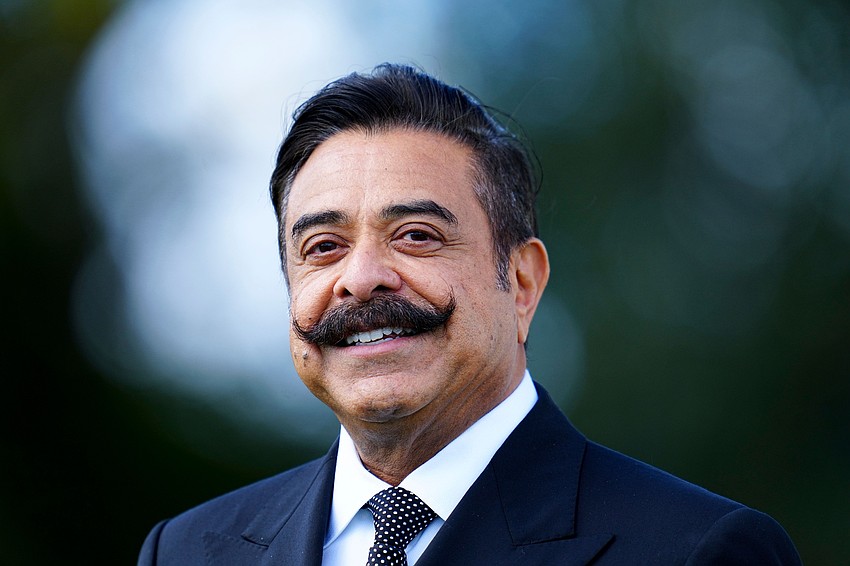
Forbes said the list of 250 people, posted on its website April 9, is part of an initiative related to the 250th birthday of the United States.
While other lists by Forbes rank people objectively by their wealth, its list of top self-made Americans has more subjective criteria.
“While we put a heavy emphasis on rags-to-riches billionaires, we also included pioneering scientists, Supreme Court justices and others whose ‘wealth’ is measured in influence and impact, not just dollar signs,” the magazine said.
It also used a self-made score “that quantifies the ‘distance traveled’ by each individual—separating those who started with nothing from those with a big head start,” it said.
“The final ranking encompasses financial success, obstacles overcome and enduring impact.”
For Khan, “the Pakistani immigrant arrived with $500 in his pocket and worked nights as a dishwasher while studying at the University of Illinois at Urbana-Champaign. He later designed a one-piece truck bumper, the basis of his $15 billion fortune,” Forbes said.
He built his fortune by turning that bumper into a major auto parts company called Flex-N-Gate Corp., before buying the Jaguars.
For Weaver, “the retail fashion mogul grew up in public housing before running Nine West,” Forbes said.
Weaver left his position as CEO of shoe retailer Nine West at about the same time he was awarded the Jaguars expansion franchise in 1993, but continued in the footwear retailing business as head of Shoe Carnival Inc.
Jacksonville-based commercial real estate developer FRP Holdings Inc. reported lower earnings for the fourth quarter and all of 2025, largely due to expenses from a major acquisition in the quarter.
FRP acquired Altman Logistics Properties in October for $33.5 million, a deal that will significantly expand its development activities.
Because of expenses tied to that deal, fourth-quarter earnings fell 77% to $380,000 and full-year earnings fell 48% to $3.3 million.
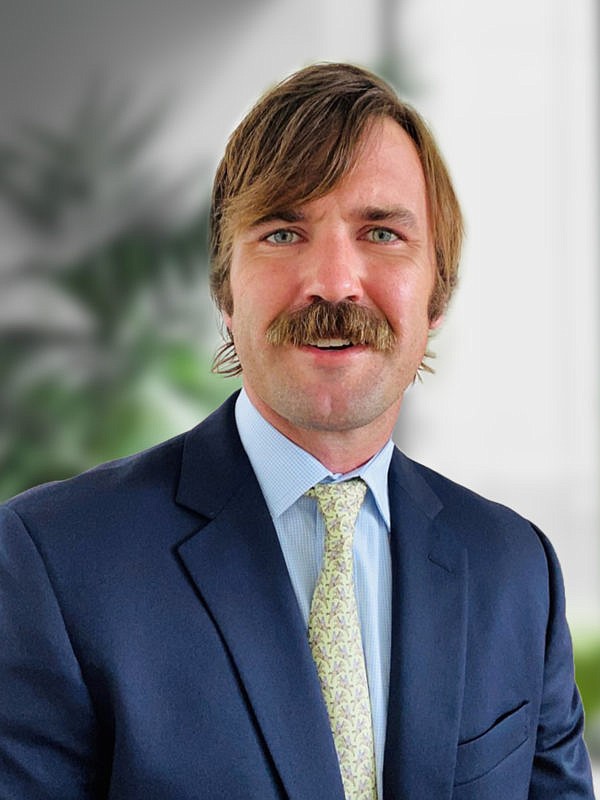
In an April 10 conference call, CEO John Baker III said the financial results don’t tell the full story of FRP’s activity in 2025.
“It can’t be overstated what the acquisition of the Altman Logistics platform and its team opens up for the company in terms of where we develop, how we develop, and with whom,” he said.
“This acquisition has refined and augmented a platform and pipeline that management expects will drive earnings and earnings growth, operational cash flow, and net asset value.”
President David deVilliers III said FRP’s stock is undervalued, based on the company’s development pipeline.
“As we enter 2026, our focus is shifting from repositioning and investment toward execution and the conversion of embedded value into cash flow,” he said.
The company’s net asset value is about $37.60 a share while the recent market price of the stock has been between $20 and $24, deVilliers said.
“Closing this gap remains a central focus of management, and we believe execution across leasing, development stabilization, and disciplined capital allocation will be the primary drivers in narrowing that discount over time,” he said.
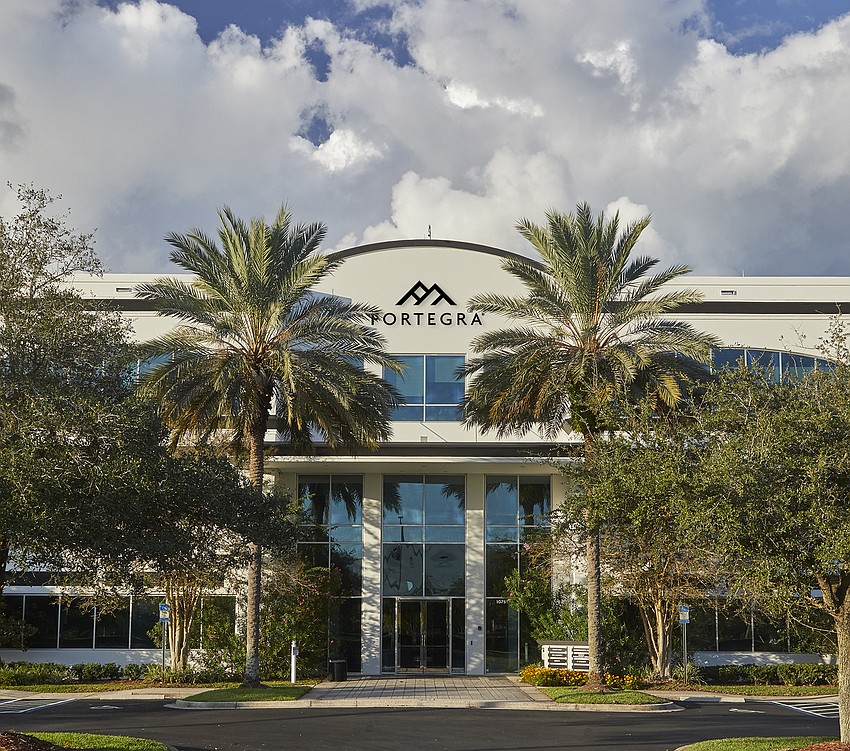
Insurance rating agency AM Best said April 9 its ratings on The Fortegra Group and its subsidiaries remain under review with positive implications, pending its acquisition by South Korea-based DB Insurance Co. Ltd.
The Jacksonville-based specialty insurance company’s majority owner, Tiptree Inc., agreed in September to sell Fortegra to DB Insurance for $1.65 billion. That deal is expected to close by mid-2026.
AM Best said in a news release the review with positive implications reflects “AM Best’s view that the announced acquisition of Fortegra by DB Insurance Co., Ltd., if completed as contemplated, could enhance Fortegra’s financial flexibility, operating scale and execution capabilities.”
“The action also considers Fortegra’s strategic importance to the prospective parent as a platform for international growth and expansion,” it said.
DB Insurance has not announced any details about the operations of Fortegra after it completes the acquisition.
However, Fortegra CEO Rick Kahlbaugh said in a note to employees after the deal was announced that Fortegra will operate independently as part of DB’s specialty insurance business
Tiptree’s 2024 annual report said Fortegra had 1,144 employees in 24 offices in nine countries, but it did not say how many work in the Jacksonville headquarters.
Fortegra had revenue of $2.01 billion and earnings of $85.3 million in 2025, according to Tiptree.
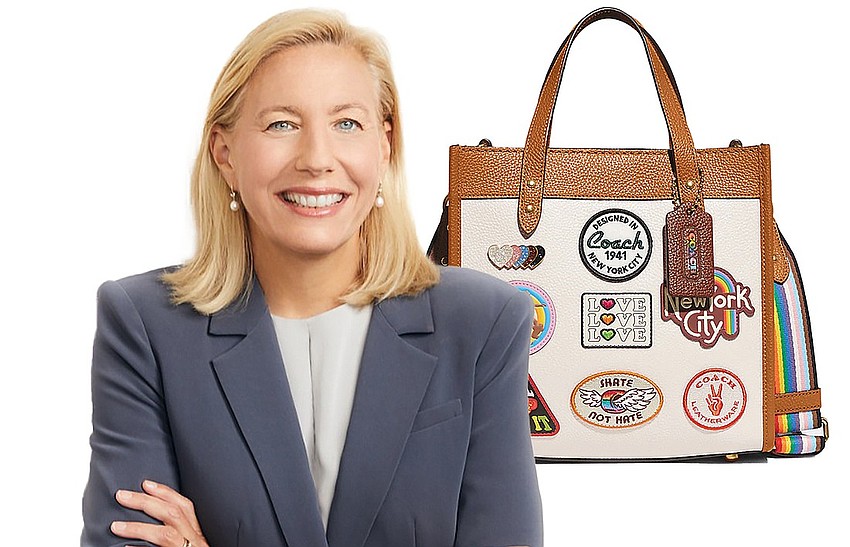
Tapestry Inc.’s stock has been soaring, more than doubling in price over the past year on the strength of its Coach handbag brand.
However, its other brands have faltered. Tapestry sold off its money-losing luxury footwear brand Stuart Weitzman last year and sales at its Kate Spade fashion accessory brands fell 11% in the six months ended Dec. 27 to $620 million.
In contrast, Coach sales jumped 24% to $3.57 billion.
The New York City-based company handles much of its North American distribution for Coach products from a 1.05 million-square-foot warehouse at Jacksonville International Tradeport near Jacksonville International Airport.
But in an April 6 interview on a Yahoo Finance podcast, CEO Joanne Crevoiserat expressed confidence that the Kate Spade brand will turn around.
“It’s a culturally iconic brand that was so unique and distinctive in its day,” Crevoiserat said. “And, it has been really fun to invest in that brand as well and make it relevant to a whole new generation of consumers,” she said.
Yahoo said Tapestry’s stock had risen 559% since Crevoiserat became permanent CEO in October 2020. It’s up 17% so far in 2026 despite the overall market turmoil.
“The leadership team and I now have even more confidence about the exponential growth that’s in front of us, just organically with these two brands,” Crevoiserat said.