
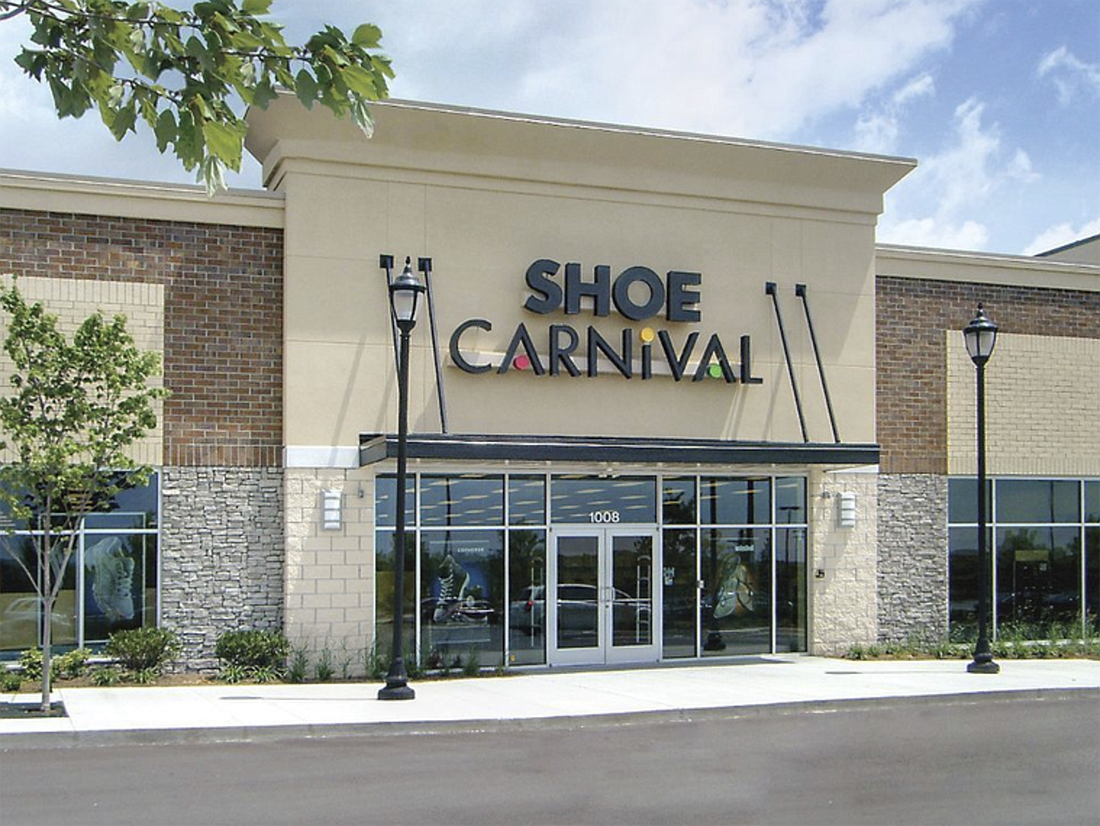
A year after announcing plans to convert most of its stores to its more upscale Shoe Station brand, Shoe Carnival Inc. reversed course.
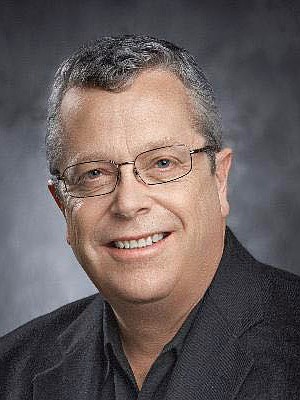
“The Shoe Carnival and Shoe Station banners each serve distinct consumer segments, and the company is best positioned to operate both banners as permanent, independent components of our portfolio. We are not pursuing a single banner strategy,” Interim CEO Cliff Sifford said in the company’s quarterly conference call May 21.
Sifford, who retired as CEO in October 2021, took over again in February 2026 when his successor, Mark Worden, left the company.
Sifford said after reviewing the company’s strategy, he and the management team decided not to push ahead with the conversions.
The footwear retailer controlled by former Jacksonville Jaguars owner Wayne Weaver currently has 281 Shoe Carnival stores and 145 Shoe Station locations.
The company said a year ago its plan was to have 80% of its stores converted to Shoe Station by March 2027. The Shoe Station brand targets a more affluent customer than Shoe Carnival.
After reviewing operations, Sifford said the Shoe Carnival banner “has more potential than recent results have shown.”
Sales at Shoe Carnival stores declined by 2.2% in the first quarter ended May 2, but Sifford said that was an improvement from last year’s trends.
“The plan (for Shoe Carnival stores) from here is straightforward. We will restore the right product mix that delivers competitive opening price points our customer expects. We’ll pair that assortment with a measured in-store promotional cadence and supporting marketing presence,” he said.
Shoe Station sales fell 3.1% in the quarter.
Along with its plan to rebrand most of its stores, Shoe Carnival announced in November it would change its corporate name to Shoe Station Group Inc.
Shareholders are scheduled to vote on the name change at the company’s annual meeting June 10. Sifford did not say if the company is planning to move forward with the name change.
Weaver is chairman of Shoe Carnival and, along with his wife, Delores, its largest shareholder, owning 31.5% of the stock.
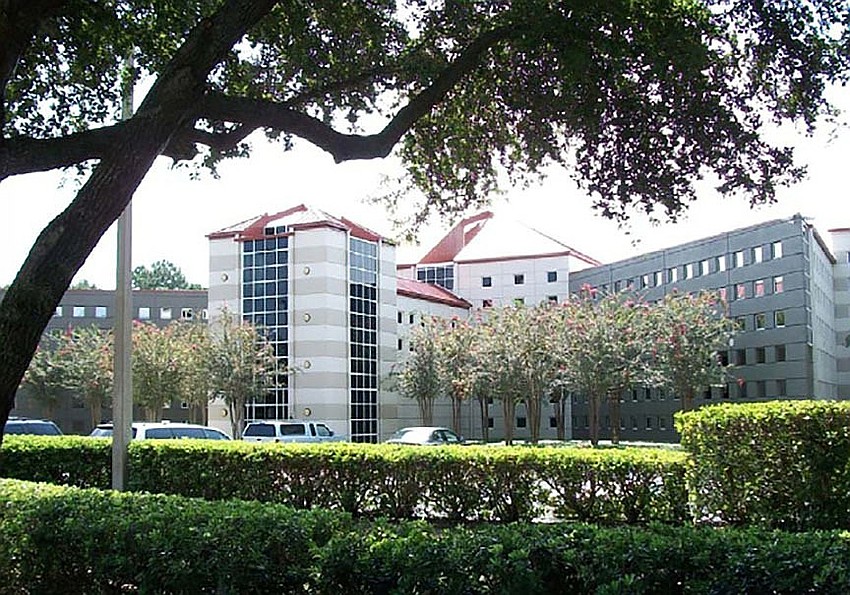
Duos Technologies Group Inc. reported a sharp drop in first-quarter revenue as the Jacksonville-based company winds down other businesses to focus on data centers.
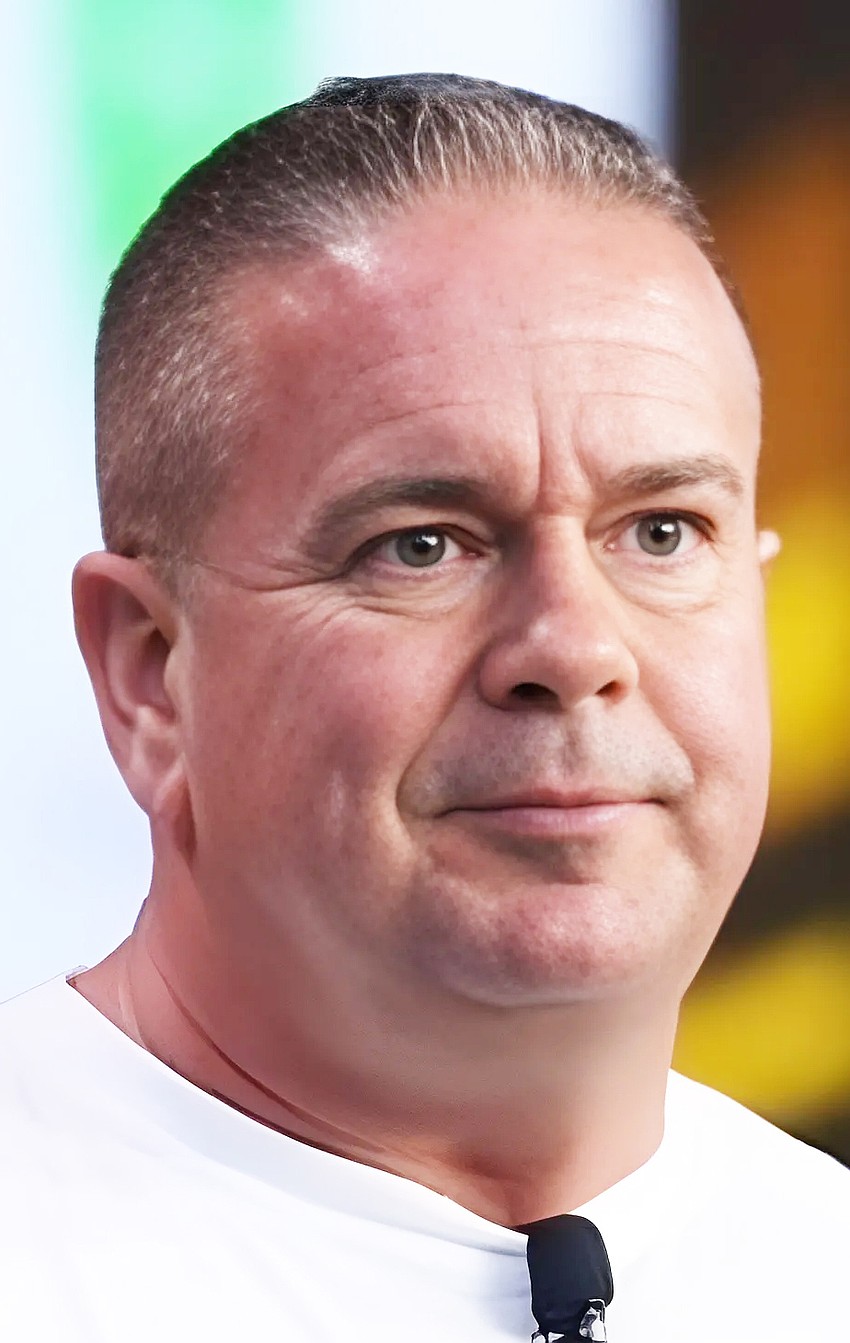
“The demand for edge computing and AI infrastructure continues to grow rapidly, and we believe Duos is well positioned to address this demand through our modular data center platform,” CEO Doug Recker said in a May 18 conference call, according to a company transcript.
“Our focus for the first half of 2026 is to continue executing our sales strategy to acquire new customers in our markets to fully utilize capacity of each EDC (edge data center),” he said.
Duos reported first-quarter revenue dropped 45% to $2.72 million. The company said the first-quarter decrease was due mainly to the ramp down of its two-year agreement to manage power plant assets for Jacksonville-based APR Energy.
Duos is also looking to divest what had been its main business, providing safety technology for the railroad industry.
“The company is currently going through a fairness opinion on the value of the rail division, and this process is expected to extend into the second quarter,” Recker said.
“As previously discussed, this was a thoughtful decision that will enable us to redeploy capital, reduce SG&A, and focus on higher growth opportunities.”
Duos formed its subsidiary to operate data centers two years ago.
Despite the big drop in revenue in the first quarter, officials said the company remains on track to reach its target of $50 million in revenue for all of 2026.
“Due to the timing of revenue recognition, a significant portion of revenue is expected to be recognized in the second half of the year, during which time we also expect to return to positive adjusted EBITDA (earnings before interest, taxes, depreciation and amortization),” Chief Financial Officer Leah Brown said in the conference call.
A big chunk of revenue is expected from an agreement announced in February to provide services to a data center company called Hydra Host, which Duos said could generate $176 million in revenue over three years.
Duos said it expects to recognize $26 million in revenue from Hydra in the second half of this year.
Recker said the company also signed deals with eight data center companies and expects to invoice $14 million in revenue from those deals before the end of 2026.
NextEra Energy Inc., parent company of Florida Power & Light Co., is also focusing more on data centers.
Juno Beach-based NextEra announced a $67 billion deal May 18 to acquire Richmond, Virginia-based Dominion Energy Inc., which provides electricity to customers in Virginia, North Carolina and South Carolina.
“We believe the combined company can become the go-to partner for large load customers, enabling us to expand and accelerate large load opportunities across our four regulated utilities and across America,” NextEra CEO John Ketchum said in a conference call, according to a company transcript.
Large load refers to data centers. Dominion provides power to data centers in a region of Virginia known as Data Center Alley.
“We view the transaction as allowing NextEra to accelerate its data center ambitions, which had trailed those of its regulated peers, by using Dominion’s expertise and relationships to expedite NextEra’s data center hub plans,” Morningstar analyst Andrew Bischof said in a research note.
Ketchum said the combination of the two companies “enables us to buy, build, finance and operate more efficiently, all to deliver more reliable and affordable electricity to our customers.”
FPL provides electricity services to just about the entire East Coast of Florida, except for Jacksonville.
The companies said as part of the merger agreement, Dominion customers will receive $2.25 billion in bill credits over two years. They did not announce any specific financial benefit for FPL customers.
Ketchum said FPL customer bills are 30% below the national average and are “only expected to grow 2% annually through the end of the decade.”
“The combined company’s unmatched scale and operating platform would enable us to meet electricity demand while maintaining affordability across Florida, Virginia, North Carolina and South Carolina,” he said.
“Both companies are committed to both serving large load customers and maintaining affordability for existing customers. And that means large load must pay their fair share.”
Under terms of the all-stock deal, current NextEra shareholders will own about 74.5% of the merged company.
The merger will require approvals from several federal and state regulatory agencies. The companies expect to close the merger in 12 to 18 months.

Ten days after Beazer Homes USA Inc. rejected its buyout offer, Jacksonville-based Dream Finders Homes Inc. broke its silence May 21 to try again to make its case for the deal.
Dream Finders publicly announced an offer May 11 to buy Atlanta-based Beazer for $25.75 per share, and Beazer rejected the offer later that day saying it undervalued the company.
In a news release, Dream Finders CEO Patrick Zalupski pushed Beazer shareholders to support his company’s offer.
“Beazer is an underperformer and consistently ranks last across every relevant metric among publicly traded homebuilder peers,” Zalupski said.
“We believe the Beazer Board is failing to fulfill its fiduciary duties, as its refusal to engage on our compelling acquisition proposal is not in the best interest of shareholders,” he said.
“We remain fully committed to pursuing this transaction and firmly believe that our offer is the best path forward for Beazer’s shareholders – delivering immediate and compelling value.”
Beazer did not publicly respond to the news release.
Beazer’s stock rose $1.36 to $24.01 May 21 after Dream Finders issued the release.
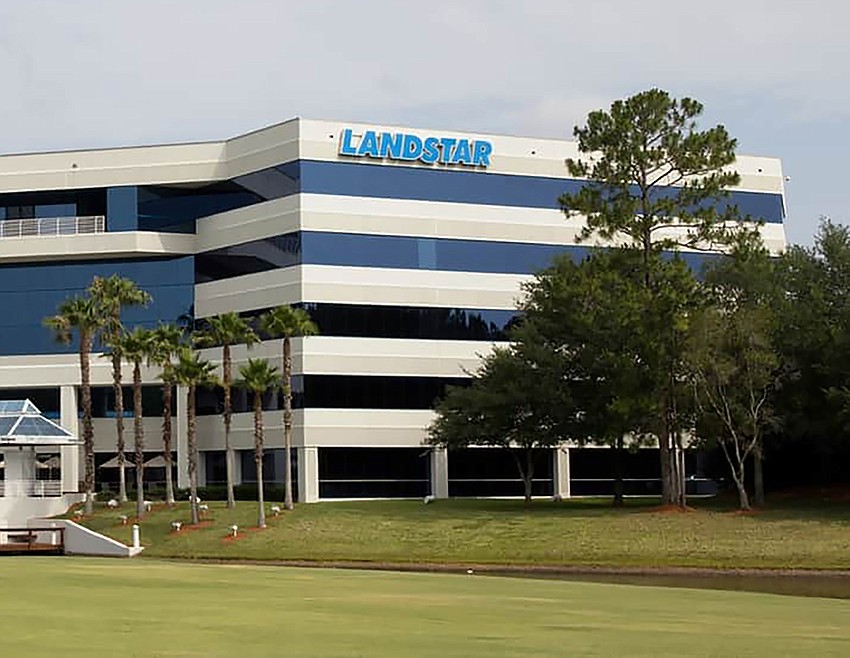
After the U.S. Supreme Court said federal law does not shield freight brokers from lawsuits involving truck drivers, Jacksonville-based Landstar System Inc. said it already has policies in place which focus on safety.
The trucking company does not employ drivers but uses sales agents and drivers who own their own trucks to move freight around the country.
The Supreme Court ruled unanimously May 14 that freight brokers could be sued for accidents involving drivers who were contracted by the brokers. The specific case involved a shipment arranged by Minnesota-based C.H. Robinson, and the court ruled that federal law does not shield the company from liability for damages caused by the driver.
The decision caused several major trucking and logistics companies to issue news releases touting their safety procedures, including a May 19 release by Landstar.
“For years, we have applied disciplined processes to evaluate, qualify and arrange transportation solutions because it is the right thing to do for our customers, our independent agents, and the motoring public. This decision reinforces the importance of how we operate and is consistent with the standards that make Landstar the leading platform for independent agents, BCOs, and third-party carriers,” CEO Frank Lonegro said in the release.
BCOs are business capacity owners, which are drivers who own their own trucks and are contracted to haul loads by Landstar.
Landstar said improving technology has helped its vetting process to ensure it is contracting with safe drivers.