

After several sluggish years, Fidelity National Information Services Inc., or FIS, is touting several technological innovations to increase profitability, including a partnership with artificial intelligence giant Anthropic.
“The most important innovations in financial technology right now, AI, digital currency, data, are all running through FIS,” CEO Stephanie Ferris said in a May 8 conference call.
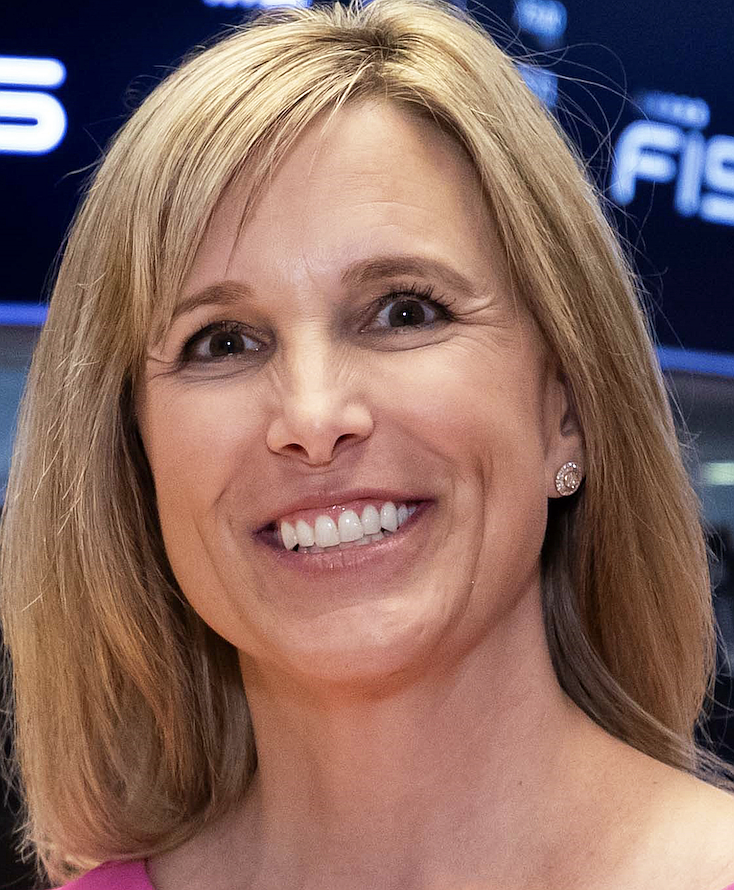
The Jacksonville-based financial technology company reported first-quarter adjusted earnings rose 10% to $705 million, or $1.36 a share, with revenue rising 30% to $3.3 billion.
“What you’re seeing in our first quarter of 2026 will translate into durable, predictable revenue growth and margin expansion in the quarters ahead,” Ferris said.
Three days before the earnings report, FIS announced its partnership with Anthropic to develop AI technology to help banks detect financial crimes.
However, FIS isn’t giving any financial projections for the partnership.
“We would expect to see revenue come forward as we deploy those agents into the market in 2026, but we’d expect to see revenue really take shape in 2027. Nothing in the guide currently,” Ferris said.
FIS’ earnings were higher than analysts’ forecasts of $1.26 to $1.30 a share, J.P. Morgan analyst Tien-tsin Huang said in a research note.
Despite the earnings beat, FIS’ stock dropped $3.76 to $43.49 on May 8 after the report.
“We attribute the reaction to a mixed 2Q outlook that was modestly light on profitability, a key investor watch item given FIS’s uneven track record on margins,” said Huang, who maintained an “overweight” rating on the stock.
“We think shares deserve better on a solid 1Q,” said Wells Fargo analyst Jason Kupferberg in his note.
Kupferberg also has an “overweight” rating.
“FIS delivered and guided to continued expectations for about 5% organic Banking revenue growth in 2026, while also reiterating its $3 billion GAAP free cash flow target for 2028, two important items,” wrote UBS analyst Timothy Chiodo, who rates the stock as a “buy.”
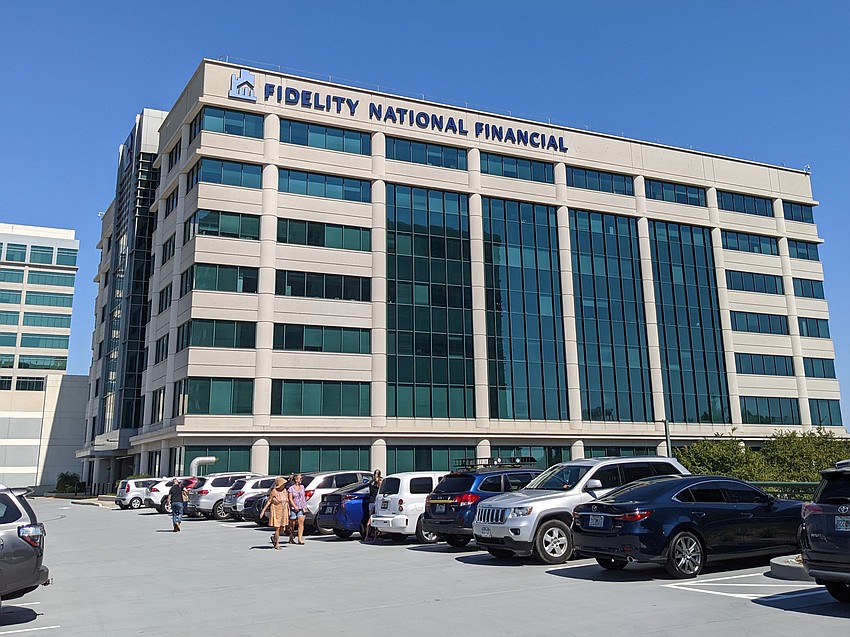
Fidelity National Financial Inc., which spun off FIS as a separate company in 2006, said investments in technology and AI are enhancing its business as it reported higher first-quarter earnings.

The Jacksonville-based title insurance company said adjusted earnings rose 17% to $249 million, or 93 cents a share, with revenue up 18% to $3.23 billion.
CEO Mike Nolan said in a May 7 conference call that mortgage refinancing orders jumped 52% in the first quarter as mortgage rates moved into the low 6% level, but volumes moderated in April as rates turned higher again.
“Once mortgage rates improve, we believe residential purchase and refinance activity will accelerate and trend toward historical levels. This recovery represents additional earnings power given the operational leverage that we have built into our model,” he said.

After announcing in April it was exploring strategic alternatives, Rayonier Advanced Materials Inc., or RYAM, added few details as it reported first-quarter results.

“We have not set a timetable for completion of the review, and we do not intend to provide updates unless and until disclosure is appropriate or required,” Chief Financial Officer Marcus Moeltner said in a May 6 conference call.
“The alternatives under evaluation include, but are not limited to, continued execution of our stand-alone strategic plan, a strategic investment or partnership that strengthens the business, a merger or other business combination and the sale of part or all of the company,” he said.
The Jacksonville-based maker of cellulose specialties products has reported seven straight years of losses from continuing operations and had a net loss of $81 million in the first quarter.
Moeltner said the company is taking steps to improve results.
“Even with a weak first quarter, we generated $12 million of adjusted free cash flow. This reinforces that positive free cash flow in 2026 will come from a combination of better operating performance, improved mix, commercialization of new offerings, disciplined capital allocation and balance sheet actions as needed,” he said.
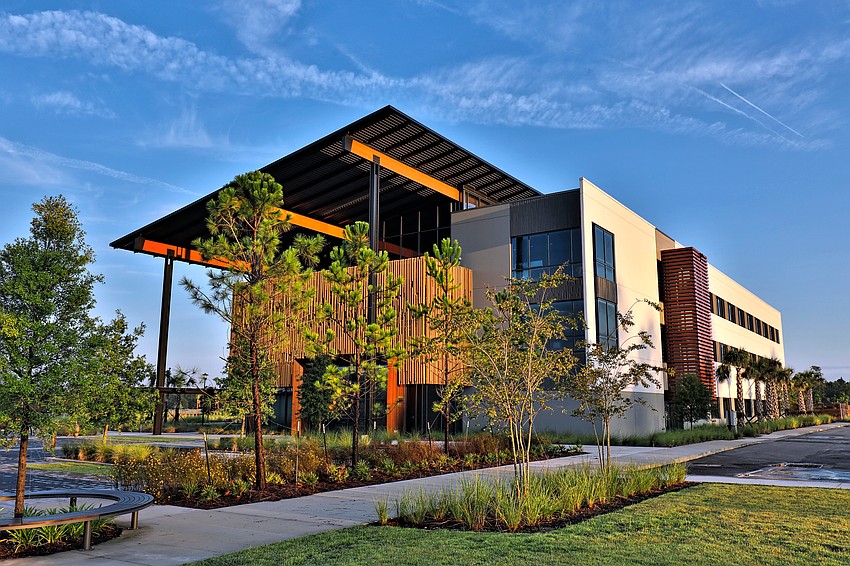
Rayonier Inc. said the recent fires in Georgia damaged about 10,000 acres of its timberland as it worked with neighboring landowners and government agencies to help contain the fires.

However, CEO Mark McHugh said in a May 7 conference call the company’s preliminary assessment is that the fires will not have a significant financial or operational impact to its business.
Rayonier, headquartered in Wildlight in Nassau County, reported pro forma earnings of $17.4 million, or 7 cents a share, in the first quarter after completing its merger with PotlatchDeltic Corp. on Jan. 30.
McHugh said the company continues to expect $40 million in annual cost savings within the next two years.
“Since closing the merger, we’ve made significant progress toward these objectives, and we remain on track to achieve our synergies targets,” McHugh said.
Rayonier has said it would move the company headquarters to Atlanta after the merger but he did not discuss that in the conference all.
Rayonier and RYAM split into separate companies in 2014.
Redwire Corp. has never been profitable since it was formed in 2020, but CEO Peter Cannito said trends are improving for Jacksonville-based space and defense technology company.
“In Q1, we demonstrated the ability to grow while simultaneously increasing our gross margin. This is the focus,” Cannito said in Redwire’s quarterly conference call May 7, according to a company transcript.

Redwire’s gross profit – revenue minus cost of sales – was $25.8 million in the first quarter, or 26.6% of total revenue of $97 million.
That’s up from the company’s gross profit margin of 14.7% in the first quarter of 2025.
Redwire’s revenue was 58% higher than the first quarter of 2025, after it expanded with the June 2025 acquisition of uncrewed aerial systems company Edge Autonomy.
That deal grew its defense technology business while the company continues to gain new contracts for its space technology.
Cannito said Redwire’s contracted backlog of business at the end of the first quarter was $498.1 million, giving him confidence in its full-year revenue forecast of $450 million to $500 million, up from $335.4 million in 2025.
Redwire had a net loss of $76.5 million in the first quarter which included $42.5 million in equity-based compensation costs related to the Edge Autonomy deal.
However, Cannito expressed confidence in the company’s direction.
“We returned to strong growth in areas with better gross margins and therefore, we will continue to invest in our highest potential opportunities where we are well positioned with differentiated capabilities,” he said.
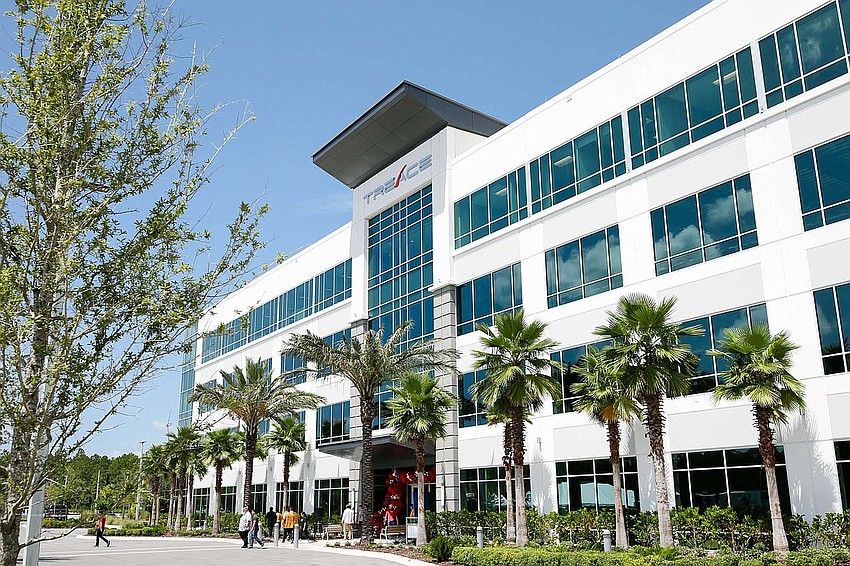
Treace Medical Concepts Inc. reported lower first-quarter revenue, but the Ponte Vedra-based company expects the introduction of new surgical products to treat bunions will increase sales.

“We’ve expanded our portfolio with multiple new procedure innovations, which we believe position us to address a broad spectrum of surgeon and patient preferences across all bunion classes,” CEO John Treace said in a May 8 conference call.
“We expect this breadth of offerings will support accelerated growth in procedure volume, increased wallet share and a meaningfully expanded serviceable market opportunity,” he said.
Treace Medical reported first-quarter revenue fell 10% to $47.2 million.
“We believe this trend will improve over time as we annualize the launch of the new products we launched in 2025, and we believe we’re well positioned to navigate these factors and drive long-term growth,” Treace said.
The company is projecting full-year revenue of $202 million to $212 million, compared with $212.7 million in 2025.
Treace Medical had a net loss of $18 million in the first quarter.


Proficient Auto Logistics Inc. reported lower first-quarter revenue, as weakness in the automobile sales market affected results.
Jacksonville-based Proficient, which transports vehicles from manufacturers to dealers, reported revenue fell 1.6% to $93.7 million and the company had a net loss of $6.5 million, or 23 cents a share.
“We’re clearly not satisfied with the outcome, and our focus remains on execution and resilience in challenging market conditions,” CEO Rick O’Dell said in a May 7 conference call, according to a company transcript.
“Looking to the second quarter, recent trends indicate more stable volume levels, supported by seasonal strengthening, improved weather, dealer inventory and strong tax refunds,” he said.

Firehouse Subs increased first-quarter sales by 7.2% to $347 million due to new restaurant openings, according to parent company Restaurant Brands International Inc.
However, sales at restaurants open for more than one year fell 0.5%.
Jacksonville-based Firehouse added 109 restaurants since the first quarter of 2025, bringing the chain to 1,461 locations as of March 31, 2026.
Firehouse’s adjusted operating income grew by $3 million in the quarter to $14 million.
Miami-based RBI, which also operates the Burger King, Popeyes and Tim Hortons restaurant chains, said its systemwide sales rose 6.2% to $11.6 billion.
Adjusted earnings rose by 11 cents a share to 86 cents.
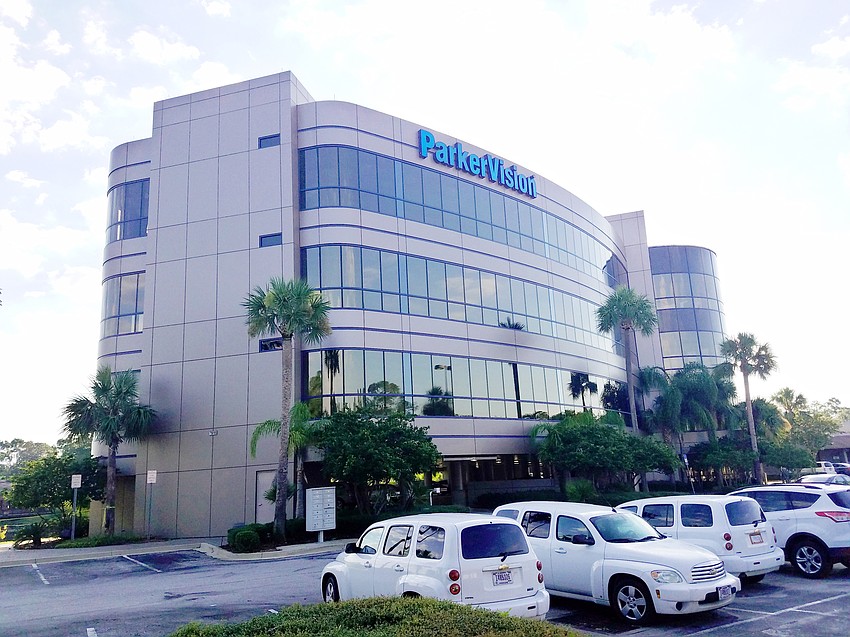
Jacksonville-based ParkerVision Inc. reported a first-quarter net loss of $1.6 million, or 1 cent per share.
The developer of wireless technology has no products on the market and reported no revenue in the quarter.
ParkerVision is focused on several patent infringement lawsuits against major telecommunications manufacturers alleging they are illegally using the company’s technology.