
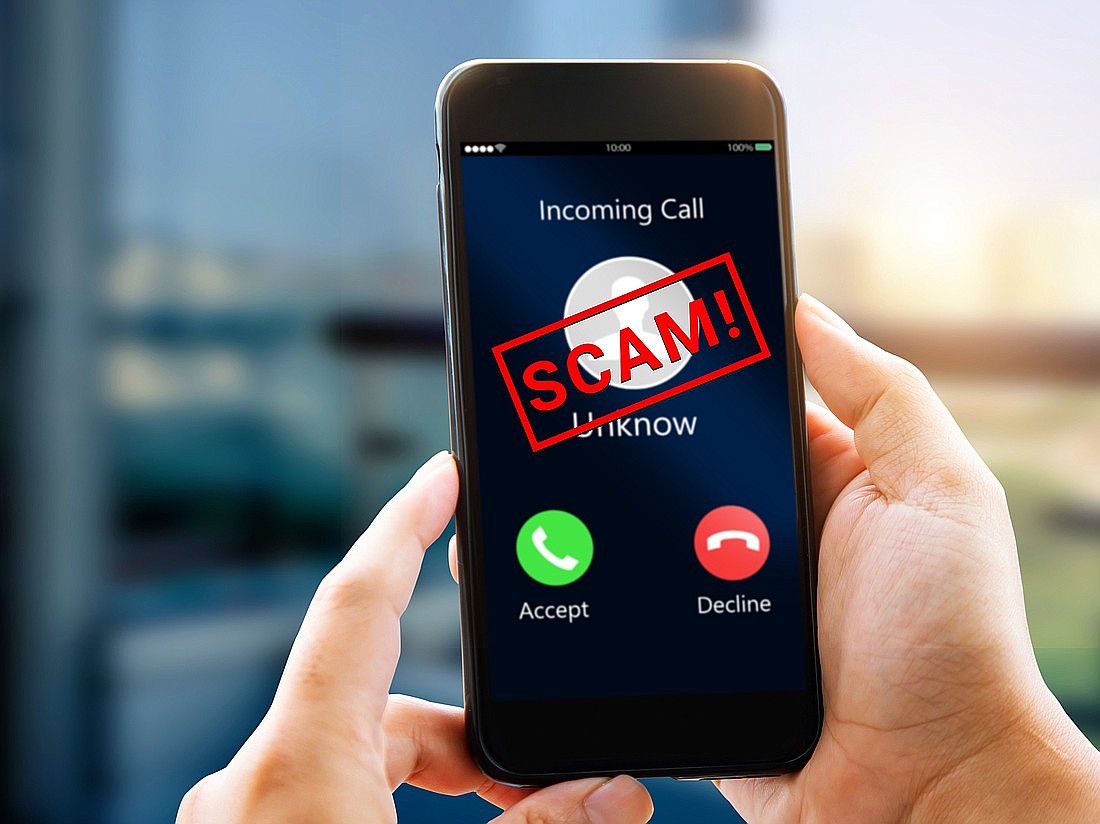
The FBI Jacksonville Field Office is warning the public about a scheme involving scammers impersonating law enforcement or government officials, including FBI special agents, in attempts to extort money or steal personal identity information.
In an April 20 bulletin, the FBI said initial contact is made via a text message, email or phone call.
On the phone, scammers often spoof caller ID information to make fraudulent calls appear to be coming from an agency’s legitimate phone number or even from the possible victim’s bank, the FBI said. Recipients should hang up immediately and report the call to law enforcement.
Fraudulent emails and texts may give the appearance of legitimacy by using pictures of the FBI director, FBI credentials and/or the FBI seal and letterhead. Common signs of a scam email include misspellings, missing words and incorrect grammar. Signs of a scam text or phone call include the scammer attempting to place time constraints on actions to create pressure to act fast without thinking.
The FBI said the scam is being perpetrated in Northeast Florida.
Its tips to avoid the scam are:
The FBI says it does not:
If you believe you are a victim of a law enforcement or government impersonation scam:
If you think you are a victim of an online scam, file a report with your local law enforcement agency and the FBI’s Internet Crime Complaint Center at ic3.gov.