
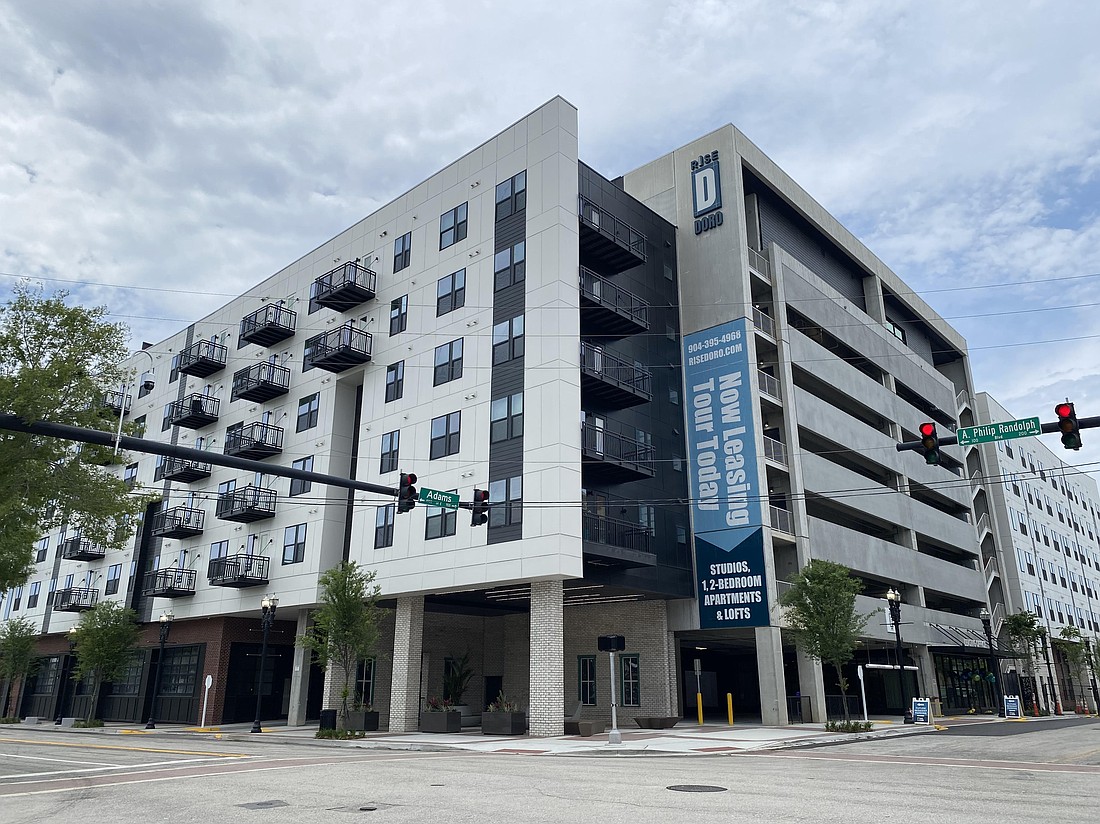
Two years, five months and seven days after fire ripped through Downtown Jacksonville’s Rise Doro apartment complex, city and development leaders celebrated its opening on the rooftop of a completed structure that already has residents inside.
A ribbon-cutting ceremony June 4 came about two months after the apartments’ developer, Rise: A Real Estate Co, welcomed its first resident. As of the event, the complex at 960 E. Adams St. had filled around 20% of its 247 rooms, said Greg Blais, Rise’s president.
“We made a commitment to Jacksonville,” Blais said. “We committed to Downtown, and working with the DIA and the City Council and the mayor’s office has afforded us an opportunity to take another swing at the pitch, and we’re so glad we did.”
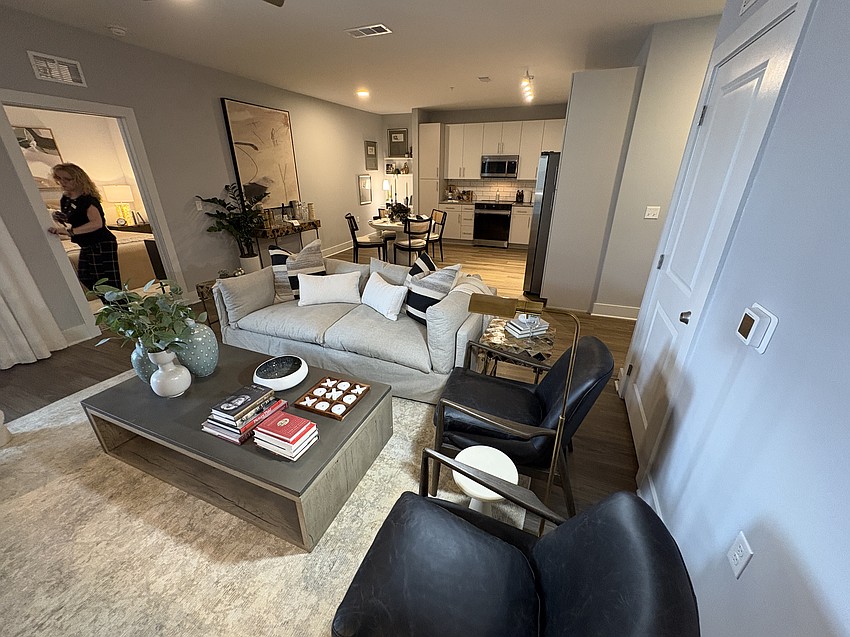
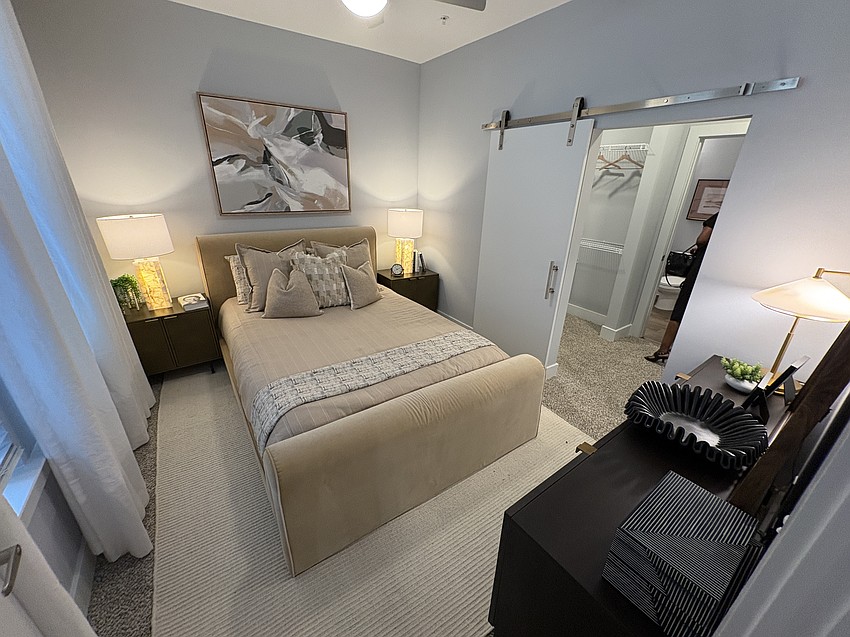
The apartment complex offers rents starting at $1,349 for a studio, $1,735 for a one-bedroom unit and $2,390 for a two-bedroom unit.
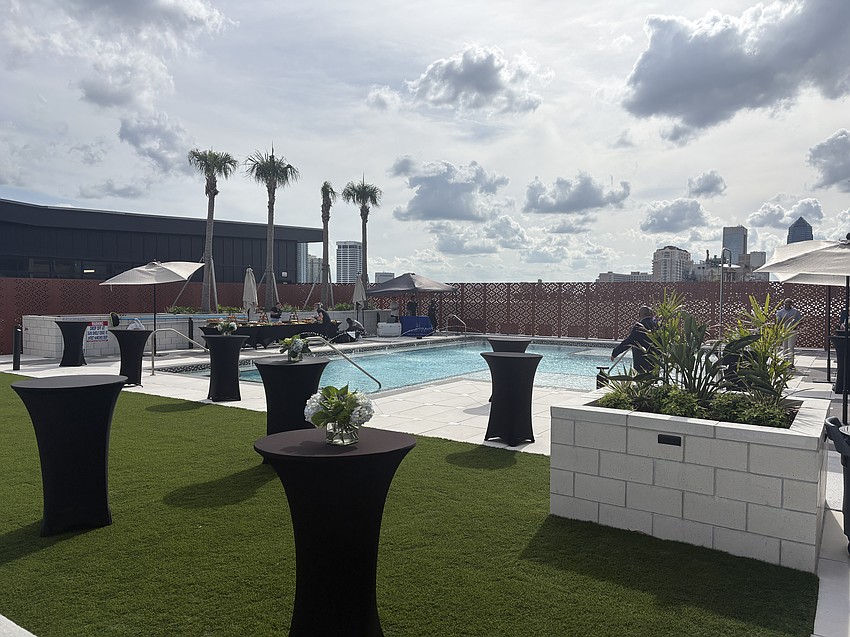
Rise Doro’s amenities include a rooftop pool and gym, a ground-floor outdoor lounge area, a coworking space, a lounge and more.
Standing on the apartment’s rooftop with Downtown’s skyline and EverBank Stadium in view, Mayor Donna Deegan praised the apartment’s rebuilding effort as a sign of things to come in Downtown.
“We are not defined by setbacks. We are defined by what we do next. When challenges come, we meet them, and we get back to work,” Deegan said. “We build, and this building stands as a reminder of that grit.”
In September 2024, Jacksonville City Council approved a $15.45 million incentive package to rebuild the apartments, which comprise five stories of wood framing built on a two-story concrete pedestal and wrapped around a concrete parking garage.
Officials determined that the concrete portions remained structurally sound after the fire, and they were retained. The wooden portions of the structure were demolished.
The cause of the fire was not determined, with a report from the Florida Division of State Fire Marshal saying it likely was sparked by “irregular electrical activity.”
The 166-page report said portions of the building where the fire may have started were destroyed by flames or had been destabilized by fire or water damage and were not accessible to investigators.
The report states there was “no conclusive evidence to indicate a specific cause of the fire.”
Officials said the fire broke out on the sixth floor. Firefighters attempted to enter the building to battle the blaze from the interior but were impeded by obstacles such as uncompleted stairwells. They poured water into the building from ladder trucks, but it burned for more than 24 hours.
After the fire was extinguished, the city ordered wood-framed portions of the building demolished out of concern that they could collapse and damage adjacent structures.
According to Downtown Investment Authority records, the rebuilt project includes 247 residential units and 7,400 square feet of retail space. Those records show that Rise intends to incorporate 85 units of workforce housing. Previously, all the units were to be leased at market rate.
With the inclusion of workforce housing, the city approved a $3 million workforce housing completion grant as part of the new incentive package.
The total incentive amount was nearly three times more than the $5.75 million in incentives the city approved in 2020 for the project.
Lori Boyer, then CEO of the DIA, said the increased amount reflected a rise in construction costs.
Boyer said that in 2020, when Rise received approval for incentives for the first time, the company had locked in construction costs at a pre-pandemic rate. Those costs had increased substantially over the four years between the incentive deals.
The initial incentives were in the form of a Recapture Enhanced Value Grant and were not paid out. A REV Grant is a refund on ad valorem tax revenue generated by a new development or property enhancement.