
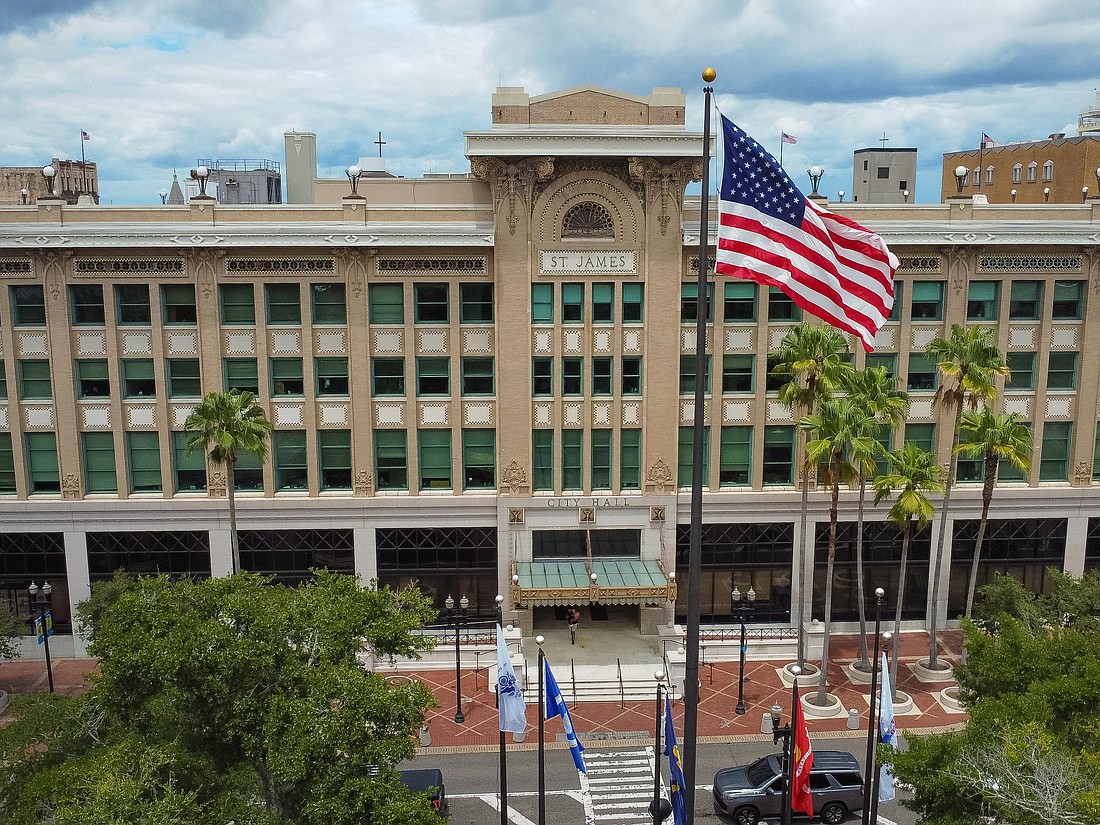
As they began analyzing the city of Jacksonville’s proposed 2026-27 budget, members of the City Council Finance Committee began eyeing cuts to proposed spending but did not set a clear benchmark for how much proposed spending they wanted to remove.
In the face of potential revenue losses that would reach more than $300 million in the next three years, committee members vowed to increase Jacksonville’s cash reserves over the coming weeks. Chair Will Lahnen said that in the first day of hearings on Aug. 13, members recommended cuts of just under 1% of the $2.02 billion proposed budget.
The city’s potential revenue losses would come from Amendment 3, an initiative on the Nov. 3 ballot that would increase the state’s homestead exemption on property taxes from $50,000 to $150,000 for fiscal year 2028 and $250,000 by FY29. City auditors estimated that by FY29, the city could lose more than $300 million.
Negotiations for the FY27 budget, which takes effect on Oct. 1 after a final Council vote set for Sept. 22, began with a different tack than those for the FY26 budget. Instead of setting a goal for how much to cut, as committee members did while preparing to cut the city’s millage rate, committee members on Aug. 13 sought to increase the city’s reserves.
Last year, Council members approved a rollback of one-eighth mill, equating to around $13 million in revenue reductions. One mill is equal to a $1 tax for every $1,000 of assessed property value.
Committee members are considering the largest budget in city history, introduced by Mayor Donna Deegan on July 20. Deegan’s proposed budget is subject to Council review, and edits made by the Council are sent back to the mayor for her signature.
Lahnen said he was not interested in adding new expenses to the budget this year and that this was the “year to preserve cash.” Member Mike Gay said it was time for the city to distinguish between wants and needs.
Rahman Johnson, the committee’s lone Democrat, warned against overreacting to the possibility of Amendment 3’s passage and preemptively proposing budget reductions that may not be needed. Similarly, city Chief Administrative Officer Mike Weinstein argued members were subjectively “picking and choosing” which line items to remove from the proposed budget, including funding for home downpayment assistance, dues for state and national associations and the mayor’s executive office.
Committee members will spend the budget process analyzing a few avenues of addressing line-item issues. They can approve items without change; eliminate them and put the saved funding into the operating reserves, emergency reserves or contingency accounts; or amend them and place the difference into those reserve or contingency accounts.
This year, committee members concerned about the effects of Amendment 3 can place money into a contingency fund based on the passage or failure of that measure. Should the initiative receive at least 60% voter approval and pass, the funds in that contingency account would fall into the city’s reserves. Should the measure fail, the funds in the account would be allocated as previously proposed without any further Council action.
While Lahnen said that fund would be used “sparingly,” committee members placed their first dollars into the account on Aug. 13. Half of city funding for the Public Service Grants and Culture Council grants initiatives — $7.1 million of $14.2 million in combined appropriations — was placed into the account along party lines, with Johnson as the lone no vote.
Before lunch, committee members had already removed more than $1 million in nonreserve spending from the budget. However, as noted repeatedly throughout the hearing, no budget decision will be final until the budget is passed by full Council on Sept. 22.
Council members also moved funds into a Special Council Contingency, largely based on apolitical advice from Council auditors. Those moves were based on restructuring budget items for better efficiency, including amendments for the city’s Finance Department, revenue transfers between departments and funds, and more.
The Special Council Contingency serves as a bucket of budget additions and subtractions throughout the budget process. Whatever money is left in that pot is addressed before the end of the budget process in September.
Committee members also approved reducing their strategic plan contingency, often used to promote initiatives in individual Council districts, from $10.02 million to $2.2 million, which was put into the city’s operating reserves. In addition, $237,427 for municipal dues to the Florida League of Cities, the Florida League of Counties, the National Association of Cities and National League of Counties was also placed into reserves.
The committee also moved $750,000 from a $1.5 million line item for a Telehealth program that was moved below the line.
Funding placed below the line means that the money is there for the intended purpose for which the budget proposed, but is in a holding pattern. To move it above the line during the budget process only takes a majority vote, but doing so after the full budget is approved in late September would require a two-thirds vote of the Council.
Those moves drew opposition from some committee members. Johnson voted against all measures, while member Randy White voted against sending the Telehealth program below the line.
Deegan has argued against cuts to her budget, saying city spending produces a return on investment for citizens of $3.05 for every $1 spent by the city. Deegan’s administration says the median Jacksonville household pays an estimated $2,864 annually for city services, and those city services generate an estimated $8,751 in economic value.

Finance Committee member Rory Diamond disputed the figure.
“No one on God’s green earth believes $1 of gov spending equals $3 in value,” he wrote in a social media post Aug. 4. “We are lucky to get ten cents back.”
The committee will hold meetings starting at 9 a.m. each day on the Thursday and Friday of the last three weeks of August. The proposed budget will then advance to consideration by full Council on Sept. 8 and 22.