
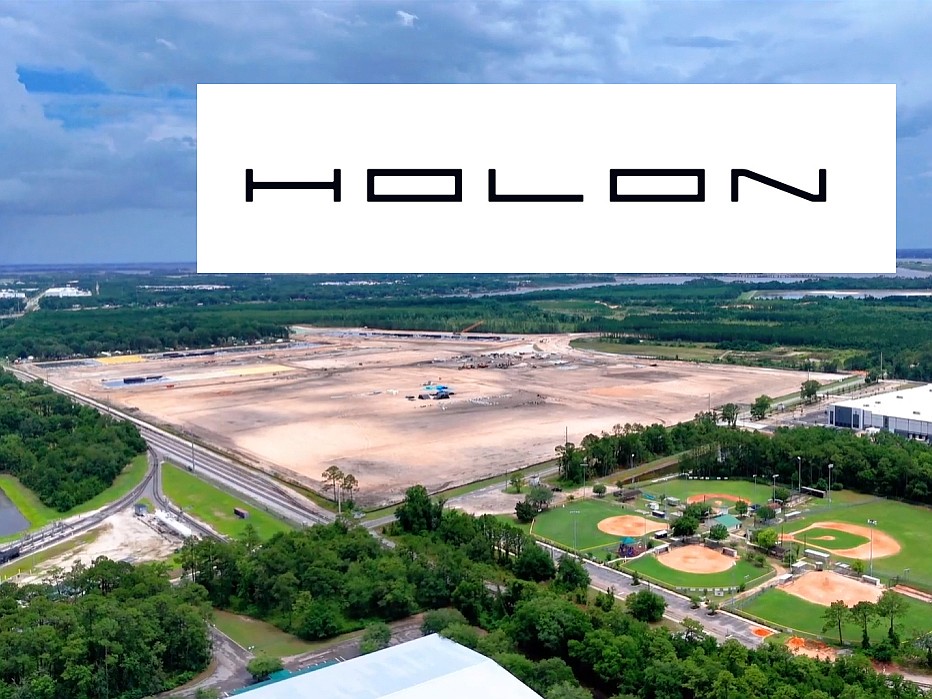
Holon, the Germany-based manufacturer that says it plans to make a $100 million investment in Jacksonville, still intends to break ground on its manufacturing facility in 2026, show records provided to the Daily Record.
Those records also show that Holon received a one-year extension to the company’s economic development agreement with the city.
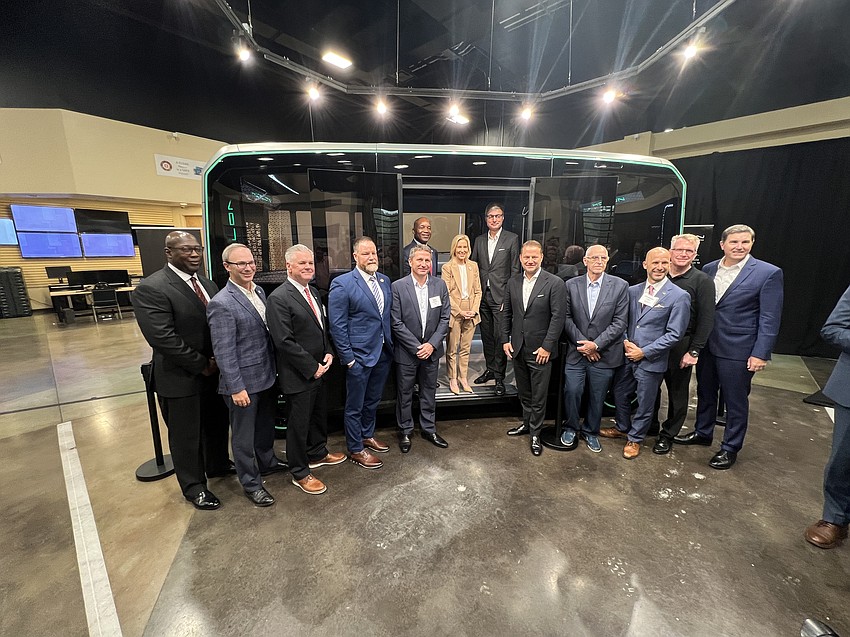
In October 2025, Holon and the Jacksonville Transportation Authority announced plans for the manufacturer to build a production facility at the Eastport Exchange industrial park at 10145 Eastport Road, where Holon would manufacture vehicles for JTA’s autonomous Ultimate Urban Circulator, or U2C, public transportation system and for other customers.
In June 2024, the city of Jacksonville approved an incentive package of more than $7.5 million for Holon to expand to Jacksonville.
A letter to the city’s Office of Economic Development from Holon Corporate Secretary Stephanie Addison dated Feb. 6, 2026, requested a one-year extension. A city spokesperson confirmed to the Daily Record the OED had granted that extension.
The extension does not require approval by Jacksonville’s City Council, and the city cannot grant any further extension under its agreement with Holon.
The February letter came as part of a public records request made April 29 by the Daily Record, the month that Holon was expected to break ground.
With the extension, Holon must make a capital investment of at least $80 million no later than Dec.31, 2027, and create 100 jobs no later than Dec. 31, 2028.
“As with many businesses, there are changes that occur in the market outside of our control. Unfortunately, HOLON’s supply base has had significant changes in business strategy and availability. This has impacted our ability to maintain our timing for Start of Production (SOP),” Holon’s letter read.
In that letter, Holon said it still planned to break ground on the project by the end of 2026. The city told the Daily Record it had no updates on Holon’s planned groundbreaking, and Holon did not respond to multiple requests for comment.
In a previous request for comment June 2, a Holon spokesperson said the company “remains fully committed to Jacksonville as its U.S. launchpad and long-term hub for autonomous mobility manufacturing.
“We are pursuing a phased approach that starts with testing, commissioning and initial production, ensuring that every step aligns with technology readiness, regulatory requirements and market demand,” the spokesperson said.
Holon misses April groundbreaking
When Holon signed its deal to locate its facility in Jacksonville, which would be the first autonomous vehicle production plant in Florida, the company and the JTA said the project would break ground in April 2026 and that final facility inspections for the project were planned for the second half of 2027.
April came and went with no groundbreaking ceremony for the project.
Responding to an April 1 question asking if the facility’s construction would be delayed, Holon said April 3 it was “finalizing updates” to its construction timeline and would provide a statement “shortly.”
After not responding to several follow-up emails, Holon told the Daily Record on May 6 its “commitment to Jacksonville is clear and unchanged. We remain in close contact with the Jacksonville Transportation Authority and other stakeholders to discuss the next steps.”
Asked again to define its project timeline and detail reasons for delay, Holon did not respond.
JTA officials also did not respond to similar questions about Holon’s facility.
Holon incentives
Holon, which is partially owned by a company under Saudi Arabia’s Public Investment Fund, received approval for a 10-year, 75% Recapture Enhanced Value Grant from the city, valued up to $7.5 million.
A REV grant is a refund on ad valorem tax revenue generated by a new development or property enhancement. It can apply to real property and tangible personal property.
Additionally, the city pledged a training grant of up to $200,000, for which the company is eligible when it hires 100 full-time employees. The city would pay Holon $1,000 for each hired employee.
According to the city OED, the project would create a return on investment of $1.32 for every $1 invested.
Holon site
The city was reviewing civil engineering plans in October 2024 for Imeson Park South industrial park before Holon moved its plans to the Eastport Exchange location.
Eastport Exchange is being developed by Ponte Vedra Beach-based InLight Real Estate Partners.
David Burch, managing partner of InLight, said in a Nov. 24 email that Holon signed a term sheet for EastPort Exchange in October at the JTA’s office.
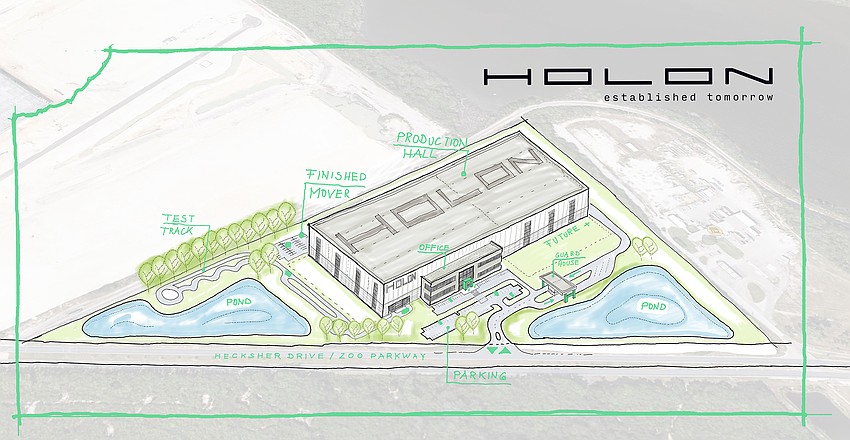
He said Holon plans a long-term lease for the facility. Burch and JTA said the site of the Eastport Exchange facility will be a 585,000-square-foot building on 40 acres.
Plans for the Imeson Park South location showed a 491,472-square-foot building on 40.88 acres. The city was reviewing civil engineering plans submitted Oct. 9, 2024, for Project Link, which was announced as Holon, in Imeson Park South, which is about 3 miles east of the Jacksonville Zoo and Gardens, on parcels owned by VanTrust Real Estate.
Eastport Exchange industrial park is about 4 miles northeast of Imeson Park South.
“I’m not sure what their decision making process was up to that point,” Burch said Nov. 24 of Holon’s choice to change locations.
No Holon plans have emerged for the Eastport Exchange site.
“I can confirm that we have not filed for any permits,” Burch said by email April 1, referring further questions to JTA.
Burch said he was under a nondisclosure agreement.
He said by email May 12 that he had no further comment.
Marc Munago, VanTrust Real Estate’s Jacksonville executive vice president, said by email May 12 that the company would consider working with Holon on a building that VanTrust has under construction, but he would rather not comment.
Munago said that the building under construction is Imeson Park South Building D, which encompasses 547,200 square feet. It is a speculative building and was not built for Holon or any other specific tenant.
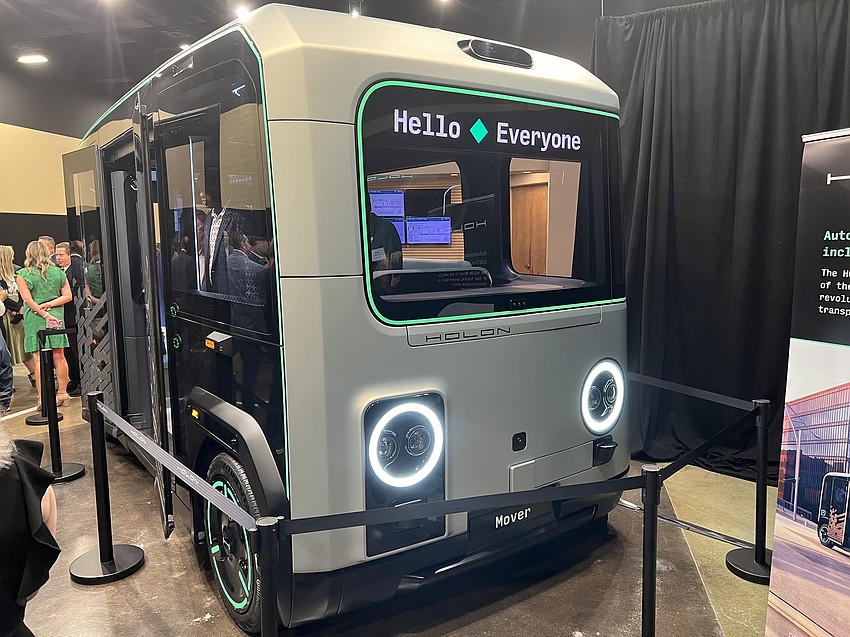
Vehicle testing underway
In March, Holon announced that it was officially listed as a Transit Vehicle Manufacturer in the United States.
Under U.S. Department of Transportation regulations, a Transit Vehicle Manufacturer is any manufacturer whose primary business purpose is to build vehicles specifically for public mass transportation.
“This recognition marks an important step for us,” Sven Herzig, chief sales officer of Holon, said in a release at the time.
“It confirms that we are on the right regulatory path and creates the foundation for resilient partnerships with U.S. transportation authorities.”
Following the announcement, Holon did not go into detail about future regulatory requirements in the United States.
The company is testing vehicles on public roads in Hamburg, Germany.
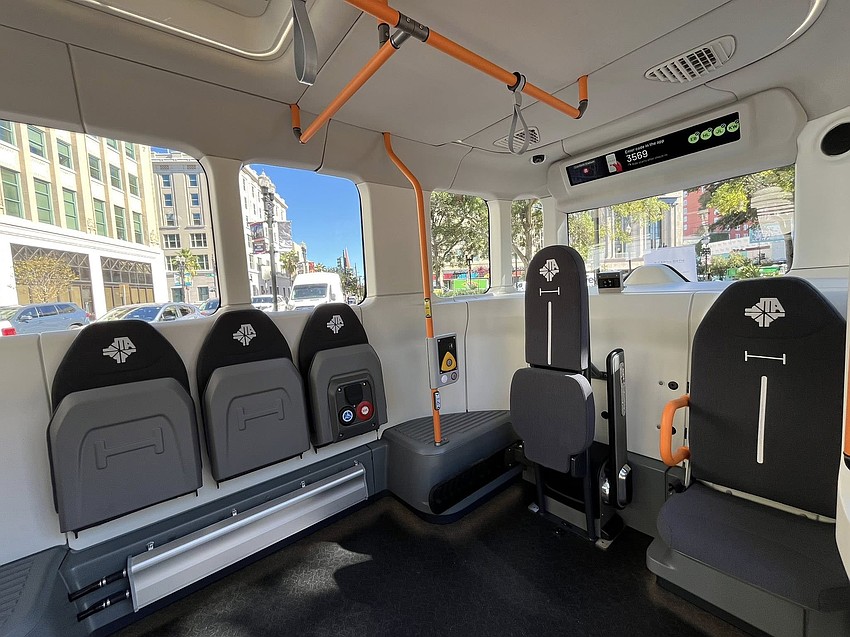
Holon touted as sign of U2C success
City officials have touted the city’s agreement with Holon as part of JTA’s U2C, which would operate autonomous vehicles around Downtown and surrounding areas. Asked what would make the U2C a success, JTA CEO Nat Ford pointed to Holon facility plans.
“I think the success is here. We’ve landed a tier one automotive grade manufacturer in our community,” Ford said during a November 2025 media conference touting Holon’s capabilities.
“That’s going to create hundreds of jobs, export thousands of vehicles across the world and the sales tax and revenue that’s generated from that far exceeds what the cost is of the U2C project with our early estimates.”
“What makes (Holon’s technology) more impactful for me is the fact that it’s job creation, job growth,” Council member Raul Arias said during the 2025 news conference.
“As you’ve seen me on Council many times, (I) advocate for our workforce, and that’s exactly what this will do.”
Holon vehicles would be used in the U2C system. The first phase of the program, which runs vehicles on a 3.5-mile route Downtown, mostly along Bay Street, cost $65 million.
JTA currently uses Ford vans operated by Beep using OXA software for its autonomous transit but would make the switch to Holon vehicles once they are approved for road use in the United States.
According to JTA, a University of North Florida study said the autonomous transit project would bring more than $200 million to the local economy during the construction phase, create more than 800 jobs, at least 150 of them at Holon, and generate $87 million in economic output annually starting in 2028.