

After months of meetings and discussion about changes to rates for its customers, JEA’s board finalized plans for those rates during a June 30 meeting. Rates, which vary between residential, multifamily, commercial and industrial customers, will go into effect Oct. 1.
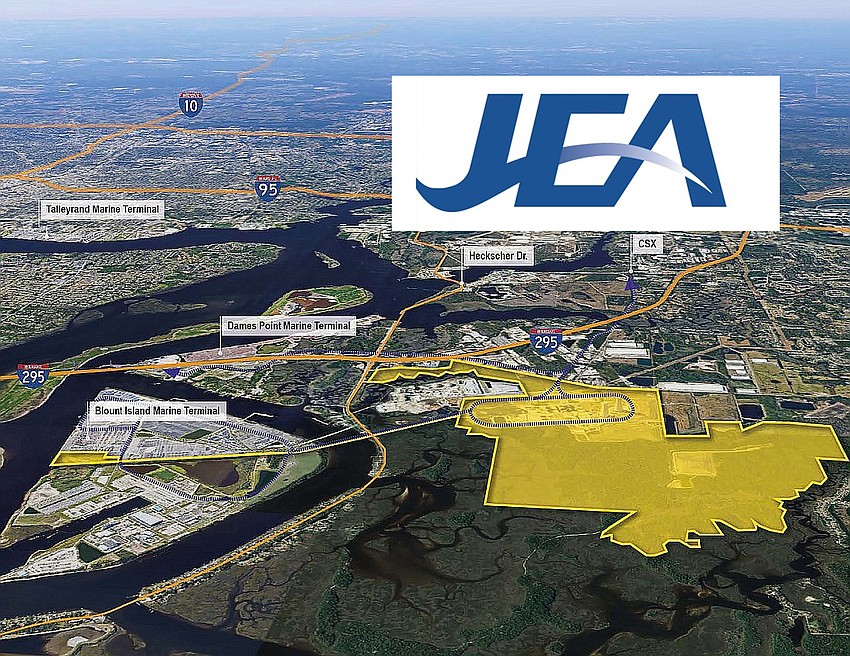
JEA’s rate changes, which will increase bills for most customers, come as the utility begins to construct a new, $1.57 billion power plant at the former St. Johns River Power Park.
JEA’s seven-member board unanimously approved the measure. The June 30 action represented the final meeting and action item following five board meetings, committee meetings and workshops. Board members also worked with JEA staff in private before each of those meetings.
Board members defended their decision to increase rates, saying ratepayers would have faced a greater financial burden had they not invested in the power plant and raised rates to help pay for it.
“It’s more expensive to do nothing,” board Chair MG Orender said. “We have a plant that’s 50 years old, there’s no guarantee how long she’s going to chug along, and this puts us ahead of the curve.”
“If you don’t do the rate increase, you put reliability at risk, and that’s the bottom line,” said member Joe DiSalvo.
Rate changes vary
JEA charges commercial customers at different rates depending on their demand for energy, with size classifications being small, large and industrial.
Demand, measured in kilowatts, is defined as the maximum amount of energy that a customer can use at any given moment.
JEA also imposes different energy charges per classification. Those charges, measured in kilowatt-hours, are based on how much energy a customer uses over a period of time.

In April, JEA staff said the recommended changes would affect customers bills as follows:
• JEA’s 53,800 small commercial customers would see bills increase 1% to 2%, which includes an increase of one-tenth of a cent in the cost per kilowatt-hour. JEA defines small commercial customers as those with demand less than 75 kilowatts.
• Bills for JEA’s 3,900 large commercial customers would decrease 2.7% to 2.8%, with a 27-cent increase per kilowatt for the demand charge, and energy and fuel charges falling around half a cent per kilowatt-hour. A demand charge, which applies only to large and industrial commercial customers, is a usage fee per kilowatt to recover some of the costs related to generation, transmission and distribution, according to JEA.
JEA defines large businesses as having a demand between 75 and 1,000 kW.
• About 150 industrial customers, defined as those demanding more than 1,000 kW, would see their bills decrease 2.9% to 4.2%. Demand charges will increase by 9 cents per kilowatt, and combined fuel and energy charges decrease by about four-tenths of a cent per kilowatt hour.
New power plant
The utility has not built a new generating facility in 14 years. In 2019, a previous iteration of the board opted against a staff recommendation to build a new oil- and gas-fired plant at an estimated $553 million. The cost rose to $800 million when JEA next estimated it in 2022.
JEA officials said inflation over the past three years increased the cost of construction, materials and equipment.
JEA expects the Northside plant to come online by 2031 or 2032.
Juli Crawford, senior vice president of finance at JEA, said after the vote that the utility would need to increase rates by a yet-to-be-determined amount to cover the costs of the project. She said construction would be financed over 30 years to spread out the costs and keep rate increases to a nominal level.
JEA staff said the expense also will be offset by savings from replacing the Northside unit with a more efficient turbine. The modern unit is 40% more energy efficient than the older version, which will allow JEA to purchase less natural gas to run it.
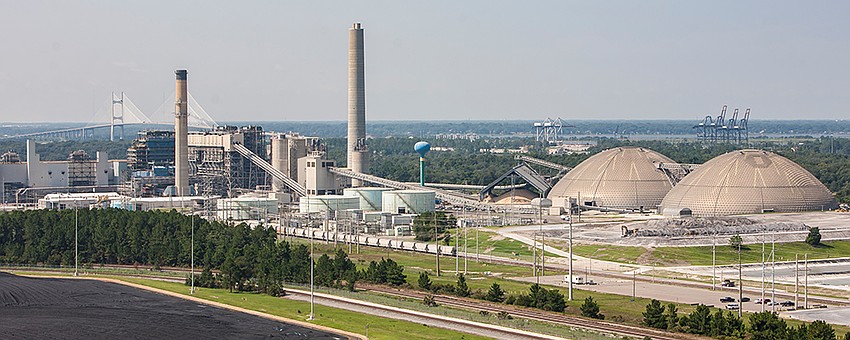
The new unit will also produce fewer emissions and is capable of being fueled with hydrogen should the emerging technology for operating power plants on that fuel be perfected.
During the June 30 board meeting, the board approved an increase in debt authorization, taking JEA’s maximum potential debt from $4.55 billion to $7.75 billion, which came in part as the utility plans out its payments for the Northside plant.
The rate hearing on June 30 brought opposition from three individuals, two of whom focused on a desire for JEA to pivot away from the Northside plant to solar-focused energy generation. Responding before the vote on the rate increase, board members said they planned to receive a presentation from JEA staff on the merits and drawbacks of solar energy before the end of the year.
“I think there’s a couple things that we need to think about as a part of that conversation,” said board member Arthur Adams, highlighting land requirements, starting costs and potential depreciation of investment in solar technology.
“We look at the mix of energy generation today, and we project out 10 to 20 years. How do we stack up (against other large Florida utilities)? And I think that should be a part of this exercise around solar,” Adams said.