

George Washington said, “The establishment of our new government seemed to be the last great experiment for promoting human happiness.”
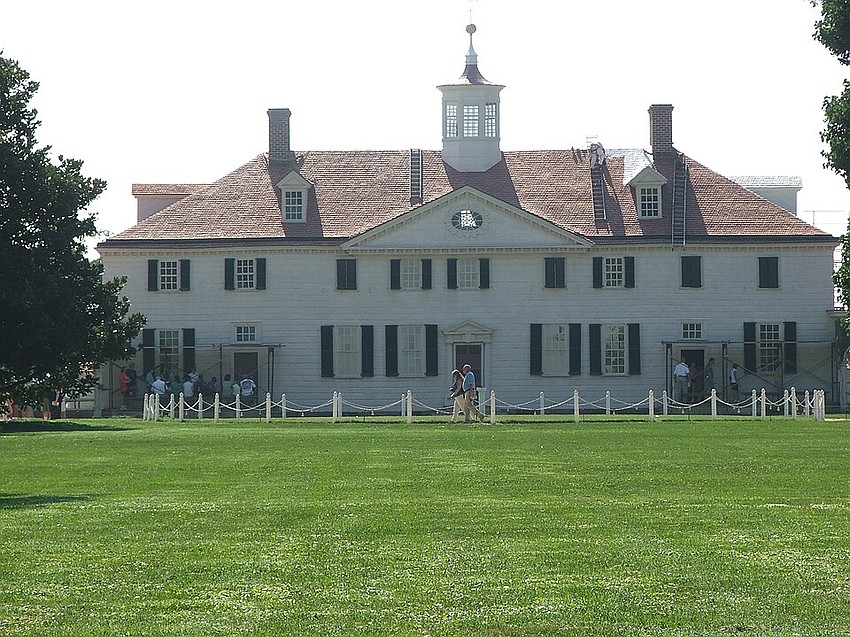
Washington’s words about our nation being “the last great experiment” were in my mind when I visited Mount Vernon earlier this year, home to the Presidential Library of George Washington. I learned so much about him during the visit, including his reluctancy to take on the role of the first president of our nation.
At his core, Washington was a soldier, a military-minded man who loved the outdoors, but it may have been his reluctancy about presidential rule that led him to father a nation, these blessed United States.
Because there was no blind ambition in him, he could and would set our nation on a course where we could create a “more perfect union.”
Washington is often compared to a general contractor because he, more than anyone else, successfully organized the gathering of the Founding Fathers to accomplish a significant mission.
I think about the 39 signers of the Constitution. How would they react and think of how we have interpreted and adapted the document? How would they think of what we left unchanged?
Since it was adopted in 1787, the Constitution has been amended only 27 times.
In that founding document and the plain language of the text, they intended for us to read and comprehend it. Those elite men must have realized that many people would not be as knowledgeable as they were, so they likely wanted the document to be accessible to everyone who wanted to read it.
The foundational philosophy of the Constitution was rooted in the Enlightenment, which emphasized human reason, liberty and civic protection. The Founding Fathers were profoundly influenced by European Enlightenment thinkers such as John Locke, who argued that every human being is born with the inherent rights to life, liberty and property.
Locke believed that a social contract exists between the government and the people with the government’s primary responsibility being to protect these natural rights.
The Founding Fathers believed in merit-based natural aristocracy. Derived from meritocracy, it means that the economic or political power vested in individuals are bred from ability and talent, rather than wealth or social class or inherited European power structures.
Embedded in the foundational philosophy and principles of the founding document is our ability to apply human reasoning, civic protection and religious freedom. Human reasoning involves the use of rational thinking processes and cognition and using one’s existing knowledge to generate new knowledge.
Civic protection usually refers to safeguarding either civilians in crises or the democratic “civic space” that allows citizens to participate in public life whether it involves human rights or civil liberties advocacy.
Religious freedom, or religious liberty, is the fundamental human right to hold, express and practice religious beliefs—or to hold no beliefs at all—without government coercion or persecution. It safeguards your right to worship, observe rituals and act on your conscience in both the public and private spheres.
Washington, in particular, believed in liberty as a testament to his mastery on the battlefield and his ability to challenge inherited social structures. He presided over and served as the convention president at the signing of the Constitution.
As we commemorate 250 years of our nation this month, I am inspired to reflect more deeply on this “the last great experiment” of our nation. What a history. What a legacy.
I ponder the avenues we can explore to further enhance this “last great experiment in promoting human happiness” and persistently advance the ethos of a more perfect union.