
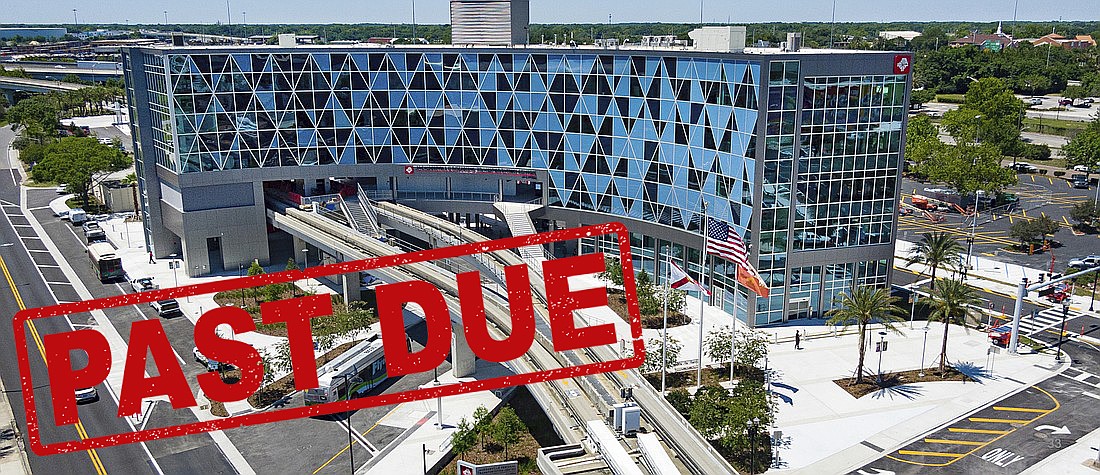
The Jacksonville Transportation Authority has $15.06 million worth of delinquent bills on its books, according to records provided to the Jacksonville Daily Record.
In invoice records dating back to the beginning of 2026, JTA’s unpaid bills are at its highest level of the calendar year. In response to questions about the bills, the independent authority confirmed the amount was $15.06 million and said it had taken steps to pay them in two months.
The delinquencies date back to 2014, according to records, which break down the debt several ways. Of the total, $4.62 million is more than 60 days past due, $4.86 million is 31 to 60 days past due and $5.58 million is one to 30 days past due.
Of the $4.62 million that is more than 60 days past due, records show that $373,259.42 was overdue since July 1, 2025, and $2.95 million was overdue after April 1, 2026.
JTA’s debts range in size and scope, from hundreds of thousands of dollars for certain companies to a few hundred for others. Some individual bills range from pennies owed to Napa Auto Parts to tens of thousands of dollars owed to lobbying firms.
JTA’s delinquent bills have risen from $11.86 million in January to its peak of $15.06 million at the end of June. The records provided to the Daily Record showed JTA owed $2.25 million in upcoming bills in July, though records did not show which of those bills had or had not been paid past June 30.
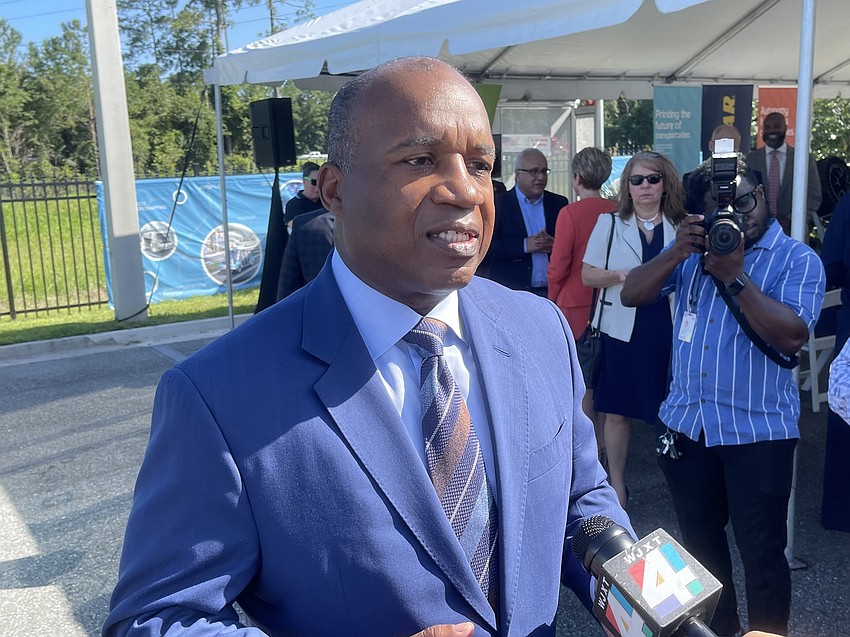
“That’s not good. That begs the question, what’s going on with cash management,” City Council member and JTA board liaison Rory Diamond said. “It’s very strange for the government to be 90 days out on bills like this.”
In a statement that verified the amount of the overdue bills, JTA spokesperson Lynn Opperman said that with a midyear budget amendment and cost-containing measures adopted by JTA, “we expect these outstanding invoices to be resolved in the next two months.”
JTA suffers revenue shortfalls, says delinquencies are standard
Those bills remain unpaid as JTA has suffered a $13.28 million budget deficit in fiscal year 2026, and had a projected deficit of $17.5 million in fiscal year 2027. The unpaid bills also make up around 11.3% of JTA’s $132.97 million operating budget.
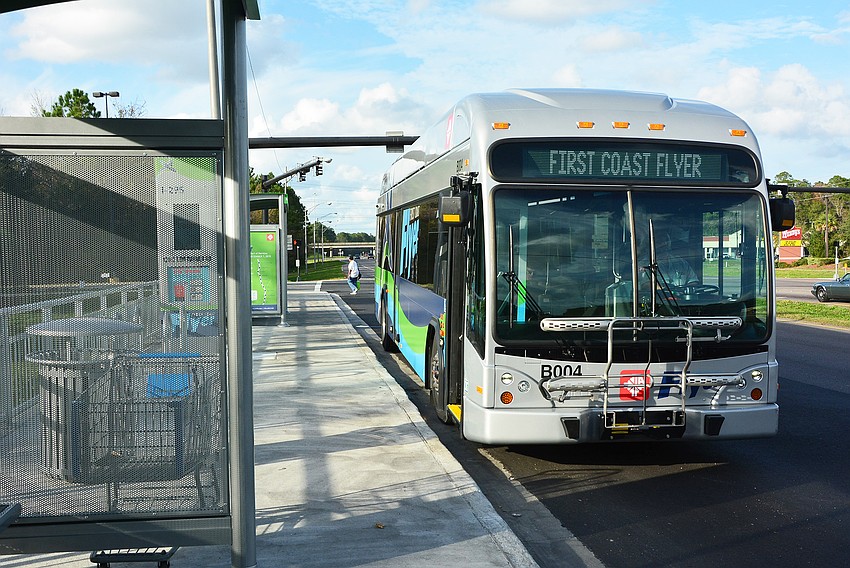
To address the budget shortfall, in May, JTA’s board approved the elimination of five bus routes, reduced the frequency of four bus routes and made more cuts while increasing some bus fares for FY27, though the budget still had a projected deficit of $2.31 million, which would need to be cut via administrative reductions. The changes are set to take effect Oct. 1.
In a response to several questions from the Daily Record, JTA said it was not uncommon for organizations in the private and public sectors to have outstanding bills paid after their due date.
“For the JTA specifically, the timing of sales tax revenues, one of the Authority’s primary operating revenue sources, can also affect payment cycles. The JTA receives estimated monthly sales tax distributions that generally represent approximately 80 percent of actual collections, followed by a quarterly reconciliation that settles the remaining balance,” Matt Galnor, representing JTA through his public relations firm Bachman Galnor Communications, wrote.
“Because expenditures occur continuously while revenue is received on a different cycle, temporary timing differences can create cash-flow management considerations that occasionally affect when invoices are paid.
“The JTA actively monitors these matters and continues to refine its internal processes to improve payment timeliness, strengthen coordination with vendors, and better align revenue inflows with expenditure obligations.”
Records showed Galnor’s firm was owed $10,000 by JTA, with another $10,000 due in July. Galnor declined to comment if his firm was concerned about JTA’s ability to pay its bills.
In recent months, JTA has paid down certain outstanding debts, despite its total owed money increasing. After it owed its security company, Allied University Security Services, $832,898.01 in June, JTA paid down those bills to $674,706.78 in July. After owing tire manufacturer Michelin $183,031.59 in April, JTA paid down those debts in full.
JTA owes more than $1 million to one creditor: $3.48 million to MV Contract Transportation Inc., which provides “transportation services, cutting-edge fleet management, or comprehensive transit planning and operations,” according to its website.
After MV Contract Transportation, JTA’s highest creditors include Uzurv Holdings Inc. ($706,796.77), which specializes in paratransit services; Allied University Security Services ($674,706.78), Shi International Corp. ($495,693.90), which works in IT; Clever Devices ($460,563), which provides technology to transit agencies; and Volkert Inc. ($398,982.04), an engineering firm.
“When payment timing differences arise due to quarterly sales tax reconciliation cycles, JTA’s finance team and departmental representatives proactively coordinate with affected vendors to provide transparent updates on payment schedules,” Galnor wrote. “We are actively refining these internal processes to ensure consistent, centralized coordination and the timely, professional resolution of all outstanding invoices.”
However, JTA’s records were not perfect. While records stated that JTA had failed to pay three bills totaling $2,475 to Jacksonville-based Burnett Mediation, a representative from Burnett informed the Daily Record all three had been paid by check May 19. Additionally, while records stated JTA owed funds to several authority employees, a spokesperson said those individuals had been paid.
CEO Ford to step down
As JTA deals with the overdue bills, CEO Nat Ford prepares to step away from the authority as the incoming CEO of Dallas Area Rapid Transit.
Ford informed the JTA board of his resignation in early July, initially saying he planned to remain in his position until Jan. 8, 2027. That timeline appears to have moved up: DART announced July 21 that Ford would start Oct. 26. A JTA spokesperson said Ford’s departure from JTA would be discussed at a July 29 board meeting.
JTA said Ford’s departure was unrelated to the authority’s financial situation.
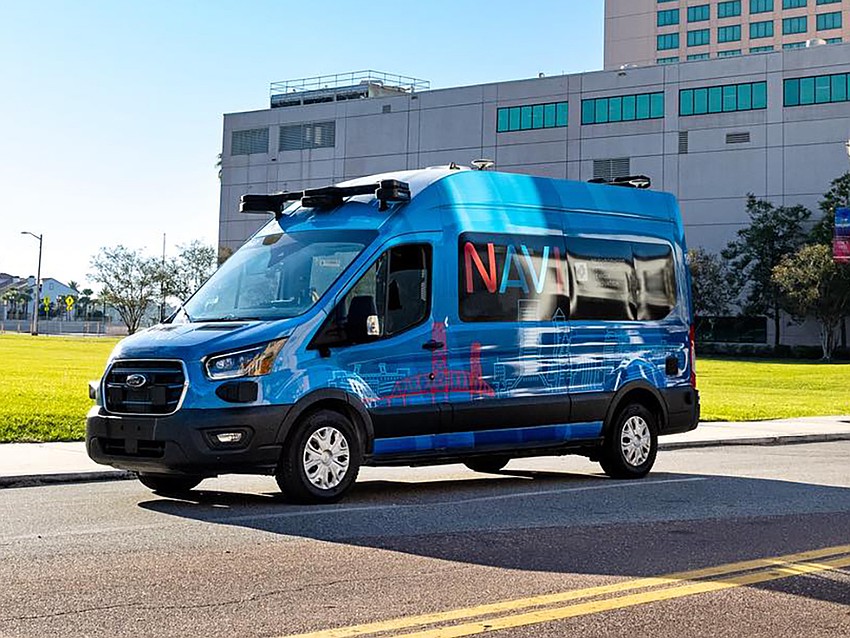
The authority also plans to take on significant capital investment in its Ultimate Urban Circulator project, which would run autonomous vehicles throughout Jacksonville’s Urban Core. Neighborhood Autonomous Vehicle Innovation vans have already begun running Downtown.
JTA planned to convert the Downtown Skyway for those vehicles and expand NAVI’s range through Brooklyn, Riverside, San Marco and Springfield, which would include an expected capital cost of at least $400 million.