
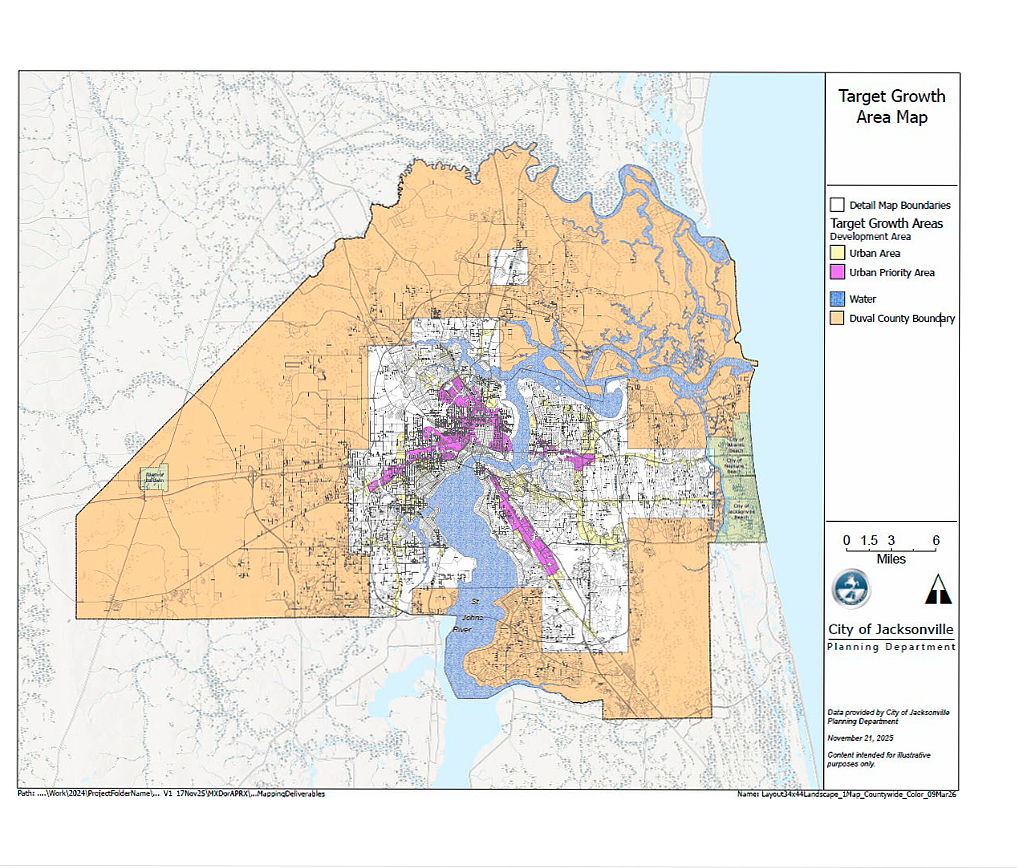
A proposed change to Jacksonville’s 2045 Comprehensive Plan, which guides the city through short- and long-term development goals, would provide nonfinancial incentives to developers for building dense and resilient residences.
Set to come under consideration by City Council, Ordinance 2026-0311 would alter land development regulations, creating “target growth areas” to grant developers higher density, smaller lot sizes, building height flexibility, increased lot coverage and parking relief.
In exchange, developers would pledge a share of their units to be affordable housing or make their properties more resilient against natural elements.
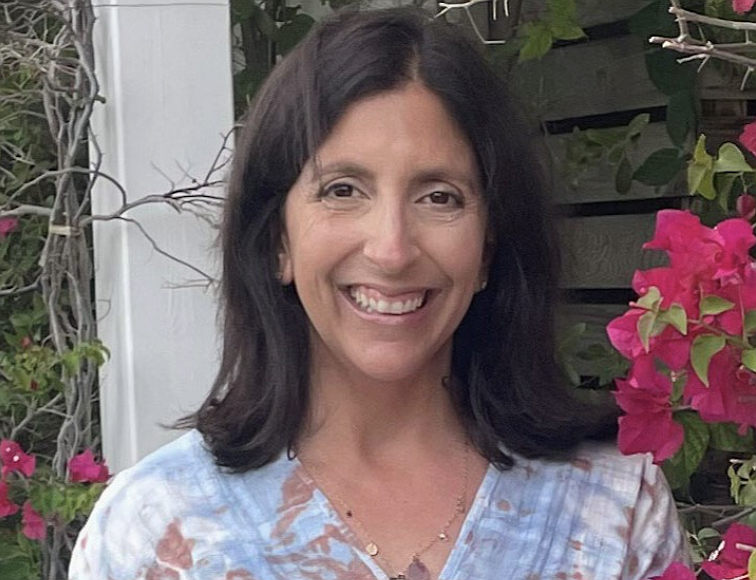
“This would provide clear expectations for developers, and it ties our housing directly to our infrastructure and where high intensity should go, because they’re served with public service infrastructure,” Planning Department Director Helena Parola said in a May 7 presentation to the Planning Commission.
“We look to areas that are better suited to accommodate growth, lower flood risk and allow housing opportunities to be connected to transit.”
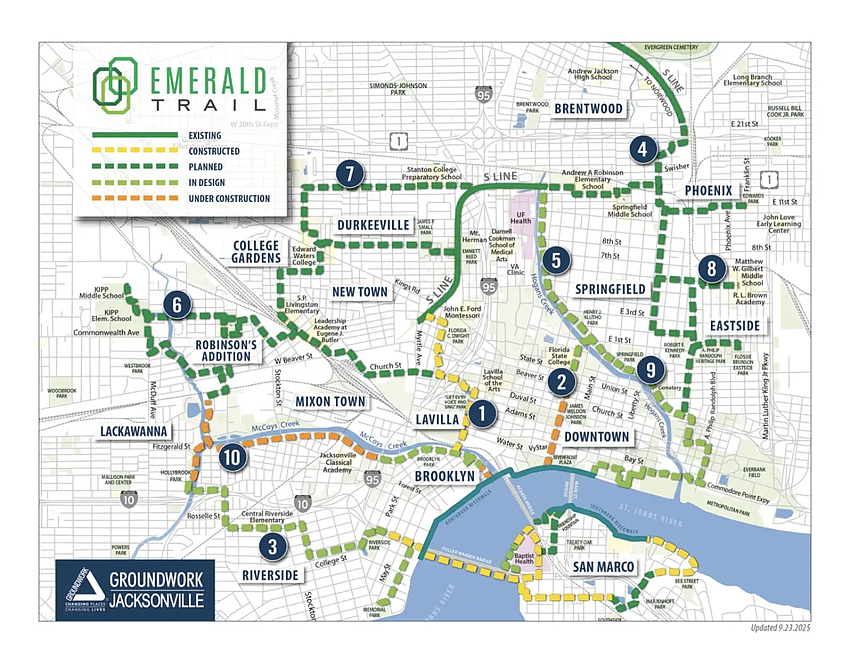
Target growth areas would be created in the city’s urban priority and urban development areas determined by the city’s Office of Resilience to be in lower flood risk areas. The legislation also requires those areas to be within a half-mile on either side of high-frequency transit corridors and the Emerald Trail, the 30-mile system of pedestrian and bicycle paths under construction in and around Downtown.
The density requirements would raise the limit for how many units per acre each land use could contain. Target growth areas would see increased maximum density of 15 to 40 units per acre in select areas.
One of the bill’s sponsors, Council member Chris Miller, said the legislation seeks to provide needed affordable housing as Jacksonville grows, while also ensuring that new housing won’t be subject to flooding issues that come with rising sea levels.
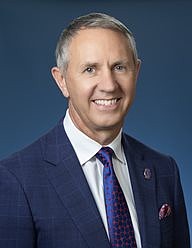
“We’re trying to convince companies to come here. We have the land, we’re trying to grow and develop,” Miller said. “But with that comes a lot of employees, and they’re going to need places to live.”
The push for higher-density housing comes as Duval County’s population is expected to grow. U.S. Census numbers show that Duval’s population rose from 864,263 in 2010 to 995,567 in 2020. A University of Florida study projects Duval’s population will be 1.29 million by 2050.
To account for the growth, the city should plan for 92,282 new housing units between 2020 and 2045, according to its Comprehensive Plan.
The proposal sets affordability and resilience criteria that developers must hit to reach their incentives. Developers would choose from one of two affordable housing options or three of five resiliency options.
The legislation defines affordable housing as housing that costs 30% of the household’s income.
The affordable housing options are:
• 20% of rental units for households earning 100% area median income or less. According to the U.S. Department of Housing and Urban Development, the area median income in Jacksonville is $108,700. The city of Jacksonville uses HUD statistics in determining affordable housing policy.
• 20% of for-sale units for households earning 140% AMI or less.
The resiliency requirements are:
• 50% of the hardscape should be permeable.
• 75% of planting areas should be used for bioretention.
• 50% of projected energy demand should be satisfied by on-site renewable energy production.
• 40% of surface parking lots and other hardscape areas should be shaded.
• The first 3 inches of rainfall should be retained or detained.
Parola noted the impact that Jacksonville’s current development is having on the city, with urban sprawl generating traffic, infrastructure and air pollution.
The Planning Department said that without passing the regulation, at least 430,000 Duval County residents would be exposed to flood risk by 2070, creating an increased taxpayer burden. Currently, more than 6% of the city’s homes are at high risk of flooding, and that risk could triple by 2070, the department said.
“A lot of people sometimes try to make (resiliency) into a political issue or matter,” Miller added. “There are realities with what’s going on with our climate, but something that shouldn’t be a debate is that our water levels are rising.”
The legislation comes from the work of the city’s Land Development Regulations Update Committee, commissioned by Mayor Donna Deegan in 2023 and made up of city staff, developers and neighborhood advocates.
The department said the legislation proposed by the committee does not apply to all areas and would not conflict with the character of single-family neighborhoods, the department said in its presentation to the commission.
That comes in contrast with a “missing middle” housing proposal introducedin 2024 and withdrawn in early 2025, which sought to pave the way for duplexes, triplexes and quadplexes in Jacksonville, including some existing single-family neighborhoods.
Opponents said that proposal was incompatible with surrounding neighborhoods, would overtax infrastructure such as roads and drainage systems, and would diminish Council’s control over building proposals. Council voted down the measure.
The map under consideration by Council is a pared-down version of the “missing middle” map, focusing on specific corridors of Jacksonville rather than swaths of the city.
The proposal is scheduled for a vote before the planning commission May 21 before it proceeds to the Council Land Use and Zoning Committee, where it’s scheduled for a June 6 public hearing.