
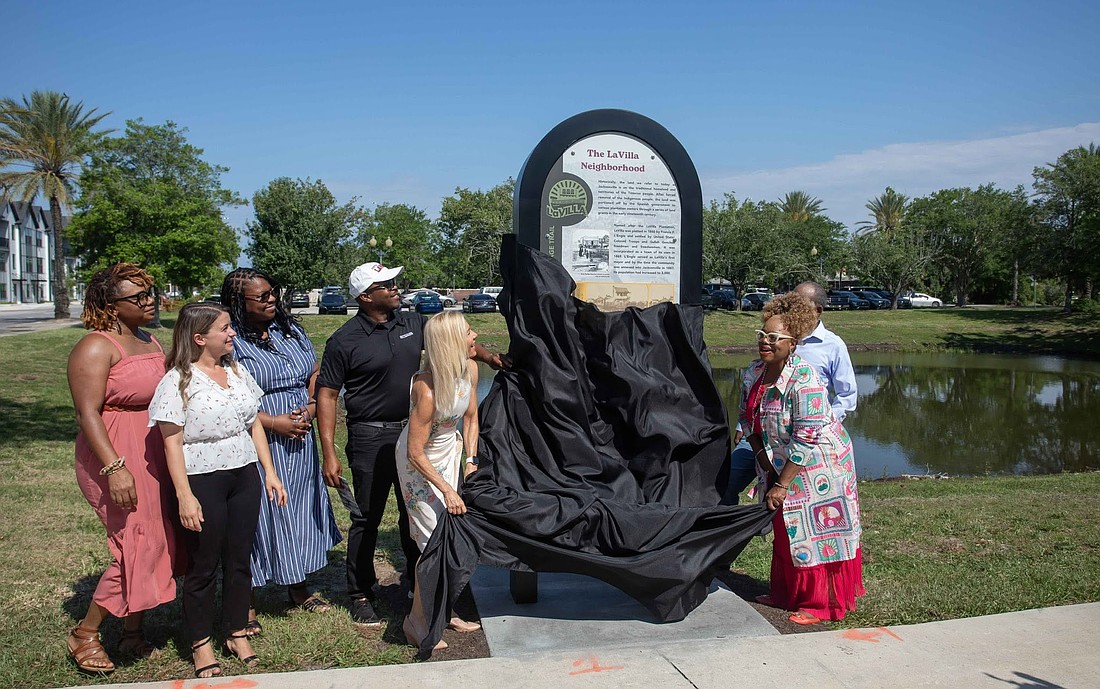
Community leaders gathered June 12 in Downtown Jacksonville to celebrate the opening of LaVilla: Lift Ev’ry Voice and Sing Heritage Trail, a 1.76-mile walking loop created through four years of planning and development.
The trail, a partnership between the city of Jacksonville, the Downtown Investment Authority and a 20-person community committee, honors LaVilla’s history with 22 markers to educate visitors about the neighborhood’s heritage.
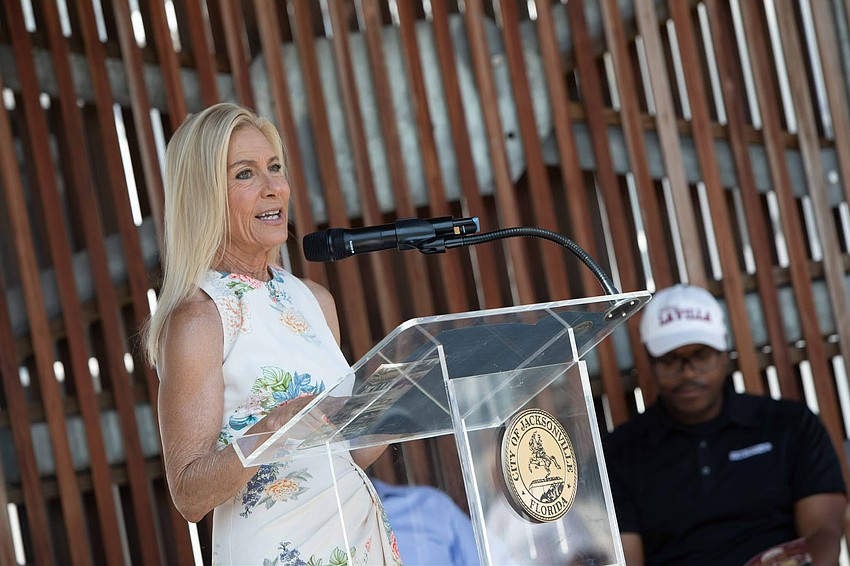
“The tales that emerge from these storied LaVilla streets help define not only Jacksonville but also influence the broader story of Black America,” Mayor Donna Deegan said during the opening event. “History should not be hidden away in archives or remembered by only a few. It should be accessible and woven into the places people live, work, gather and learn.”
The LaVilla Heritage Trail and Gateway Committee, formed by the DIA, planned the trail. The DIA provided $568,739 for design, engineering, permitting, fabrication and installation of the trail markers.
Committee members mapped the trail route, decided which events and spaces in LaVilla to highlight and designed the markers.
“We need money to ensure that the stories are not lost, but celebrated and shared,” said Council member Ju’Coby Pittman, a committee member. “With that in mind, as we cut this ribbon today, let us recommit ourselves to preserving the rich heritage of LaVilla, supporting the continued revitalization of this historic community, and to listen and to be at the table.”
The trail is bordered by Beaver Street to the north, Bay Street to the south, Lee Street to the west and Broad Street to the east. The markers are organized into eight themes based on the lyrics of “Lift Ev’ry Voice and Sing.” Originally written as a poem by Jacksonville native James Weldon Johnson, the song has become known as the “Black National Anthem.”
LaVilla, established in 1866 by descendants of Gullah Geechee people — formerly enslaved African Americans — and veterans of the United States Colored Troops of the Civil War, grew into a diverse neighborhood. It was home to a large Black community and to an immigrant population that included Arabs, Cubans, Chinese, Eastern European Jews, Greeks and Italians.
Deegan has referred to it as “the city’s first melting pot.”
LaVilla became an epicenter for Black culture, music and the arts before much of the neighborhood was demolished in the 1990s in a failed urban renewal effort. Its heritage includes being the site of performances by well-known ragtime, jazz and blues musicians, including Ma Rainey, Ray Charles, Duke Ellington, Ella Fitzgerald, Billie Holiday and Cab Calloway.
“When we lift every voice, we strengthen the future for every generation that follows,” Pittman said. “Today is more than just a ribbon cutting. It’s about being intentional and getting to the finish line, as it is our homecoming today.”
Details about the trail and its stops can be found at lavillaheritagetrail.com.